
Services
Knowledge Hub
Resources
Tools
Services







©PropTech Pulse 2025, All rights reserved.

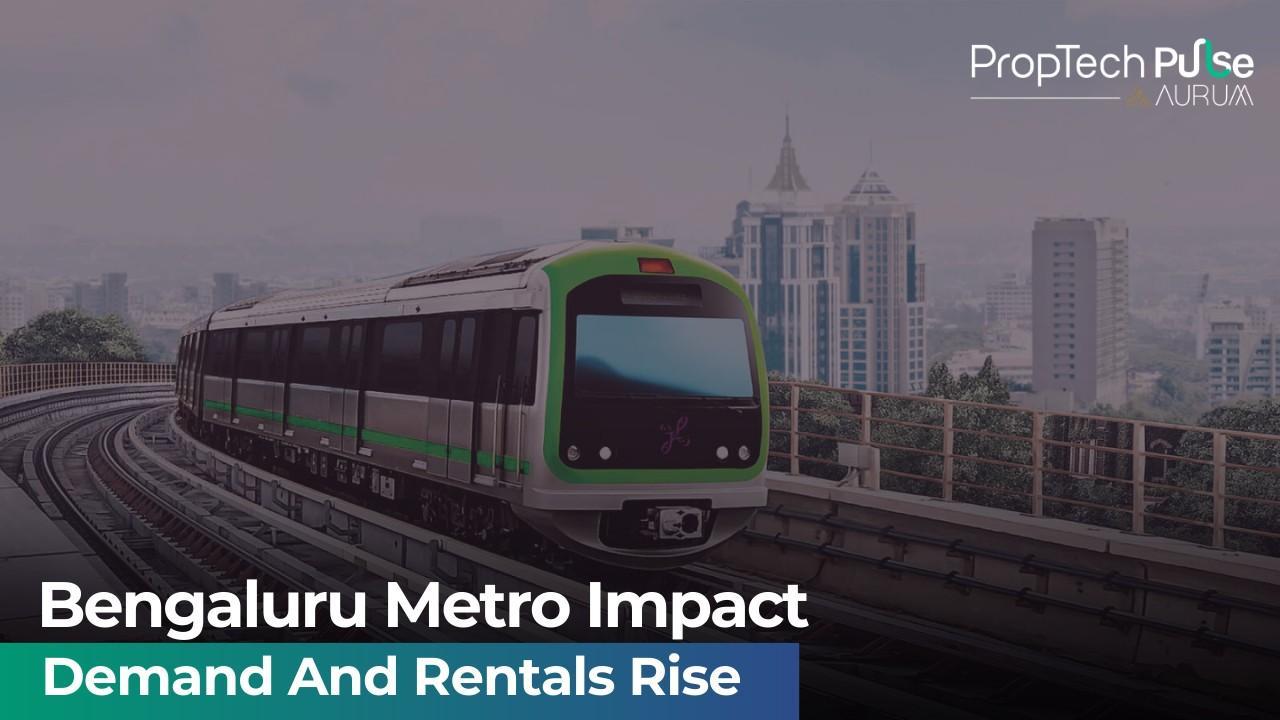
Metro Connectivity As A Market Catalyst
Bengaluru’s expanding metro network is emerging as a major catalyst for residential real estate activity. Improved rail-based urban mobility is reducing travel time across key corridors, making daily commuting more predictable and efficient. This shift is translating into stronger end-user demand in neighbourhoods with direct metro access.
Impact On Homebuyer Preferences
Homebuyers are increasingly prioritising proximity to metro stations when evaluating locations. Connectivity-driven convenience has become a core decision factor, especially for working professionals. As a result, areas aligned with metro routes are seeing higher enquiry levels and faster decision-making.
Residential Price Movement Along Metro Corridors
Residential prices along operational and upcoming metro lines have shown steady appreciation. Improved accessibility enhances location desirability, allowing developers to command better pricing. This has led to measured price growth rather than speculative spikes, supporting market stability.
Rental Market Strength Near Metro Stations
Rental demand has risen sharply in metro-connected micro-markets as tenants seek shorter commute times and lower travel costs. Properties within walking distance of stations are witnessing strong rental absorption and upward pressure on rents, particularly in established employment corridors.
Tenant Profile And Rental Behaviour
Young professionals, IT employees, and relocating workers form the core tenant base in metro-linked areas. Reliable public transport improves work-life balance, making such locations preferred choices. This has resulted in lower vacancy levels and higher tenant retention.
Developer Strategy And Project Planning
Developers are increasingly aligning project launches with metro expansion plans. Site selection, product design, and pricing strategies are being tailored to leverage connectivity advantages, reinforcing transit-oriented development patterns across the city.
Secondary Market And Resale Activity
Improved metro access has also strengthened the resale market. Homeowners in well-connected areas are benefiting from higher liquidity, with resale transactions closing faster due to broader buyer interest and location-led demand.
Infrastructure And Urban Livability
Beyond real estate metrics, metro connectivity enhances overall urban livability by easing congestion and reducing dependence on private vehicles. These benefits contribute to long-term residential sustainability, reinforcing buyer and investor confidence.
Comparative Advantage Over Non-Connected Areas
Neighbourhoods lacking metro access are seeing comparatively slower demand growth. This contrast highlights how connectivity is reshaping micro-market performance, creating clear differentiation based on transport infrastructure.
Long Term Outlook For Metro Led Growth
As additional metro lines become operational, the impact on housing demand, pricing, and rentals is expected to deepen. Sustained infrastructure expansion supports predictable, end-user-led real estate growth rather than short-term speculation.
Conclusion
Bengaluru’s metro expansion is playing a central role in reshaping residential real estate dynamics. By improving accessibility and daily mobility, metro connectivity is driving strong demand, steady price appreciation, and resilient rental growth across key corridors.
Enjoyed this update? Visit PropTech Pulse for more real estate news and market insights.




Unlock the Latest in Real Estate
News, Infographics, Blogs & More! Delivered to your inbox.