New Launch - India Real Estate Report 2026.











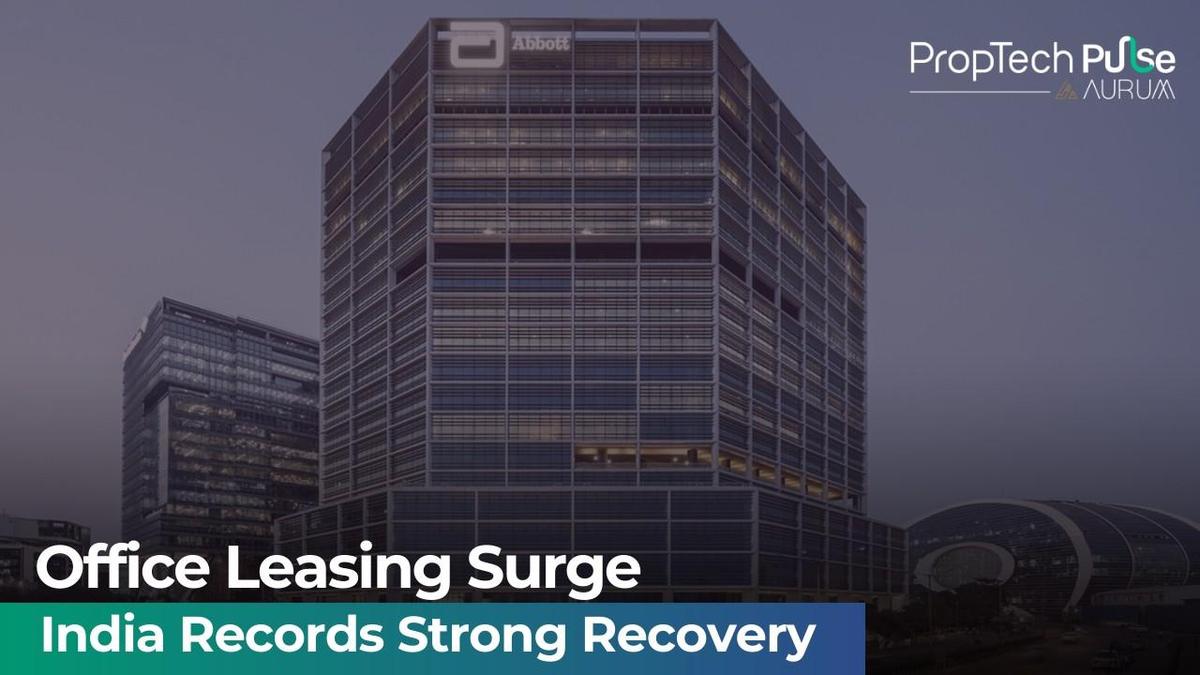
Indian Office Market Hits New Milestone
India’s office real estate sector has delivered a strong performance in 2025, recording nearly 71.5 million square feet of office leasing across major cities. This marks one of the highest annual leasing volumes in recent years and signals a clear recovery in commercial real estate activity after periods of uncertainty.
Key Cities Driving Leasing Activity
Bengaluru, Delhi-NCR, and Mumbai continue to dominate leasing volumes, reinforcing their position as the country’s leading office space markets. These cities benefit from deep talent pools, established business ecosystems, and strong infrastructure, making them preferred destinations for both domestic enterprises and multinational corporations.
Role of Technology and Services Sector
The technology sector remains a major contributor to office demand, with IT services, global capability centres, and technology-led firms accounting for a significant share of absorption. In addition, sectors such as banking, financial services, consulting, and engineering have also expanded their physical footprints, supporting sustained workspace demand.
Hybrid Work Shapes Office Strategy
The rise of hybrid work models has reshaped how companies approach office leasing. Rather than reducing space significantly, many organisations are opting for redesigned workplaces that prioritise collaboration, flexibility, and employee experience. This shift has increased demand for grade-A office spaces that support modern working styles.
Flexible Offices and Co-Working Gain Ground
Flexible office operators and managed workspace providers continue to gain traction in 2025. Enterprises are increasingly using flexible spaces to accommodate project teams, manage headcount fluctuations, and enter new markets quickly. This trend has strengthened the role of flexible office solutions within India’s broader office ecosystem.
Investor Confidence in Commercial Assets
Strong leasing activity has reinforced investor confidence in India’s commercial real estate assets. Office properties are viewed as stable income-generating investments, supported by improving occupancies and long-term leases. Institutional investors continue to allocate capital toward office real estate investments, particularly in core urban markets.
Supply Pipeline and Quality Focus
Developers are responding to demand by accelerating the completion of high-quality office projects while maintaining discipline on new supply. There is a clear focus on sustainability, energy efficiency, and technology-enabled buildings, which aligns with occupier preferences and global standards for modern office infrastructure.
Impact on Urban Real Estate Ecosystem
Strong office leasing has a multiplier effect on surrounding residential and retail markets. Employment growth driven by office expansion supports housing demand, especially in well-connected corridors. This reinforces the integrated nature of urban real estate development across India’s leading cities.
Outlook for the Coming Years
With corporate confidence improving and India remaining a key global outsourcing and services hub, the office market is expected to remain resilient. While leasing volumes may normalise from peak levels, demand for quality office spaces is likely to stay strong, positioning India’s office real estate sector for sustained long-term growth.
Enjoyed this update? Visit PropTech Pulse for more real estate news and market insights.


