
Ask Pulse Ai
Services
Knowledge Hub
Resources
Tools
Ask Pulse Ai
Services







©PropTech Pulse 2025, All rights reserved.

Projected Market Size By 2030
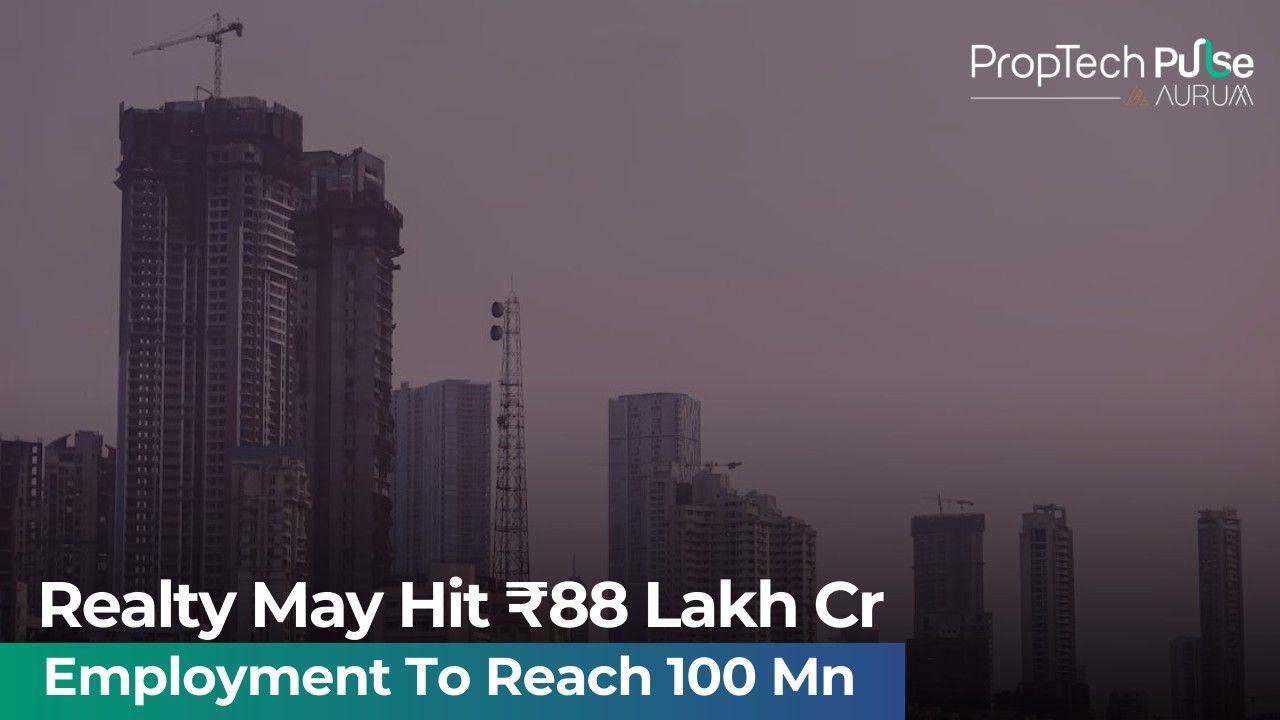
India’s real estate sector is projected to reach ₹88 lakh crore in market size by 2030, reflecting strong long-term growth potential driven by urbanisation, infrastructure development, and rising income levels. The expansion underscores the sector’s evolving role as a key contributor to national economic output and capital formation.
Employment Generation Potential
The report indicates that employment in the real estate ecosystem could touch 100 million jobs by 2030. This includes direct employment in construction, development, and brokerage, as well as indirect roles across allied industries such as cement, steel, logistics, finance, and facility management.
Urbanisation As A Core Growth Driver
Rapid urban migration and expansion of metropolitan regions are expected to fuel sustained housing demand. Growth of Tier 2 and Tier 3 cities, alongside infrastructure upgrades, supports geographically diversified real estate expansion across India.
Residential Segment Momentum
Residential real estate remains a foundational component of the sector’s growth trajectory. Rising homeownership aspirations, improved mortgage accessibility, and structured project launches contribute to steady housing absorption patterns across price categories.
Commercial And Office Expansion
Commercial real estate, particularly office and retail segments, continues to benefit from corporate expansion and global capability centre growth. Demand for Grade A office assets reinforces institutional investment participation within the commercial landscape.
Infrastructure Investment Multiplier Effect
Large-scale infrastructure initiatives, including metro rail networks, highways, and airport development,s are acting as catalysts for real estate growth. Connectivity enhancements strengthen transit-oriented development models and unlock peripheral land value.
Contribution To GDP And Capital Formation
Real estate remains one of the largest contributors to India’s GDP after agriculture. Its projected expansion to ₹88 lakh crore reflects increasing economic integration with financial markets, urban planning, and long-term asset creation.
Role Of Policy And Regulatory Framework
Regulatory reforms, structured compliance mechanisms, and transparency initiatives have strengthened buyer confidence and developer accountability. These measures support market stability and organised sector growth.
Investment And Institutional Interest
Domestic and foreign institutional investors continue to view Indian real estate as a long-term growth asset class. The scale projections reinforce capital inflow potential across residential, commercial, and logistics segments.
Long Term Sector Outlook
If projected growth materialises, the sector’s expansion to ₹88 lakh crore and 100 million jobs would position it as a central pillar of India’s economic transformation. Sustained infrastructure development and urban demand will remain critical determinants of sectoral momentum.
Conclusion
The projection of India’s real estate market reaching ₹88 lakh crore by 2030 highlights its expanding economic footprint. With employment potentially touching 100 million, the sector is poised to play a pivotal role in long-term urban and economic development.
Enjoyed this update? Visit PropTech Pulse for more real estate news and market insights.




Unlock the Latest in Real Estate
News, Infographics, Blogs & More! Delivered to your inbox.