
Services
Knowledge Hub
Resources
Tools
Services







©PropTech Pulse 2025, All rights reserved.

Overall Industry Reaction To Budget 2026
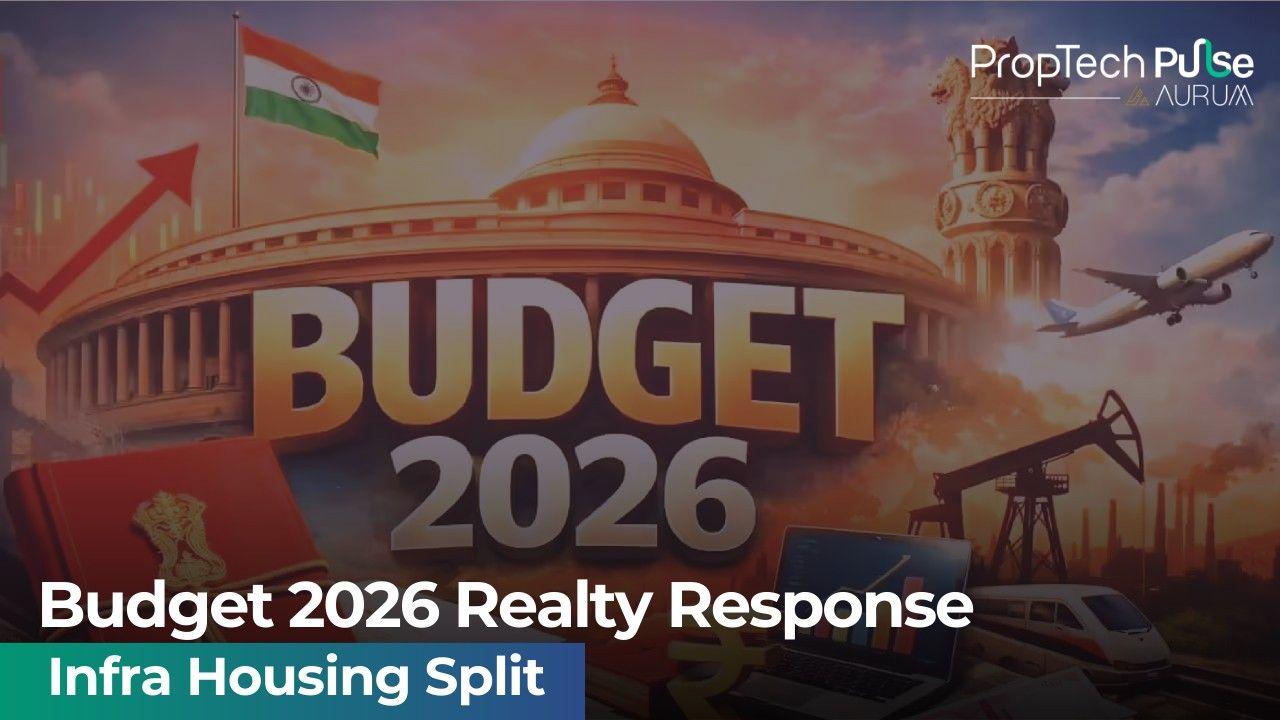
The real estate industry has responded with a measured and mixed reaction to the Union Budget 2026. While stakeholders have acknowledged the government’s continued emphasis on infrastructure development, several segments of the sector have expressed disappointment over the absence of targeted measures for housing demand stimulation.
Infrastructure Push Receives Positive Feedback
Industry participants have welcomed the sustained focus on infrastructure spending, viewing it as a long-term catalyst for real estate growth. Investments in transport, logistics, and urban infrastructure are expected to support regional development, improve connectivity, and indirectly boost residential and commercial property demand.
Limited Direct Support For Housing
Despite the infrastructure emphasis, the article notes that the budget did not introduce significant new incentives for the housing sector. Developers and market observers had expected measures such as enhanced tax benefits for homebuyers or revised affordable housing thresholds, which were not addressed in the budget announcements.
Affordable Housing Expectations Fall Short
Affordable housing players expressed concern that Budget 2026 did not sufficiently address rising construction costs and affordability pressures. The absence of fresh fiscal incentives or subsidy enhancements has raised questions about the pace of affordable housing expansion in the near term.
Impact On Homebuyer Sentiment
From a buyer perspective, the lack of additional tax relief measures may limit immediate demand acceleration. The article suggests that while underlying housing demand remains intact, stronger demand-side incentives could have helped convert fence-sitters into active buyers.
Developer Perspective On Policy Continuity
Some developers have viewed the budget as an exercise in policy continuity rather than expansion. Stability in existing frameworks provides predictability, but industry voices argue that evolving market conditions warrant more proactive interventions to sustain housing momentum.
Regional And Segment Wise Implications
The impact of Budget 2026 is expected to vary across regions and segments. Infrastructure-led development may benefit peripheral and emerging markets, while core urban housing markets may see limited immediate impact due to unchanged fiscal incentives.
Long-Term Versus Short-Term Outcomes
The article highlights a divergence between long-term optimism and short-term caution. Infrastructure investments are seen as structurally positive, but the absence of near-term housing stimulus could moderate residential market growth over the coming quarters.
Industry Outlook Post Budget
As we advance, industry stakeholders are likely to focus on the execution of announced infrastructure projects and monitor any follow-up policy measures. The real estate sector continues to seek a balanced approach that combines infrastructure development with direct housing support.
Conclusion
Budget 2026 has drawn a mixed response from the real estate sector, with appreciation for infrastructure focus tempered by concerns over limited housing-specific incentives. While long-term fundamentals remain supportive, industry participants believe targeted housing measures could strengthen near-term market momentum.
Enjoyed this update? Visit PropTech Pulse for more real estate news and market insights.




Unlock the Latest in Real Estate
News, Infographics, Blogs & More! Delivered to your inbox.