
Ask Pulse Ai
Services
Knowledge Hub
Resources
Tools
Ask Pulse Ai
Services







©PropTech Pulse 2025, All rights reserved.

Context Of The Lakshadweep Debate
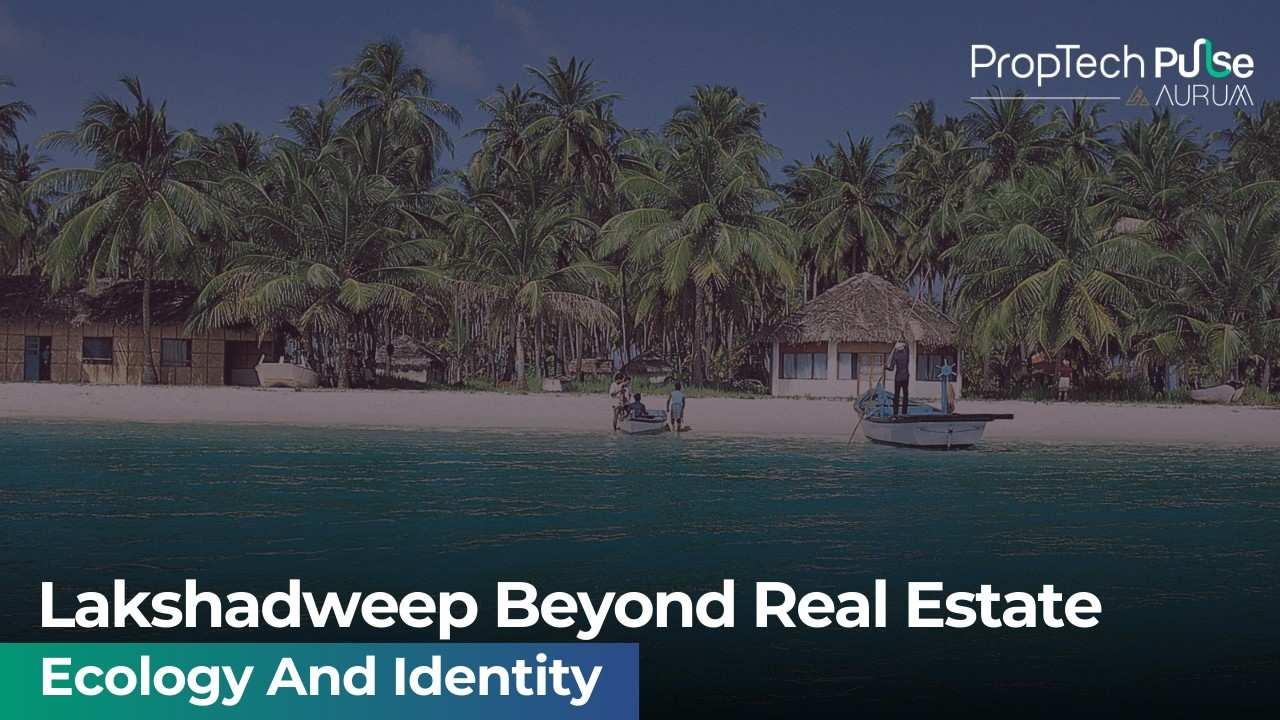
The article addresses growing discourse around Lakshadweep, cautioning against viewing the islands primarily through a real estate or commercial development lens. It argues that reducing Lakshadweep to land value overlooks its fragile ecology, unique culture, and long-term sustainability challenges.
Ecological Sensitivity Of The Islands
Lakshadweep consists of coral atolls that are environmentally delicate and highly vulnerable to climate change. The article highlights that unchecked development could irreversibly damage coral reefs, marine biodiversity, and coastal stability, which are central to the islands’ survival.
Limits Of Large Scale Construction
Unlike mainland regions, Lakshadweep has a limited carrying capacity in terms of infrastructure, water resources, and waste management. The editorial stresses that large-scale real estate or tourism projects could strain ecosystems beyond recovery, making conventional development models unsuitable.
Cultural And Social Identity
The islands are home to close-knit communities with distinct cultural, social, and religious practices. The article underlines that development decisions must respect local identity and community-led priorities, rather than imposing externally driven economic agendas.
Tourism Versus Preservation Balance
Tourism offers economic opportunity but also poses environmental risks. The editorial suggests that Lakshadweep requires low-impact, regulated tourism models that prioritise conservation over volume-driven visitor growth.
Real Estate As A Misleading Metric
Framing Lakshadweep in terms of real estate potential risks normalises speculative thinking. The article argues that land on the islands cannot be treated like urban property because environmental cost far outweighs commercial valuation.
Lessons From Other Island Regions
The editorial draws parallels with island regions globally, where aggressive development has led to ecological degradation and displacement. These examples serve as warnings that short-term economic gains can result in long-term losses.
Policy Responsibility And Governance
Governments and planners carry a responsibility to adopt precautionary approaches. The article stresses that policymaking should be guided by scientific assessment, environmental safeguards, and community consent, rather than market-driven incentives.
Long Term Sustainability Imperative
Sustainable development in Lakshadweep must prioritise resilience, conservation, and livelihoods compatible with the natural environment. The editorial positions sustainability not as an option, but as a necessity for the islands’ continued existence.
Conclusion
The article concludes that Lakshadweep should not be reduced to a real estate narrative. Its value lies in its ecosystems, people, and cultural heritage, demanding a development approach rooted in responsibility, restraint, and long-term stewardship.
Enjoyed this update? Visit PropTech Pulse for more real estate news and market insights.




Unlock the Latest in Real Estate
News, Infographics, Blogs & More! Delivered to your inbox.