
Services
Knowledge Hub
Resources
Tools
Services







©PropTech Pulse 2025, All rights reserved.

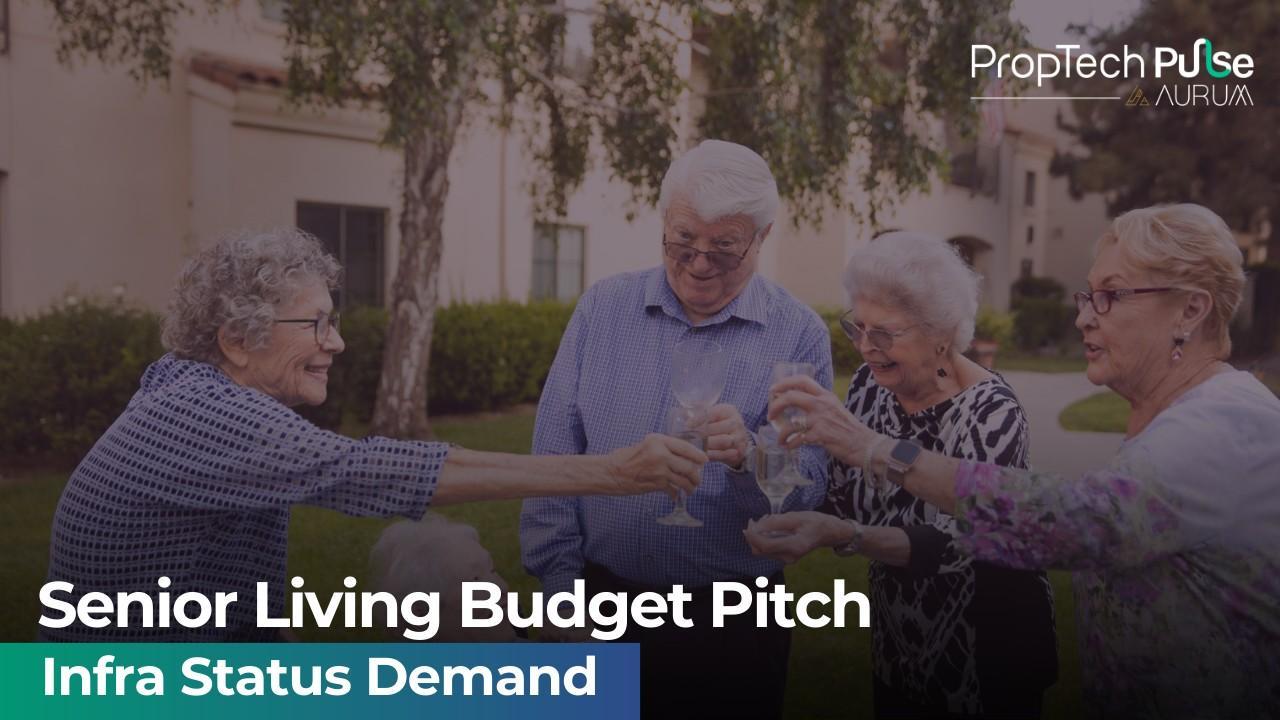
Budget 2026 Context for Senior Living
As preparations for Union Budget 2026 gather pace, senior living real estate has emerged as a focused area of policy discussion. Industry participants are highlighting the need for targeted support to address India’s ageing population and the growing demand for specialised housing solutions designed for senior citizens.
Push for Infrastructure Status
Senior living developers are pitching for infrastructure status for the sector, arguing that such recognition would improve access to long-term, lower-cost financing. Infrastructure classification typically enables easier credit availability, longer repayment tenures, and improved project viability, which are particularly important for capital-intensive senior housing developments.
Rationale Behind the Demand
The article notes that senior living projects involve higher upfront costs due to specialised design, healthcare integration, safety features, and community amenities. Without infrastructure status, developers often face higher borrowing costs, which can impact pricing and scalability. Industry voices suggest that formal recognition would help align senior living with other long-term social infrastructure assets.
Pension-Linked Financial Products Proposal
Another key demand ahead of Budget 2026 is the introduction of pension-linked investment and purchase products for senior housing. The sector believes that linking pension income streams with housing solutions could improve affordability and provide financial security for retirees while ensuring predictable cash flows for developers and operators.
Addressing the Needs of an Ageing Population
India’s demographic profile is gradually shifting, with a rising share of elderly citizens requiring age-appropriate housing and assisted living options. The article highlights that senior living is no longer a niche concept but an emerging segment that addresses healthcare access, social engagement, and independent living needs in a structured manner.
Policy Support and Regulatory Clarity
Industry stakeholders are also seeking clearer regulatory frameworks for senior living projects. Uniform definitions, guidelines, and standards across states could reduce uncertainty and encourage greater participation from organised developers. Such clarity is seen as essential for building trust among residents and investors alike.
Investment and Financing Implications
Granting infrastructure status and enabling pension-linked products could attract institutional and long-term capital into the sector. Senior living assets typically operate on annuity-style models, making them suitable for patient capital seeking stable returns. Enhanced policy support could therefore improve investment depth and sector sustainability.
Comparison With Global Practices
The article references global precedents where senior housing is treated as a form of social or healthcare infrastructure. In many mature markets, such projects benefit from policy incentives and long-term financing structures, supporting scale and professional management. Industry participants believe similar approaches could be adapted to Indian conditions.
Outlook for Senior Living Real Estate
With supportive measures in Budget 2026, the senior living segment could move toward faster adoption and wider geographic presence. Policy recognition and financial innovation are expected to play a critical role in transitioning the sector from early-stage development to mainstream real estate activity.
Conclusion
The demands raised by senior living real estate players ahead of Budget 2026 underline the sector’s growing relevance within India’s housing ecosystem. Infrastructure status and pension-linked products are seen as key enablers for scaling senior housing, improving affordability, and meeting the long-term needs of an ageing population.
Enjoyed this update? Visit PropTech Pulse for more real estate news and market insights.




Unlock the Latest in Real Estate
News, Infographics, Blogs & More! Delivered to your inbox.