New Launch - India Real Estate Report 2026.

Services
Knowledge Hub
Resources
Tools

Ask Pulse Ai
Services
FOR BUYERS & RENTERS
FOR REAL ESTATE DEVELOPERS








Refer other Connectors &
Multiply IncomeRefer other Connectors
& Multiply Income
Refer KuberX & earn
commission on every
loan they get
disbursed.


Scan & Download
©PropTech Pulse 2025, All rights reserved.

AI Agent

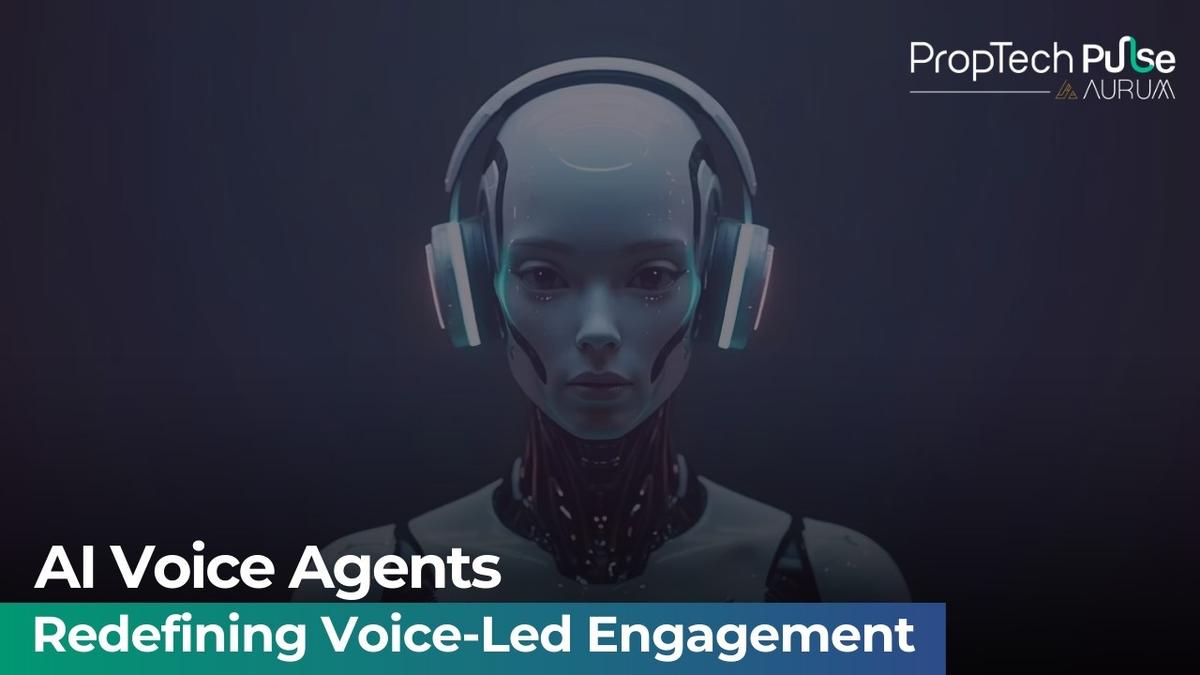
Why Voice Is Becoming the Next Competitive Advantage in PropTech
Real estate has always been a people-first business. Conversations, trust, responsiveness, and timing play a decisive role in whether a lead converts or quietly drops off. Yet, as the industry scales across geographies, channels, and digital touchpoints, one paradox has become increasingly clear: human-led voice engagement does not scale efficiently.
In a world where property inquiries arrive 24/7 through portals, campaigns, inbound calls, missed calls, and WhatsApp nudges, traditional call centres and sales teams are under growing pressure. Speed-to-Lead expectations have collapsed from hours to minutes, sometimes seconds. Meanwhile, customer patience has declined sharply, influenced by on-demand digital experiences in fintech, e-commerce, and travel.
This is where AI Voice Agents are emerging as a transformational layer within the PropTech stack, bridging the gap between automation and human-like interaction.
The Voice Gap in Modern Real Estate Operations
Despite rapid digitisation, voice remains the most critical and most strained touchpoint in real estate.
Across global markets, developers, brokerages, and allied real estate businesses face similar operational challenges:
- High inbound call volumes during campaigns and launches
- Missed calls outside business hours
- Delayed follow-ups leading to cold leads
- Inconsistent customer experience across agents and regions
- Rising costs of sales and support teams
- Limited visibility into call quality and lead intent
While CRMs, chatbots, and marketing automation tools have solved parts of the funnel, voice interactions have largely remained manual, fragmented, and expensive.
The result is a widening execution gap between customer expectations and enterprise capability.
Enter AI Voice Agents: What They Are, and What They Are Not
AI Voice Agents are not IVRs.
They are not pre-recorded scripts.
And they are not basic call routing systems.
Modern AI Voice Agents use Conversational AI, Natural Language Processing, and contextual intelligence to engage users in fluid, human-like dialogue, while remaining tightly integrated with enterprise systems such as CRMs, lead managers, and telephony platforms.
At a high level, an AI Voice Agent can:
- Answer inbound calls instantly
- Understand intent rather than keywords
- Respond conversationally, not mechanically
- Handle objections and follow-up questions
- Capture and update lead data automatically
- Schedule site visits or callbacks
- Escalate high-intent leads to human teams
Crucially, these agents are designed to operate continuously, without fatigue, downtime, or performance inconsistency.
Why Voice Automation Matters More Than Chat in Real Estate
While chatbots and WhatsApp automation have gained traction, Voice Automation continues to outperform text in real estate for several reasons:
Complex decision-making
Property decisions involve budget, location, financing, timelines, and family considerations - better addressed through conversation than clicks.
Trust and reassurance
Voice builds emotional confidence, especially for high-value transactions.
Speed of clarification
A two-minute call can replace ten chat messages.
Demographic diversity
Voice works across age groups, literacy levels, and regions.
AI Voice Agents bring automation into this high-impact channel without sacrificing the conversational advantage.
Use Cases Across the Real Estate Value Chain
1. Developers and Large Projects
For developers running national or multi-city campaigns, AI Voice Agents act as a frontline engagement layer.
Typical use cases include:
- Handling thousands of inbound calls during launches
- Qualifying leads before routing to sales teams
- Providing instant project information
- Booking site visits automatically
- Reducing dependency on temporary call-center staffing
The outcome is faster response times, higher Lead Conversion, and better sales productivity.
2. Brokerages and Channel Partners
Broker-led ecosystems depend heavily on speed and follow-up discipline. AI Voice Agents help brokerages:
- Ensure zero missed calls
- Auto-follow up with unresponsive leads
- Maintain consistent messaging across agents
- Capture intent signals for prioritisation
For brokers operating across listings and developers, this consistency becomes a strategic advantage.
3. Leasing, Co-Living, and Property Management
In rental-heavy models, call volumes spike around availability, pricing, and scheduling.
AI Voice Agents can:
- Answer availability queries instantly
- Share rental terms and policies
- Schedule property visits
- Handle post-lease service calls at scale
This reduces operational friction while maintaining service quality.
4. Housing Finance and Allied Services
Mortgage providers, housing finance firms, and real-estate-adjacent services benefit from AI voice automation for:
- Lead qualification
- Document follow-up reminders
- Status updates
- Pre-screening eligibility conversations
Voice automation here improves conversion without overburdening sales teams.
From Cost Center to Growth Lever
Historically, voice operations in real estate were treated as cost centres - necessary but inefficient.
AI Voice Agents change this equation by:
- Improving speed-to-lead, directly impacting conversions
- Increasing lead coverage without proportional cost increases
- Standardising customer experience
- Freeing human agents for high-intent, high-value conversations
This reframes voice from a support function into a revenue-enabling capability.
Multilingual Voice: Expanding Market Reach
One of the most underutilised growth levers in global real estate is language accessibility.
For enterprises operating across geographies or targeting diverse buyer segments, multilingual voice engagement significantly expands reach while preserving consistency.
Data, Intelligence, and Decision-Making
Unlike human calls that often leave fragmented notes, AI Voice Agents generate Structured Data.
This includes:
- Call transcripts
- Intent classification
- Lead qualification scores
- Frequently asked questions
- Drop-off reasons
- Objection patterns
Over time, this data becomes a strategic asset - informing marketing strategy, sales scripts, pricing communication, and product positioning.
Trust, Security, and Enterprise Readiness
As voice automation scales, concerns around data privacy, security, and reliability naturally follow.
Enterprise-grade AI Voice Agents are designed with:
- Secure data handling protocols
- Controlled integrations with CRMs
- Audit-friendly conversation logs
- Configurable workflows and permissions
This makes them suitable not just for startups, but for large developers, institutional platforms, and regulated allied sectors.
The Human + AI Model: Not Replacement, but Reinforcement
A critical misconception around AI voice technology is that it replaces human teams.
In practice, the most effective deployments follow a human + AI model:
- AI handles volume, speed, and repetition
- Humans handle empathy, negotiation, and closure
This hybrid approach enhances morale, mitigates burnout, and boosts overall team effectiveness.
Why AI Voice Agents Are Becoming a Strategic Imperative
As competition intensifies and customer acquisition costs rise, real estate enterprises can no longer afford slow response times, inconsistent engagement, or missed opportunities.
AI Voice Agents address a core operational truth:
Growth is limited not by demand but by execution capacity.
By automating the most time-sensitive and repetitive layer of customer interaction, AI voice technology enables businesses to scale without losing the human touch.
The Role of Pulse AI Voice Agent in This Evolution
Within this broader shift, Pulse AI Voice Agent represents a real-estate-focused approach to Smart Automation, built around the realities of property sales, leasing, and allied services rather than generic call handling.
Its relevance lies not in replacing teams, but in making real estate conversations faster, smarter, and more consistent at scale.
Looking Ahead: Voice as the New Voice Interface
As AI matures, voice is becoming an increasingly primary interface between enterprises and customers, especially in high-consideration industries such as real estate.
The question is no longer whether voice automation will be adopted, but how intelligently it will be implemented.
Enjoyed this blog article? Visit PropTech Pulse for more interesting blogs.





Ask Pulse Ai anything about real estate

Unlock the Latest in Real Estate
News, Infographics, Blogs & More! Delivered to your inbox.