






PropTech, or Property Technology, is the application of technology to innovate and improve real estate services. Examples include online property listing platforms like MagicBricks and 99acres in India, which simplify the buying and renting process. Virtual reality offers immersive property tours, while blockchain technology ensures secure and transparent transactions. Other examples are AI-powered data analytics for market insights and augmented reality apps for virtual property staging. These technologies are driving digital transformation in the real estate industry.

Investment Opportunities
The size of rental market in India is estimated to be USD 13.9 Bn by 2025. Around 50% of this is attributed to the Gen-Z population, and 30% to the millennial population. Demographic profile of India’s work force, changing behaviour of gen-Z and millennials, rapid urbanisation, digital behaviour and capital allocators preference are the five key factors are driving this increased trend in rental real estate. Demographic profile of the work force Around 52% of the Indian population comprises of Gen-Z and Millennials. In 2023, millennials constituted 70% of the Indian work force have emerged as the backbone of many Indian companies. Indian technology sector workforce comprises of 86% to 90% of Gen-Z and Millennial work force. The innate behavioural traits, real estate requirement patterns, lifestyles and purchasing power are often intrinsic to their nature of real estate consumption patterns. Changing behaviour of gen-Z and millennials. Internet penetration has shaped the consumer across industries including real estate. 50% of Gen Zs and millennials say they live paycheck to paycheck with high cost of living is their top societal concern. Big life decisions like buying a house and starting a family are often postponed to later stage. Ability to maintain a positive work/life balance and not live their life on their own terms, and not necessarily to live up to societal expectations. This has shifted the consumption pattern of with increasing demand for rental real estate. The behavioural pattern of consumers of community and experiential living with a value that meets their pocket has given rise to the Co-Living segment. Rapid urbanisation Industrial growth, rise of services sector has shaped rapid urbanisation. In India, contribution component of urban growth is segmented into three categories according to a study by International Institute for Population Sciences. In India, it is estimated that more than 500 million individuals, i.e. approximately 35% of the population stays in urban areas. As the decade progresses, India will witness addition of 100 million urban dwellers, which will further rise to 60% by 2050. (Ref: Macrotrends, Urban Development Ministry, Govt. of India) It is estimated that 28% of the urban households stay in rental housing. This number shall be higher in mega cities. The demand for rental living, is 5.7 million units across top 30 cities (Tier I, II, II) in the country -comprising of working singles living on rent (migrants and domicile) and unmarried student population. This together adds up to 5.7 million across top 30 cities (Tier I, II and III) in the country. Digital behaviour of consumers: There is a remarkable increase in internet penetration, adoption and consumption across enterprises and consumers in India. 700 Mn internet users across the country, 470 Mn social media users and 350 Mn digital payment users. 80% of digital consumers in India prefer searching and discovering new products online before visiting physical stores or seeking offline. 69% of digital consumers prefer digital communications for customer support and interactions. Convenience, value and trust are key drivers across most internet platforms with Capital allocators preference for real estate supply The sector interest has increased after a funding winter for two straight years. Investments in the sector dropped from USD 148 million in 2021 to USD 21.7 million in 2022 and USD 6 million in 2023. With strong fundamental demand backed by urbanisation, consumer behaviour and digitisation, institutional investors and global funds favour co-living and data centres as an alternative asset class. The understanding of private equity funds is also well defined in international markets where co-living is a mature sector. Recently, Singapore’s CapitaLand Investment announced CLARA II: A $600 Million private equity fund for serviced apartments and co-living properties. Brookfield Asset Management, which has a real estate AUM of USD 690 billion globally is also looking to invest more in the coliving, rental housing and serviced apartment asset class.
7th March 2024

Digital Transformation
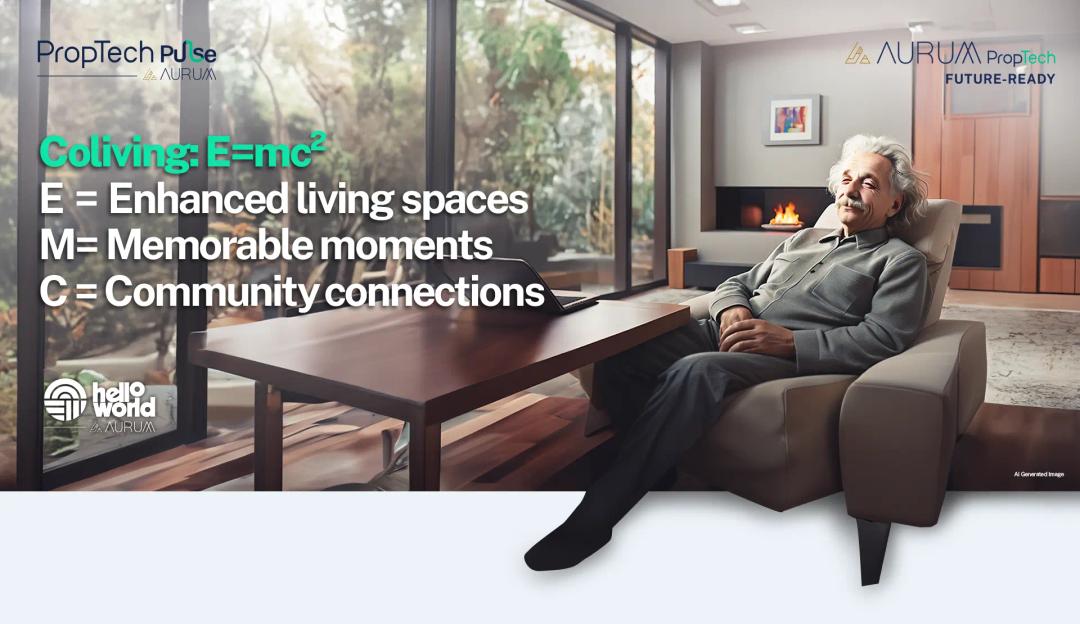
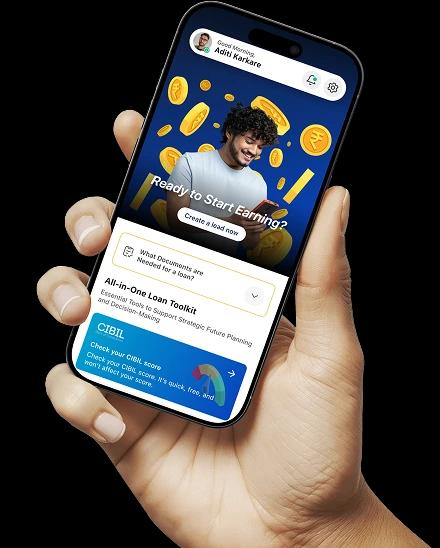
Dear Young Albert, I hope this letter finds you well, filled with the same curiosity and wonder that has always driven you. As I reflect on the world today, I can't help but think about how much has changed since my time, especially in the realm of communal living which might seem quite intriguing to you. You see, much like the principles of relativity that I delved into in my time, co-living operates on the idea of interconnectedness. Just as I discovered that the laws of physics are the same for all observers, regardless of their relative motion, co-living emphasizes the equality and inclusivity of all residents. Regardless of background or circumstance, everyone contributes to and benefits from the community space. These co-living spaces foster a sense of belonging and support that is invaluable, especially in today's fast-paced world. Just as I contemplated the effects of gravity on the motion of celestial bodies, consider the "community gravity" within a co-living space — the connections and relationships that draw residents together, enriching their lives in ways they never thought possible. Moreover, in these co-living spaces, one finds a beautiful confluence of diversity. Each resident brings their own unique perspective, skills, and passions to the table. Just as I theorized that the curvature of spacetime depends on the distribution of mass and energy, the social "space" within a co-living community is shaped by the collective presence of its members. This diversity creates an environment ripe for collaboration, innovation, and personal growth. Young Albert, Technology has altered Co-living manifold enabling students and young professionals discover, access and live in shared spaces at a touch of their fingertips. We individuals, each with their unique stories, come together to create a community unlike any other. It's not just about sharing physical space; it's about sharing ideas, dreams, and aspirations. So, my dear young Albert, as I continue to explore the wonders of the universe co-living has given me an opportunity to connect with likeminded others, to learn from them, and to grow together. Remember that just as the universe is vast and ever-expanding, so too are the opportunities for meaningful connections and shared experiences in the world around you. With warm regards, Your Future Self
15th March 2024

Technology and Innovation
‘‘The purpose of a business is to create and keep a customer’’, Peter Drucker, a famous writer, and management consultant said prolifically. The realm of CRM scope covers customer discovery, interactions, service, care, retention, and loyalty. The term Customer Relationship Management (CRM) was coined in the early 1970s when management at business units realized it would be better to be customer emphatic rather than product emphatic. Customer relationship management tools has evolved gradually from Rolodex’s of 1950s to Generative AI in 2020. What started as a record-keeping tool gradually evolved into digital documentation, sales automation, enterprise resource planning, social marketing, to the present age hyper personalised automated communication form. 1956 - First CRM Gadget - Rolodex In 1956s, Danish engineer Hildaur Neilsen, chief engineer of Zephyr American invented Rolodex, a card index system used to store customer contact information. It was a desk gadget that stacked and stored business cards and index cards that people could spin and flip through. Digital Rolodex, Tele sales and advent of computers The 1980s saw an evolution in sales, marketing and customer retention tactics with the advent of digitisation. Tools such as direct mail, brochures, and product catalogues being sent to a database of customers to get them to buy something were prevalently used in the 1980s. Database marketing and digital Rolodex came to the fore. The late 1980s saw the advent of telesales for customer communication. Computers were also accessible for enterprises and became a means of storing information about customers. In 1987, the software programme ACT (Activity Control Technology) was created by Mike Sullivan and Mitch Muhney, officially known as the first CRM software. This was essentially a digital Rolodex that allowed storage and management of the entire customer lifecycle information on the software. With its usage of Customer Relationship Management software, Act! demonstrated the advantages of scalable software that utilized consumer information to help a firm better manage its connections. 1990 - Sales Automation and progression into CRM systems By 1990s, one saw a progression of database management into customer lifecycle management and sales force workflow automation. Tools like enterprise resource planning, and marketing were added to the software’s contact management functions. This was the emergence first CRM systems. Tom Siebel, founder of Sieble Systems, coined the term CRM (Customer Relationship Software) for the first time. The post-introduction of the same CRM took off exponentially, with other companies also providing CRM solutions. Siebel Systems was later acquired by Oracle for over USD 5 billion in 2005. Late 1900s - First Mobile CRM, SaaS business model and Salesforce Inc. Post invention of PDA (Personal Digital Assistant) devices, tasks, emails, and calendar management became mobile. It allowed sales individuals to access customer data from central databases on the go, which proved to be a game changer as one didn’t have to be on the desk to work out these tasks. Salesforce.com was launched in 1999 and offered a new business model, offering software services as subscriptions (SaaS), wherein the upfront implementation cost, effort, and maintenance would be taken care of by Salesforce. 2000 - Cloud based CRM, Open-Source CRM and Social CRM In 2007, internet boom and cloud storage led to the advent and proliferation of Cloud-based CRM. With the increased internet adoption, Salesforce’s subscription model became popular as it could be scaled up very quickly. Open-source software also came to the fore, with the most prominent one being Sugar CRM, invented by computer scientists and ex-IBM and Hewlett-Packard employees Clint Oram, John Roberts, and Jacob Taylor. With the increased proliferation, and exponential growth of social media platforms, CRMs were combined with social media tools to offer SCRM. 2010 - Artificial Intelligence and CRM Artificial intelligence (AI) has changed the CRM space substantially with automation and intelligence. AI can be used for lead scoring, identifying customer needs, and providing recommendations. With enormous data being generated across every consumer by way of their digital footprint, CRM with AI and data analytics makes it simple to extrapolate consumer behaviour and requirements in real-time. 2020 and Now - Generative AI Generative AI is a subset of AI but unique in its ability to learn from underlying patterns to create new data that mirrors the training data set. The power of creation has a multifold impact across industries, and consumer communication is only to benefit from this capability. Managing customer interactions with Gen AI has the potential to enable a better connection between brands and customers. This however requires creative ability to engage customers and ability to execute to deliver better performance results and employee experiences. A combination of Gen AI and CRM can impact functional domains of marketing, sales, commerce, service and customer success. The true potential of Gen AI can be unlocked best when used in combination with predictive AI, voice to text, experience management and workflow optimisation. The CRM journey has reached an interesting point with AI, and the future looks promising for this space. The Total Addressable Market is set to grow to USD 290 billion by 2026. Salesforce Inc, an early mover, and a global market leader grew 10x in revenue in a decade. In 2013, its revenue stood at USD 3.1 billion which stands at USD 34 billion in FY 2022. CRM, which started as a simple Rolodex, has evolved into a complex system laced with artificial intelligence that helps organisations manage customer data and engage them with it in a self-assisted automated format, bringing huge implications for cost, efficiency, and the experience of consumer communication. As we advance further into the coming decades, CRM software systems will become more intelligent, integrated and intuitive with powerful AI capabilities, greater emphasis on self-service, enhanced experience for customers, hyper-personalisation, integrated API networks and ecosystems, and a single source of truth for businesses. Peter Drucker will be smiling in his grave looking at the advancement in this space.
12th April 2024

Investment Opportunities
The size of rental market in India is estimated to be USD 13.9 Bn by 2025. Around 50% of this is attributed to the Gen-Z population, and 30% to the millennial population. Demographic profile of India’s work force, changing behaviour of gen-Z and millennials, rapid urbanisation, digital behaviour and capital allocators preference are the five key factors are driving this increased trend in rental real estate. Demographic profile of the work force Around 52% of the Indian population comprises of Gen-Z and Millennials. In 2023, millennials constituted 70% of the Indian work force have emerged as the backbone of many Indian companies. Indian technology sector workforce comprises of 86% to 90% of Gen-Z and Millennial work force. The innate behavioural traits, real estate requirement patterns, lifestyles and purchasing power are often intrinsic to their nature of real estate consumption patterns. Changing behaviour of gen-Z and millennials. Internet penetration has shaped the consumer across industries including real estate. 50% of Gen Zs and millennials say they live paycheck to paycheck with high cost of living is their top societal concern. Big life decisions like buying a house and starting a family are often postponed to later stage. Ability to maintain a positive work/life balance and not live their life on their own terms, and not necessarily to live up to societal expectations. This has shifted the consumption pattern of with increasing demand for rental real estate. The behavioural pattern of consumers of community and experiential living with a value that meets their pocket has given rise to the Co-Living segment. Rapid urbanisation Industrial growth, rise of services sector has shaped rapid urbanisation. In India, contribution component of urban growth is segmented into three categories according to a study by International Institute for Population Sciences. In India, it is estimated that more than 500 million individuals, i.e. approximately 35% of the population stays in urban areas. As the decade progresses, India will witness addition of 100 million urban dwellers, which will further rise to 60% by 2050. (Ref: Macrotrends, Urban Development Ministry, Govt. of India) It is estimated that 28% of the urban households stay in rental housing. This number shall be higher in mega cities. The demand for rental living, is 5.7 million units across top 30 cities (Tier I, II, II) in the country -comprising of working singles living on rent (migrants and domicile) and unmarried student population. This together adds up to 5.7 million across top 30 cities (Tier I, II and III) in the country. Digital behaviour of consumers: There is a remarkable increase in internet penetration, adoption and consumption across enterprises and consumers in India. 700 Mn internet users across the country, 470 Mn social media users and 350 Mn digital payment users. 80% of digital consumers in India prefer searching and discovering new products online before visiting physical stores or seeking offline. 69% of digital consumers prefer digital communications for customer support and interactions. Convenience, value and trust are key drivers across most internet platforms with Capital allocators preference for real estate supply The sector interest has increased after a funding winter for two straight years. Investments in the sector dropped from USD 148 million in 2021 to USD 21.7 million in 2022 and USD 6 million in 2023. With strong fundamental demand backed by urbanisation, consumer behaviour and digitisation, institutional investors and global funds favour co-living and data centres as an alternative asset class. The understanding of private equity funds is also well defined in international markets where co-living is a mature sector. Recently, Singapore’s CapitaLand Investment announced CLARA II: A $600 Million private equity fund for serviced apartments and co-living properties. Brookfield Asset Management, which has a real estate AUM of USD 690 billion globally is also looking to invest more in the coliving, rental housing and serviced apartment asset class.
7th March 2024

Digital Transformation
Dear Young Albert, I hope this letter finds you well, filled with the same curiosity and wonder that has always driven you. As I reflect on the world today, I can't help but think about how much has changed since my time, especially in the realm of communal living which might seem quite intriguing to you. You see, much like the principles of relativity that I delved into in my time, co-living operates on the idea of interconnectedness. Just as I discovered that the laws of physics are the same for all observers, regardless of their relative motion, co-living emphasizes the equality and inclusivity of all residents. Regardless of background or circumstance, everyone contributes to and benefits from the community space. These co-living spaces foster a sense of belonging and support that is invaluable, especially in today's fast-paced world. Just as I contemplated the effects of gravity on the motion of celestial bodies, consider the "community gravity" within a co-living space — the connections and relationships that draw residents together, enriching their lives in ways they never thought possible. Moreover, in these co-living spaces, one finds a beautiful confluence of diversity. Each resident brings their own unique perspective, skills, and passions to the table. Just as I theorized that the curvature of spacetime depends on the distribution of mass and energy, the social "space" within a co-living community is shaped by the collective presence of its members. This diversity creates an environment ripe for collaboration, innovation, and personal growth. Young Albert, Technology has altered Co-living manifold enabling students and young professionals discover, access and live in shared spaces at a touch of their fingertips. We individuals, each with their unique stories, come together to create a community unlike any other. It's not just about sharing physical space; it's about sharing ideas, dreams, and aspirations. So, my dear young Albert, as I continue to explore the wonders of the universe co-living has given me an opportunity to connect with likeminded others, to learn from them, and to grow together. Remember that just as the universe is vast and ever-expanding, so too are the opportunities for meaningful connections and shared experiences in the world around you. With warm regards, Your Future Self
15th March 2024


News, Infographics, Blogs & More! Delivered to your inbox.