
Ask Pulse Ai
Services
Knowledge Hub
Resources
Tools
Ask Pulse Ai
Services







©PropTech Pulse 2025, All rights reserved.

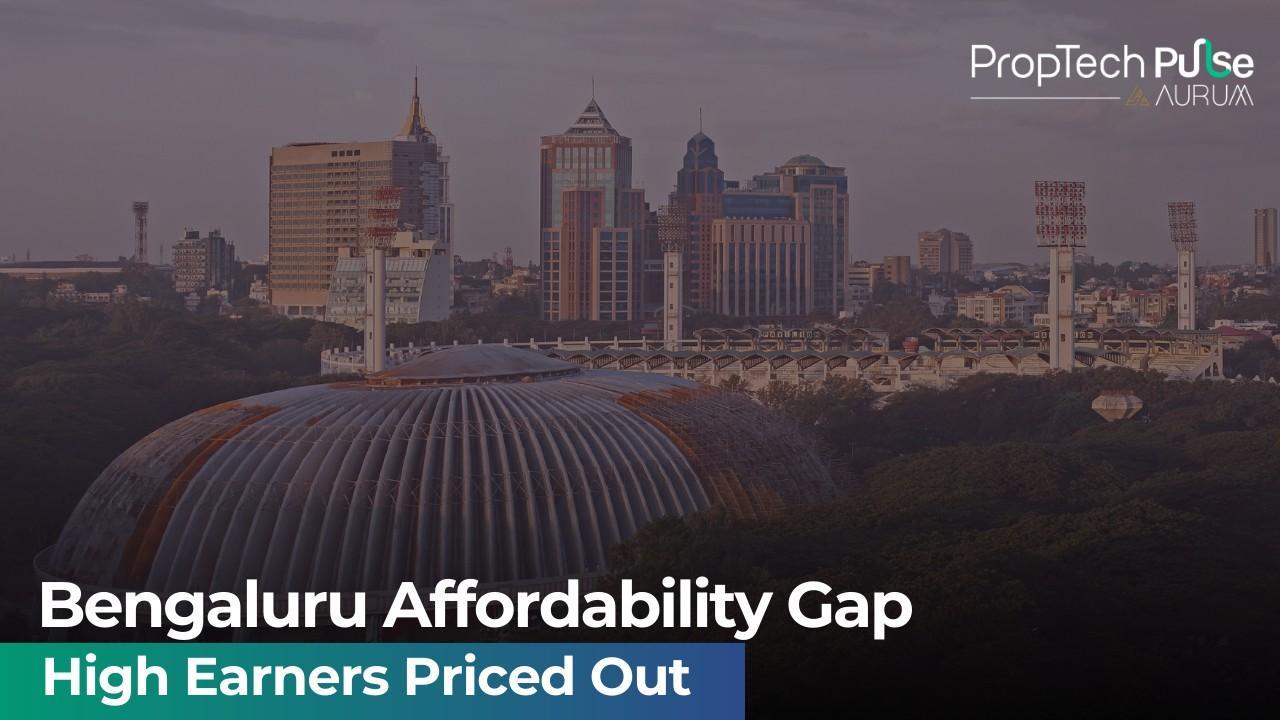
Rising Prices In Bengaluru’s Key Micro Markets
Bengaluru’s residential market has witnessed steady price appreciation across major employment corridors, particularly in established and infrastructure-led micro-markets. Premium launches, limited land supply in core zones, and sustained end-user demand have contributed to elevated price benchmarks that are increasingly stretching affordability, even for high-income households.
Income Growth Versus Property Price Movement
While salaries in the technology and startup ecosystem remain competitive, income growth has not matched the pace of property price increases in several prime locations. This divergence has widened the affordability gap, making down payments and EMI commitments significantly higher relative to annual earnings, reinforcing structural affordability pressures.
Role Of Large Down Payments
High property prices translate into substantial upfront capital requirements. Even well-compensated professionals may find it challenging to accumulate large down payments without liquidating investments or taking on additional leverage, underscoring capital intensity in urban homeownership.
Impact Of Home Loan Eligibility Limits
Loan eligibility is typically determined by income-to-EMI ratios, which cap borrowing capacity despite strong salaries. In high-value markets, eligible loan amounts may fall short of prevailing property prices, requiring larger personal contributions and limiting purchase options, resulting in reduced effective buying power.
Shift Toward Peripheral Locations
As central and well-connected neighbourhoods become increasingly expensive, many high-income professionals are exploring emerging peripheral areas. These zones offer relatively lower entry prices and larger unit sizes, though they may involve longer commute times, highlighting trade-offs between affordability and connectivity.
Preference For Renting Over Buying
Given current price levels, some high earners are opting to rent rather than purchase, especially when rental yields remain comparatively moderate. Renting offers flexibility and lower immediate capital outlay, allowing individuals to preserve liquidity while reassessing long-term housing plans, reinforcing rational financial decision-making.
Influence Of Infrastructure Led Price Appreciation
Metro expansions, improved road connectivity, and commercial growth have driven property appreciation in select corridors. Infrastructure-led demand strengthens long-term value but also raises entry costs, contributing to price escalation in high-demand zones.
Investor Participation And Market Dynamics
Sustained participation from investors and NRI buyers in certain segments has supported pricing resilience. Competition for limited high-quality inventory further intensifies affordability constraints, particularly in premium projects, leading to tighter supply conditions in desirable locations.
Financial Planning Considerations For Buyers
High-income professionals evaluating home purchases must weigh EMI commitments against lifestyle expenses, investment goals, and risk tolerance. A disciplined assessment of tenure, interest rates, and long-term liquidity helps ensure sustainable homeownership decisions.
Long Term Market Implications
The widening affordability gap may gradually influence product configuration, with developers exploring mid-size units and phased pricing strategies. Over time, market equilibrium could emerge through supply adjustments, supporting balanced growth between income levels and housing costs.
Conclusion
Bengaluru’s rising property prices are reshaping affordability dynamics, even for top earners. While income levels remain strong, rapid price appreciation in key micro-markets has made homeownership more capital-intensive, underscoring the evolving affordability challenge in urban real estate.
Enjoyed this update? Visit PropTech Pulse for more real estate news and market insights.




Unlock the Latest in Real Estate
News, Infographics, Blogs & More! Delivered to your inbox.