
Ask Pulse Ai
Services
Knowledge Hub
Resources
Tools
Ask Pulse Ai
Services







©PropTech Pulse 2025, All rights reserved.

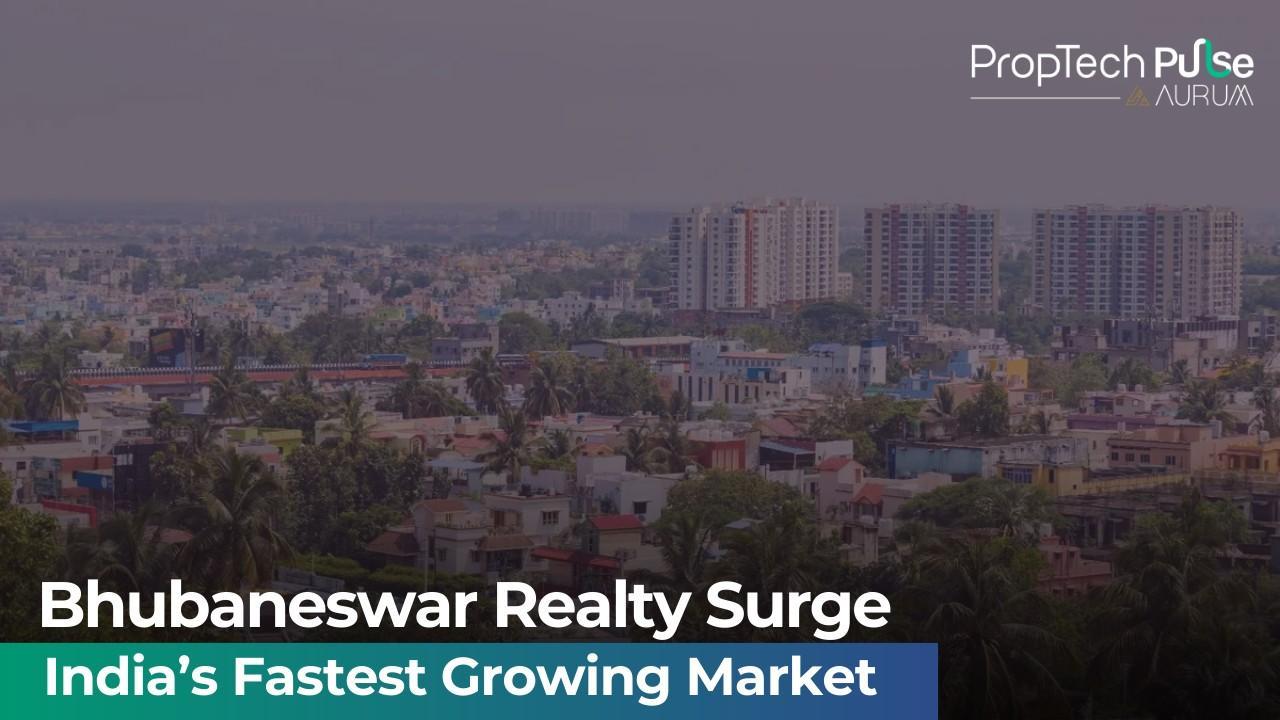
Bhubaneswar’s Rise In The Real Estate Landscape
Bhubaneswar is increasingly being recognised as one of India’s most dynamic real estate growth markets, supported by sustained infrastructure investment and planned urban expansion. As a state capital with strong administrative, educational, and IT presence, the city has transitioned from a regional housing market into a structurally expanding urban centre attracting both developers and institutional interest.
Infrastructure Led Growth Momentum
Large-scale infrastructure projects, including road network upgrades, airport expansion, and improved civic amenities, have strengthened connectivity and livability. Such enhancements are directly influencing housing demand, particularly in emerging corridors, reinforcing connectivity-driven residential appreciation across multiple micro-markets.
Demand Driven By End Users
Unlike speculative cycles seen in some larger metros, Bhubaneswar’s growth is largely anchored in end-user demand. Government employees, IT professionals, education sector workers, and local entrepreneurs are contributing to steady absorption and stable pricing trends, ensuring balanced market expansion.
Affordable And Mid Segment Dominance
The residential market in Bhubaneswar is characterised by strong activity in the affordable and mid-income categories. Competitive pricing relative to larger metros enhances accessibility, making homeownership attainable for a broad base of buyers and supporting inclusive housing growth.
Commercial And IT Sector Expansion
The growth of IT parks, business centres, and institutional developments is strengthening employment generation within the city. Commercial real estate expansion supports residential uptake by creating live-work ecosystems, contributing to integrated urban development.
Developer Participation And New Launches
Both regional and national developers are increasing their presence in Bhubaneswar, responding to rising demand visibility and infrastructure progress. Measured project launches and disciplined pricing strategies reflect confidence in sustained market fundamentals.
Rental Market Stability
The rental market remains stable, supported by student populations, government staff transfers, and young professionals. Consistent occupancy levels indicate healthy demand dynamics without excessive volatility, reinforcing the city’s long-term investment appeal.
Urban Planning And Livability Advantage
Bhubaneswar benefits from relatively planned urban layouts compared to many fast-growing cities. Structured zoning, road networks, and civic planning enhance livability and reduce congestion risk, supporting orderly and sustainable city expansion.
Investment Perspective And Long Term Outlook
The combination of affordability, infrastructure momentum, and employment generation makes Bhubaneswar attractive from a long-term investment standpoint. Gradual price appreciation and demand stability point toward predictable growth rather than speculative escalation.
Conclusion
Bhubaneswar’s emergence as a strong real estate growth market reflects infrastructure-led development, end-user demand, and balanced supply addition. With structural fundamentals in place, the city is positioned for consistent and sustainable expansion in the coming years.
Enjoyed this update? Visit PropTech Pulse for more real estate news and market insights.


Unlock the Latest in Real Estate
News, Infographics, Blogs & More! Delivered to your inbox.