
Services
Knowledge Hub
Resources
Tools
Services







©PropTech Pulse 2025, All rights reserved.

Sector Outlook Ahead of Budget 2026
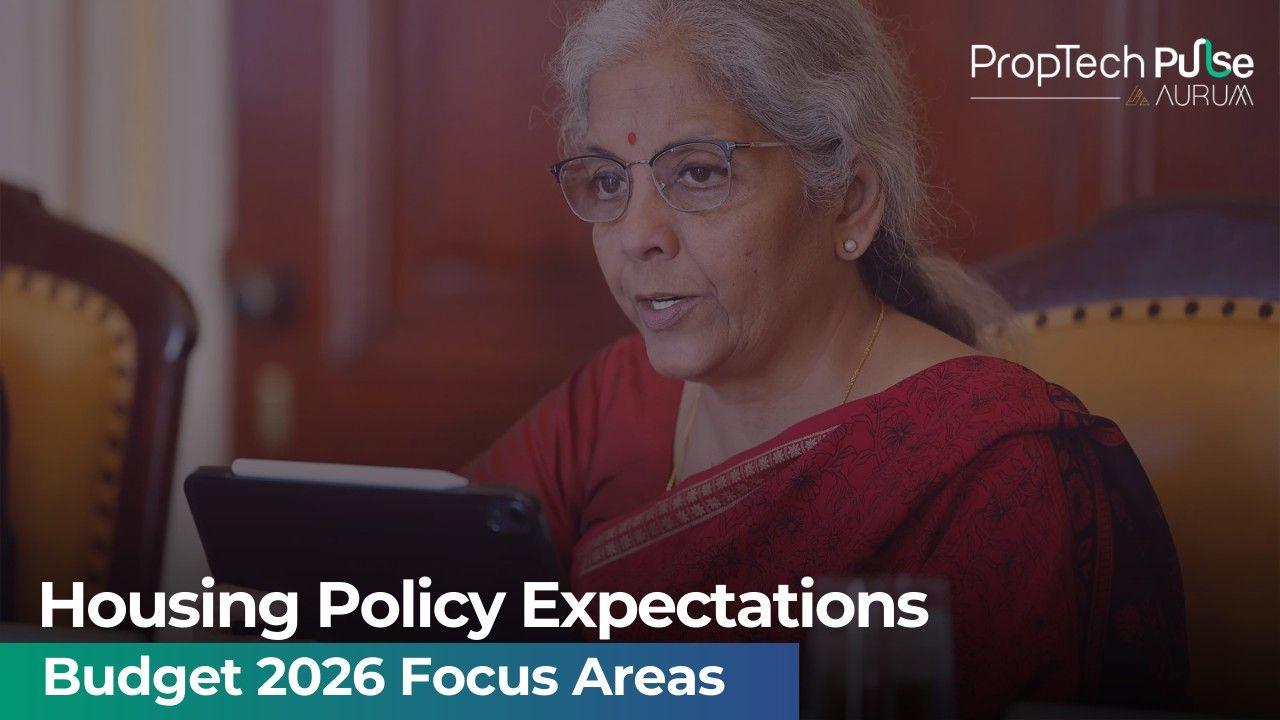
The real estate sector is approaching Budget 2026 with a strong focus on reforms that can address affordability challenges and revive demand. Developers, housing finance institutions, and industry bodies have highlighted the need for targeted interventions that support affordable housing while aligning policy frameworks with current market realities.
Rising construction costs and higher land prices have altered project economics, prompting calls for policy recalibration to ensure that housing remains accessible to a broader segment of buyers.
Revisiting the Affordable Housing Threshold
One of the primary demands from the sector is an upward revision of the affordable housing threshold. Stakeholders argue that existing price limits no longer reflect prevailing market conditions in many urban areas, effectively excluding a large number of potential homebuyers from policy benefits.
An increased threshold could enable more families to qualify for incentives and concessional financing, thereby improving demand in the budget housing segment. Industry participants believe this step could help restore viability for projects that cater to end-users rather than speculative demand.
Expectations Around CLSS Support
The Credit Linked Subsidy Scheme (CLSS) has been widely regarded as a critical enabler for first-time homebuyers from low and middle-income groups. By reducing the effective interest burden, the scheme has supported home ownership for households with limited financial flexibility.
In the context of Budget 2026, stakeholders are seeking enhanced allocation, extended timelines, or revised eligibility norms for CLSS. Strengthening this scheme is seen as a way to sustain homebuyer confidence and encourage participation in the formal housing market.
Affordability and Demand Revival
Affordability-focused reforms are expected to have a direct impact on housing demand. Lower effective costs and improved access to credit can help convert latent demand into actual purchases, particularly among first-time buyers.
Such measures may also support developers by improving sales velocity and reducing inventory overhang in the mass housing segment.
Broader Economic Implications
The real estate sector has strong linkages with multiple industries, including construction materials, logistics, and financial services. Policy support that stimulates housing demand can contribute to job creation and wider economic activity.
Increased housing development also supports urban infrastructure usage and can encourage more balanced growth across cities and peripheral regions.
Need for Policy Alignment
Industry leaders emphasise that clear regulatory guidelines and efficient implementation should complement reforms related to housing thresholds and subsidy schemes. Policy certainty plays a key role in sustaining long-term investment and maintaining market stability.
Looking Toward Budget Announcements
As the Union Budget 2026 approaches, the real estate sector remains cautiously optimistic. Revisions to affordable housing definitions and stronger support for buyer-focused schemes are viewed as practical steps that could enhance accessibility without compromising fiscal discipline.
If addressed effectively, these measures could reinforce the sector’s role in promoting sustainable economic growth while advancing the objective of wider home ownership.
Enjoyed this update? Visit PropTech Pulse for more real estate news and market insights.


Unlock the Latest in Real Estate
News, Infographics, Blogs & More! Delivered to your inbox.


“Data that drives action. Insight that inspires action. Technology that empowers action.“
“Data that drives action.
Insight that inspires action.
Technology that empowers action.“