New Launch - India Real Estate Report 2026.

Services
Knowledge Hub
Resources
Tools

Ask Pulse Ai
©PropTech Pulse 2025, All rights reserved.


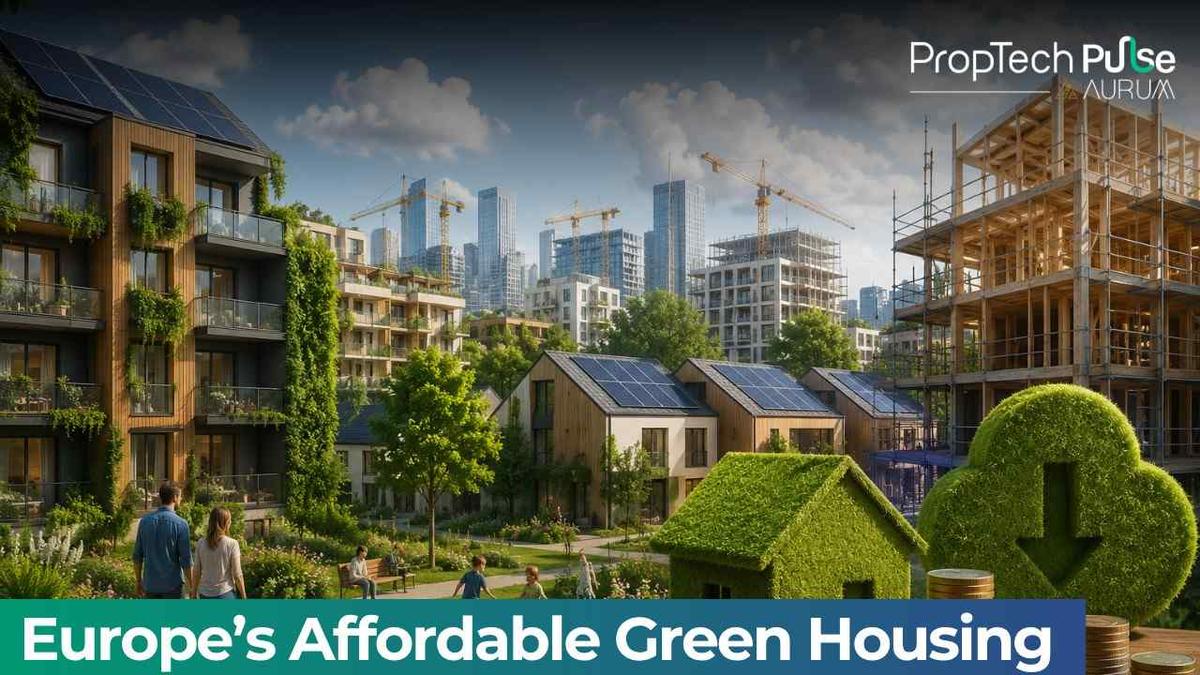
The European housing sector is currently facing a complex "triple challenge" that requires a fundamental restructuring of how residential infrastructure is developed and managed. According to report data, policymakers are attempting to solve an equation that balances the urgent need for increased housing supply with ambitious decarbonization targets and the necessity for lower costs for end-users. This initiative comes as many European cities grapple with record-high rents and a building stock that contributes significantly to the continent's carbon footprint.
Decarbonization as an Economic Driver
The strategy posits that reducing carbon dioxide emissions is not merely an environmental mandate but a critical component of long-term economic stability for residents. By prioritising energy-efficient renovations and sustainable new builds, the framework aims to:
- Significantly reduce monthly energy expenditures for households through superior insulation and smart grid integration.
- Utilise innovative building materials that have lower embodied carbon while maintaining structural integrity and thermal efficiency.
- Scale the use of heat pumps and renewable district heating to decouple residential living from volatile fossil fuel markets.
Lowering Costs Through Industrialized Construction
To address the affordability aspect of the equation, the European framework encourages a shift toward industrialised and modular construction methods. Experts suggest that moving residential assembly from traditional sites to controlled factory environments can reduce waste, shorten development timelines, and lower overall construction costs by up to 20%. This systematic approach is intended to provide high-quality, sustainable homes at a price point that remains accessible to middle and low-income demographics across the European Union.
Policy Alignment and Future Outlook
The successful execution of this housing equation depends on deep policy alignment between local municipal authorities and national governments. Financial incentives, such as "green mortgages" and public subsidies for deep renovations, are being deployed to bridge the initial capital gap required for sustainable upgrades. As Europe moves toward its 2050 climate neutrality goal, the integration of affordability and sustainability in the housing sector will serve as a primary benchmark for the success of the broader European Green Deal.
Enjoyed this update? Visit PropTech Pulse for more real estate news and market insights.


