
Services
Knowledge Hub
Resources
Tools
Services







©PropTech Pulse 2025, All rights reserved.

Foreign Investment Sees a Downturn
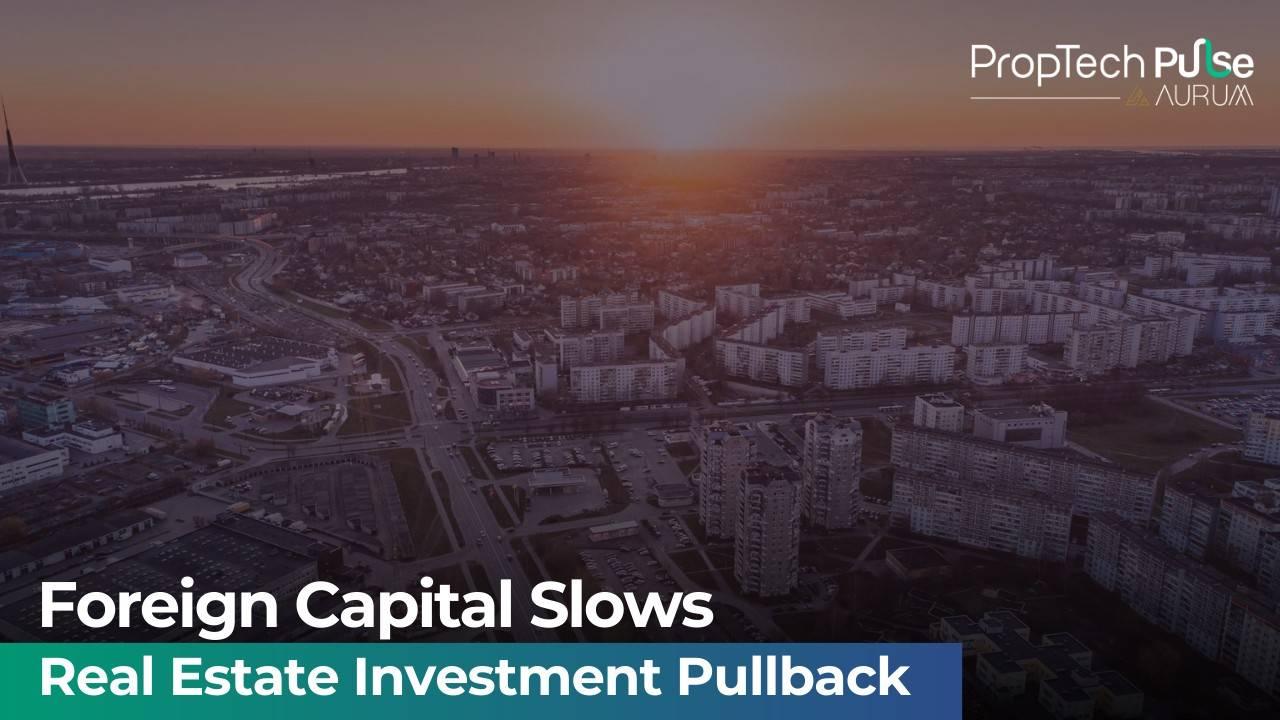
Foreign investment in India’s real estate sector witnessed a notable contraction in 2025, declining by 16% year-on-year to $3.65 billion, according to a recent report by Colliers. This slowdown marks a clear shift from the stronger inflows recorded in the previous year and highlights a phase of recalibration among global investors assessing risk and return dynamics.
Global Caution Impacts Capital Flows
The decline in foreign direct investment reflects broader global uncertainties that have influenced capital allocation across markets. Rising interest rates in developed economies, geopolitical tensions, and tighter liquidity conditions have prompted international investors to adopt a more selective approach. As a result, capital that previously flowed into Indian commercial and residential assets is being reassessed against competing global opportunities.
Key Factors Behind the Decline
Industry experts point to multiple factors contributing to the slowdown in foreign inflows:
- Regulatory adjustments that have increased due diligence timelines and compliance requirements.
- Intensifying competition among global markets offering alternative real estate investment avenues.
- Capital rotation toward emerging sectors such as data centers, logistics, and digital infrastructure in other regions.
Shift in Investment Preferences
Another important trend shaping 2025 inflows is the evolving preference of investors. While traditional office and retail assets remain relevant, global funds are increasingly prioritising asset-light strategies and sectors with faster monetisation cycles. In India, this has translated into selective investments rather than broad-based exposure, especially in large-ticket developments.
Domestic Capital Offers Stability
Despite lower foreign inflows, the Indian real estate market continues to demonstrate resilience, supported by strong domestic institutional investment and end-user demand. Local funds, family offices, and high-net-worth investors have stepped in to partially offset the reduction in overseas capital, particularly in residential and mixed-use developments.
Long-Term Outlook Remains Positive
Market analysts remain confident about India’s long-term real estate prospects. Structural drivers such as urbanisation, infrastructure expansion, and formalisation of the sector continue to strengthen fundamentals. With improving transparency, stable policy direction, and growing demand across housing and commercial segments, India remains a strategically important market for global investors.
Conclusion
While 2025 reflects a temporary pause in foreign real estate investments, it does not signal a loss of confidence in India’s property market. Instead, the current phase represents a period of recalibration as investors realign strategies. As global conditions stabilise, India’s real estate investment landscape is well-positioned to attract renewed international interest in the coming years.
Enjoyed this update? Visit PropTech Pulse for more real estate news and market insights.


Unlock the Latest in Real Estate
News, Infographics, Blogs & More! Delivered to your inbox.


“Data that drives action. Insight that inspires action. Technology that empowers action.“
“Data that drives action.
Insight that inspires action.
Technology that empowers action.“