New Launch - India Real Estate Report 2026.

Services
Knowledge Hub
Resources
Tools

Ask Pulse Ai
©PropTech Pulse 2025, All rights reserved.


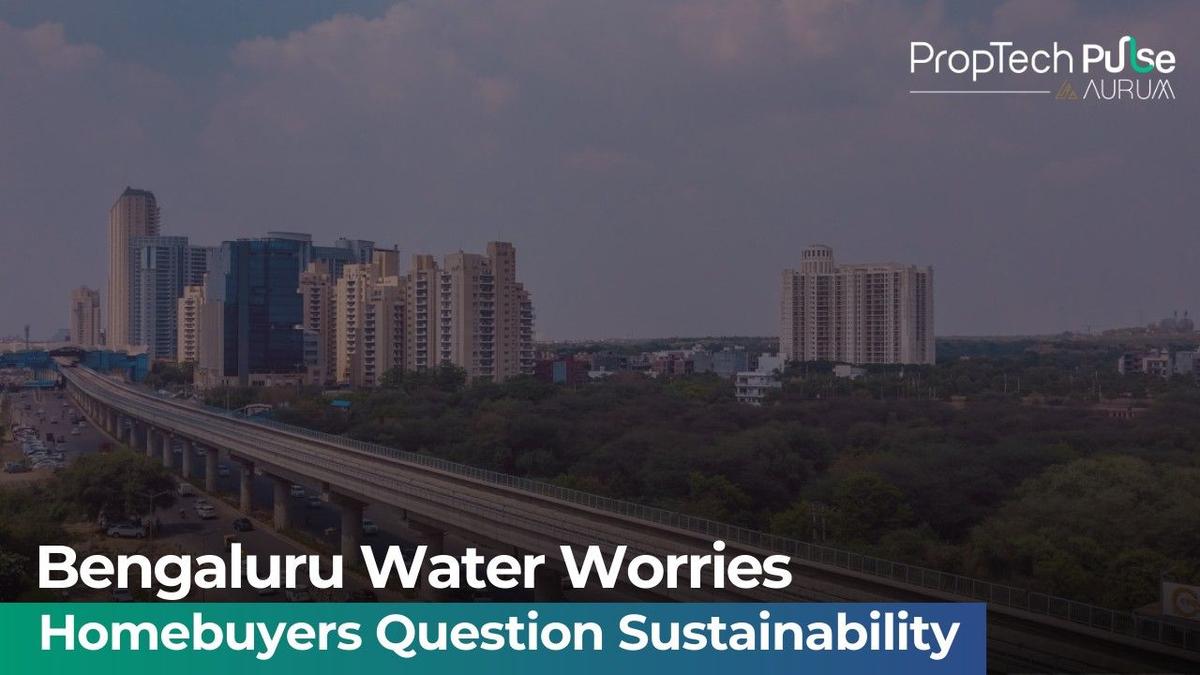
Bengaluru’s Real Estate Boom Meets a Water Reality
Bengaluru’s rapid rise as India’s technology capital has fuelled strong demand for high-end residential projects, particularly across major tech corridors. However, as apartment prices cross the ₹2 crore mark in several pockets, a growing number of homebuyers are raising concerns about one fundamental issue: reliable water supply. The mismatch between premium pricing and basic infrastructure preparedness is becoming a central point of debate.
Water Security Emerges as a Key Buying Concern
Prospective buyers are increasingly scrutinising how new developments plan to address water scarcity in Bengaluru. Many areas rely heavily on borewells and tanker water, raising questions about long-term sustainability. Homebuyers argue that luxury living cannot be justified without assured access to essential utilities, particularly as climate variability and groundwater depletion intensify.
Impact of Rapid Urbanisation
The city’s real estate expansion has been driven by sustained tech-sector growth, drawing a steady influx of professionals from across the country. While this has boosted housing demand, it has also placed significant pressure on existing civic infrastructure. Experts note that water availability has not scaled at the same pace as construction activity, creating stress across residential clusters.
Homebuyers Seek Sustainable Water Management
Buyers are now actively engaging developers on sustainable living practices, seeking clarity on rainwater harvesting systems, sewage treatment plants, and water recycling mechanisms. For many, these features are no longer optional amenities but critical decision-making factors. Projects lacking credible water management plans are increasingly viewed as high-risk investments.
Developer Response to Growing Scrutiny
In response, some developers have begun integrating advanced water conservation measures into project designs. These include enhanced rainwater harvesting capacity, reuse of treated wastewater for landscaping, and reduced dependency on external water sources. Such initiatives are seen as necessary steps toward future-ready real estate rather than value additions.
Community and Policy Dimensions
Beyond individual projects, residents and civic groups are calling for stronger alignment between urban planning and resource availability. There is increasing emphasis on coordinated planning involving developers, local authorities, and utility providers to ensure that growth corridors are supported by adequate water infrastructure. Without systemic planning, experts warn that isolated project-level solutions may fall short.
Long-Term Implications for the Market
Water availability is emerging as a factor that could influence property values and buyer sentiment in the long run. Projects that demonstrate resilience through sustainable infrastructure are likely to enjoy stronger demand, while others may face slower absorption. The issue underscores a broader shift where buyers are prioritising livability and resilience alongside location and amenities.
Conclusion
As Bengaluru’s real estate market continues to evolve, the debate around water security highlights the limits of unchecked expansion. The city’s growth story now depends not just on premium developments, but on how effectively essential resources are managed. Addressing water sustainability will be crucial to ensuring that Bengaluru’s housing boom remains viable, responsible, and aligned with long-term urban well-being.
Enjoyed this update? Visit PropTech Pulse for more real estate news and market insights.


