
Services
Knowledge Hub
Resources
Tools
Services







©PropTech Pulse 2025, All rights reserved.

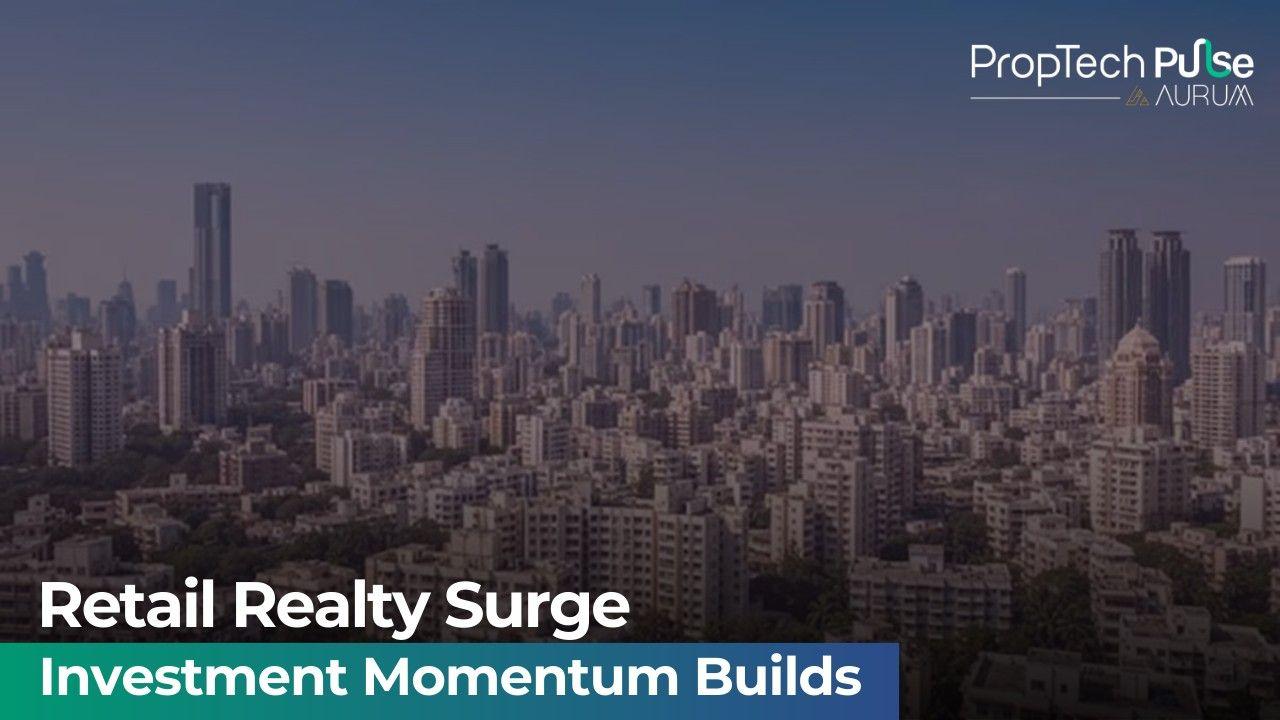
India’s Retail Real Estate Enters a Growth Phase
India’s retail real estate sector is entering a renewed growth cycle, with industry forecasts indicating potential investments ranging between $3 billion and $5 billion over the next three years. This expected capital inflow reflects a broader revival in investor confidence, driven by consumption-led growth and improving market fundamentals across the country.
Why Retail Real Estate Is Back in Focus
Over the past few years, India’s retail segment has undergone a structural transformation. While digital commerce expanded rapidly, physical retail adapted by reinventing formats and enhancing customer experiences. Today, malls, high streets, and mixed-use developments are increasingly positioned as experience-driven destinations rather than pure shopping centres. This shift has strengthened the long-term relevance of brick-and-mortar retail assets.
Key Drivers Supporting Investment Growth
Multiple demand-side and policy-driven factors are converging to support the sector’s outlook:
- Rapid expansion of organised retail across metros and Tier II cities
- Rising disposable incomes and aspirational consumption patterns
- Integration of digital-first retail strategies with physical stores
- Government initiatives improving ease of doing business and urban infrastructure
Together, these drivers are creating a favourable environment for long-term capital deployment into retail-focused real estate developments.
Role of Tier II and Emerging Cities
Beyond major metropolitan regions, Tier II and emerging urban centres are becoming key growth engines for retail real estate. With improving connectivity, rising urban populations, and lower development costs, these markets offer attractive risk-return profiles. Developers are increasingly launchings focusing on scalable retail formats tailored to regional consumption behaviour, strengthening the overall retail property ecosystem.
Institutional and Foreign Investor Interest
Institutional investors, including private equity funds and global real estate players, are showing renewed interest in income-generating retail assets. Stable rentals, improving footfalls, and longer lease tenures are enhancing the appeal of well-located malls and high-street assets. This trend aligns with broader investment strategies favouring yield-focused real estate amid global market volatility.
Technology and Data-Driven Retail Spaces
PropTech adoption is also reshaping retail real estate operations. From data-driven tenant mix optimisation to smart energy management systems, technology is improving asset performance and operational efficiency. These innovations not only enhance tenant retention but also improve valuation metrics, making retail assets more attractive to long-term investors.
Outlook for Developers and Stakeholders
As capital flows strengthen, developers will need to remain agile, focusing on location quality, experiential design, and sustainability. Retail assets that successfully blend physical presence with digital integration are likely to outperform. For stakeholders across the value chain, the next three years represent a critical window to capitalise on India’s evolving consumer-driven real estate growth.
Conclusion
India’s retail real estate market stands at a pivotal juncture. With strong consumption fundamentals, supportive policy measures, and rising investor confidence, the sector is poised for sustained expansion. If executed strategically, the anticipated $3–5 billion investment inflow could redefine the next phase of retail-led urban development in India.
Enjoyed this update? Visit PropTech Pulse for more real estate news and market insights.


Unlock the Latest in Real Estate
News, Infographics, Blogs & More! Delivered to your inbox.


“Data that drives action. Insight that inspires action. Technology that empowers action.“
“Data that drives action.
Insight that inspires action.
Technology that empowers action.“