New Launch - India Real Estate Report 2026.

Services
Knowledge Hub
Resources
Tools

Ask Pulse Ai
©PropTech Pulse 2025, All rights reserved.


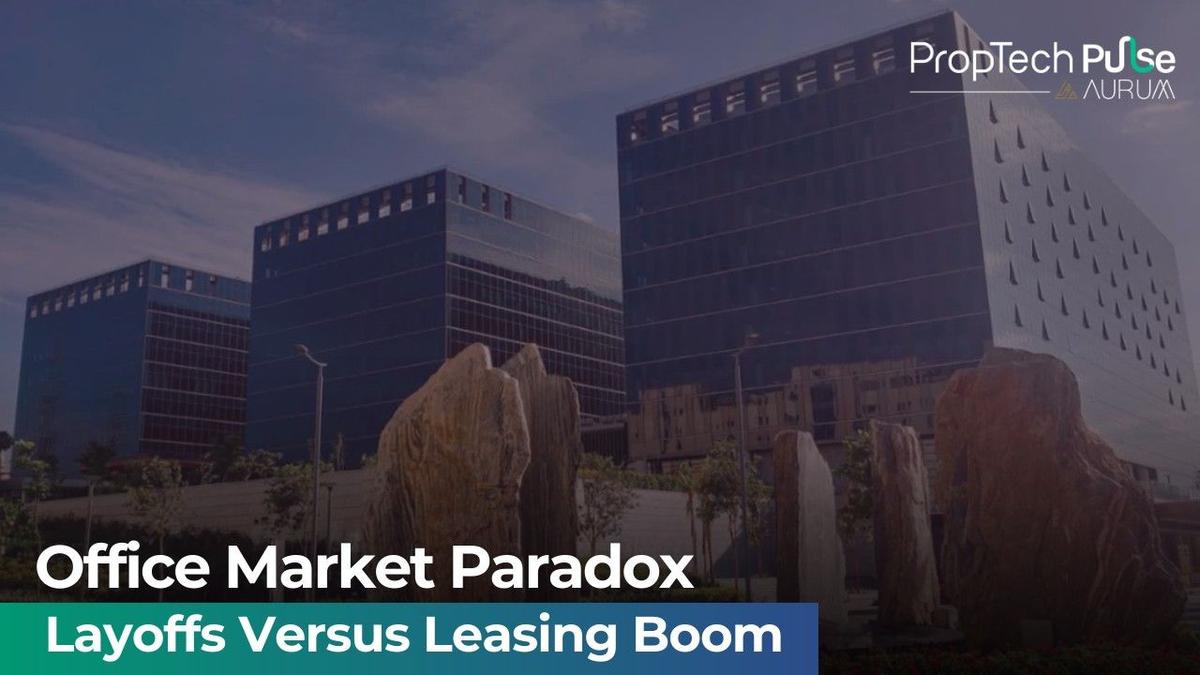
India’s Office Market at a Crossroads
The Indian office real estate market is witnessing an unusual paradox in 2025. While the technology sector has been grappling with workforce rationalisation and layoffs, office leasing activity across major cities continues to scale new highs. This contrast underscores the evolving nature of India’s commercial real estate ecosystem, where demand is no longer driven solely by IT companies.
Tech Layoffs and Corporate Restructuring
Over the past year, several technology firms have undertaken cost-cutting measures, including layoffs and the consolidation of teams. Global economic uncertainty, moderation in tech spending, and automation-driven efficiencies have pushed IT companies to optimise both talent and office space utilisation. As a result, some firms are renegotiating leases, downsizing footprints, or shifting to hybrid workplace models.
Why Office Leasing Continues to Grow
Despite this slowdown in the tech sector, India’s office market is expanding due to diversification in demand. Industries such as global capability centres (GCCs), manufacturing-linked services, BFSI, consulting, healthcare, and engineering services are driving fresh leasing activity. Multinational corporations continue to view India as a strategic base for long-term operations, fuelling sustained absorption of Grade A office spaces.
Hybrid Work and Workspace Evolution
The rise of hybrid work has not reduced the importance of offices; instead, it has transformed their role. Companies are now prioritising collaborative, experience-driven workplaces over large, conventional floor plates. Demand is rising for flexible layouts, managed offices, and buildings equipped with advanced technology, wellness features, and sustainability certifications.
Investor Confidence in Commercial Assets
From an investment standpoint, office real estate remains one of the most stable asset classes. Strong leasing activity, long-term contracts, and predictable cash flows continue to attract domestic and global investors. Institutional capital, REITs, and private equity funds are increasingly focused on income-generating office assets, particularly in established business districts.
Key Trends Shaping the Market
- Diversified tenant demand beyond traditional IT services
- Increased interest from GCCs and multinational enterprises
- Sustainability-led office design gaining priority
- Technology-enabled workspace management and smart buildings
What Lies Ahead
Looking forward, the Indian office market is expected to remain resilient despite sector-specific challenges. While IT companies recalibrate their strategies, other industries are stepping in to sustain momentum. The market’s ability to adapt to changing work patterns and tenant requirements positions it well for long-term growth.
Conclusion
The coexistence of tech layoffs and a commercial real estate boom highlights a deeper transformation underway in India’s office market. Demand is becoming broader, more balanced, and less dependent on a single sector. For developers, investors, and occupiers, this shift signals a more mature and resilient office ecosystem in the years ahead.
Enjoyed this update? Visit PropTech Pulse for more real estate news and market insights.


