
Services
Knowledge Hub
Resources
Tools
Services







©PropTech Pulse 2025, All rights reserved.

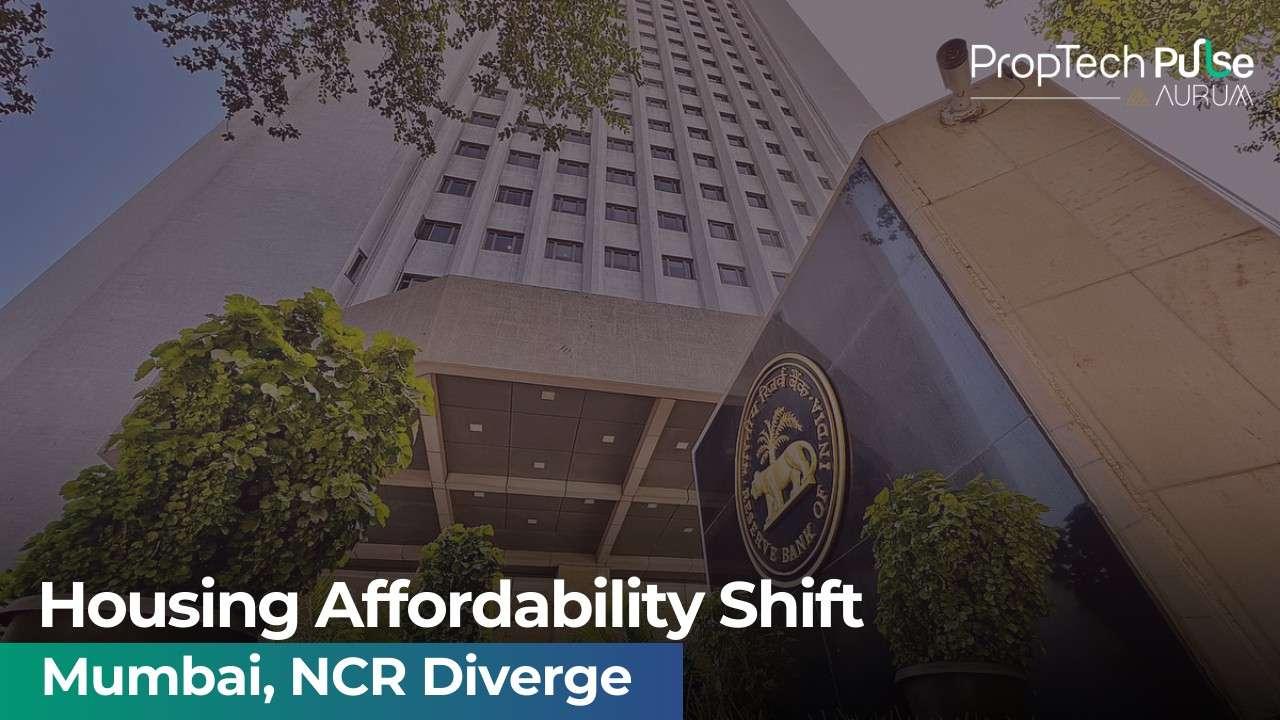
Affordability Trends Reshape Key Markets
India’s residential real estate market is witnessing a noticeable shift in housing affordability, with Mumbai and Delhi-NCR emerging on divergent paths. Recent interest rate reductions by the Reserve Bank of India (RBI) have lowered borrowing costs, directly influencing monthly home loan outflows and buyer decision-making across major metropolitan regions.
Mumbai Sees Strong Affordability Gains
Mumbai has recorded a meaningful improvement in affordability, primarily due to declining home loan interest rates. Lower EMIs have eased the financial burden on end-users, especially first-time buyers who were previously priced out of the market. This shift is encouraging renewed interest in both mid-segment and premium residential projects.
Delhi-NCR Shows Marginal Softening
In contrast, Delhi-NCR has witnessed a slight dip in affordability levels. While borrowing costs have reduced, continued price appreciation in select micro-markets has partially offset the benefits of lower interest rates. This has resulted in a more balanced outlook, where affordability gains remain present but less pronounced than in Mumbai.
Interest Rates as a Key Driver
Interest rates play a pivotal role in shaping homebuyer affordability. Even minor reductions can significantly lower EMIs over long loan tenures, improving eligibility and purchasing power. The recent rate cuts have therefore acted as a catalyst for housing demand, particularly in markets where price growth has remained relatively stable.
What This Means for Homebuyers
For prospective buyers, improved affordability translates into greater flexibility in choosing location, unit size, and project quality. Many households are now able to upgrade from renting to ownership or move into better-planned developments with modern amenities.
- Lower EMIs improve long-term financial planning
- Higher loan eligibility expands property choices
- Improved sentiment supports purchase decisions
Developer and Market Response
Developers in Mumbai are responding to rising demand by accelerating sales strategies and selectively launching new projects aligned with affordability thresholds. In Delhi-NCR, builders remain cautious, focusing on inventory absorption and pricing discipline to maintain buyer interest amid mixed affordability signals.
Investor Perspective
From an investment standpoint, improved affordability enhances market liquidity and absorption rates. End-user-driven demand provides stability, reducing speculative volatility and supporting sustainable real estate growth. Investors are therefore closely tracking interest rate movements as a key indicator of near-term market momentum.
Outlook for the Coming Quarters
Going forward, affordability trends will remain closely linked to monetary policy and price movements. If interest rates If remain supportive and price growth stays measured, Mumbai is likely to sustain its affordability-led momentum. Delhi-NCR’s outlook will depend on how pricing adjusts across key corridors in response to evolving demand.
Conclusion
The contrasting affordability trends in Mumbai and Delhi-NCR highlight the nuanced nature of India’s residential markets. While lower interest rates are providing broad-based relief, local pricing dynamics continue to shape outcomes. For buyers and investors alike, understanding these shifts is essential to making informed decisions in a changing real estate landscape.
Enjoyed this update? Visit PropTech Pulse for more real estate news and market insights.


Unlock the Latest in Real Estate
News, Infographics, Blogs & More! Delivered to your inbox.


“Data that drives action. Insight that inspires action. Technology that empowers action.“
“Data that drives action.
Insight that inspires action.
Technology that empowers action.“