
Ask Pulse Ai
Services
Knowledge Hub
Resources
Tools
Ask Pulse Ai
Services







©PropTech Pulse 2025, All rights reserved.

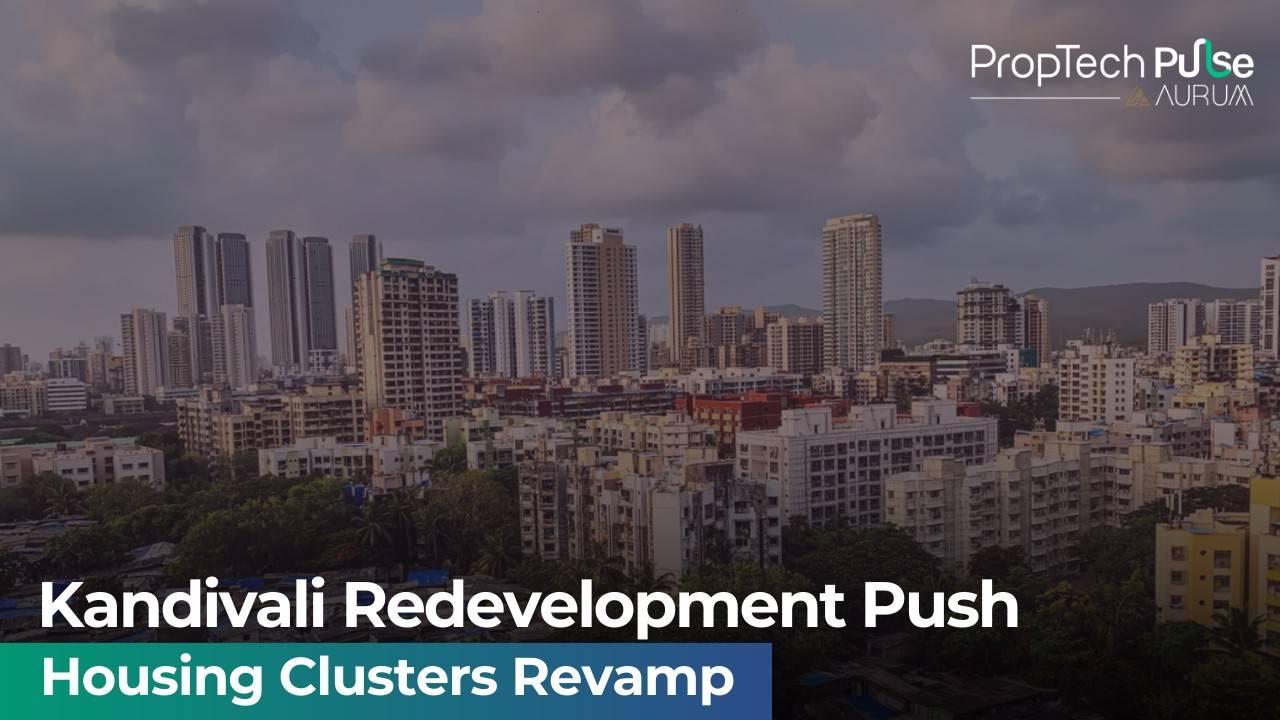
Scale of Cluster Redevelopment in Kandivali
As many as 53 housing societies in Kandivali have expressed interest in undertaking cluster redevelopment, marking one of the larger coordinated redevelopment initiatives in Mumbai’s western suburbs. The move reflects growing momentum among ageing housing societies to modernise buildings, improve safety standards, and unlock redevelopment potential through collective planning.
Why Cluster Redevelopment Is Being Considered
Many of the housing societies involved are decades old and face structural limitations, rising maintenance costs, and outdated amenities. Cluster redevelopment allows multiple adjacent societies to pool land parcels, enabling more efficient design, better infrastructure provision, and compliance with current development regulations. This approach offers larger redevelopment benefits compared to standalone projects.
Role of Policy and Development Regulations
Cluster redevelopment in Mumbai is supported by policy frameworks that encourage the consolidation of small plots to enable holistic urban renewal. Such regulations typically allow higher development potential in exchange for improved planning, open spaces, and infrastructure upgrades. The article highlights that Kandivali’s initiative aligns with broader municipal objectives of planned urban regeneration.
Expected Benefits for Residents
Residents participating in cluster redevelopment can expect new homes with enhanced safety, modern layouts, and upgraded amenities. In many cases, redevelopment also offers additional carpet area and improved common facilities. Importantly, the cluster model helps reduce execution risk by enabling financial viability and developer interest at scale.
Developer Participation and Project Feasibility
Large-scale cluster projects are typically more attractive to established developers due to scale efficiencies and clearer commercial viability. By aggregating multiple societies, projects can support better construction planning and phased execution. This improves delivery confidence and helps address concerns around timelines and quality.
Challenges and Coordination Requirements
Despite its advantages, cluster redevelopment requires extensive coordination among societies, consensus building among residents, and alignment on commercial terms. Legal due diligence, approvals, and rehabilitation planning are critical to project success. The article notes that stakeholder coordination remains a key execution challenge.
Impact on Kandivali’s Urban Fabric
If implemented successfully, the redevelopment of 53 societies could significantly alter Kandivali’s residential profile. Improved buildings, better internal infrastructure, and enhanced open spaces could raise overall liveability. Such transformation may also influence surrounding property values and set benchmarks for future redevelopment initiatives in suburban Mumbai.
Broader Redevelopment Trend in Mumbai
Kandivali’s initiative reflects a wider trend across Mumbai, where ageing housing stock is increasingly being replaced through redevelopment. Cluster models are gaining traction as they address land constraints while enabling comprehensive urban renewal rather than piecemeal rebuilding.
Conclusion
The interest shown by 53 housing societies in Kandivali toward cluster redevelopment underscores a growing push for structured urban renewal in Mumbai. While execution will depend on coordination and approvals, the initiative represents a significant step toward modernising suburban housing and improving long-term residential quality.
Enjoyed this update? Visit PropTech Pulse for more real estate news and market insights.




Unlock the Latest in Real Estate
News, Infographics, Blogs & More! Delivered to your inbox.