New Launch - India Real Estate Report 2026.











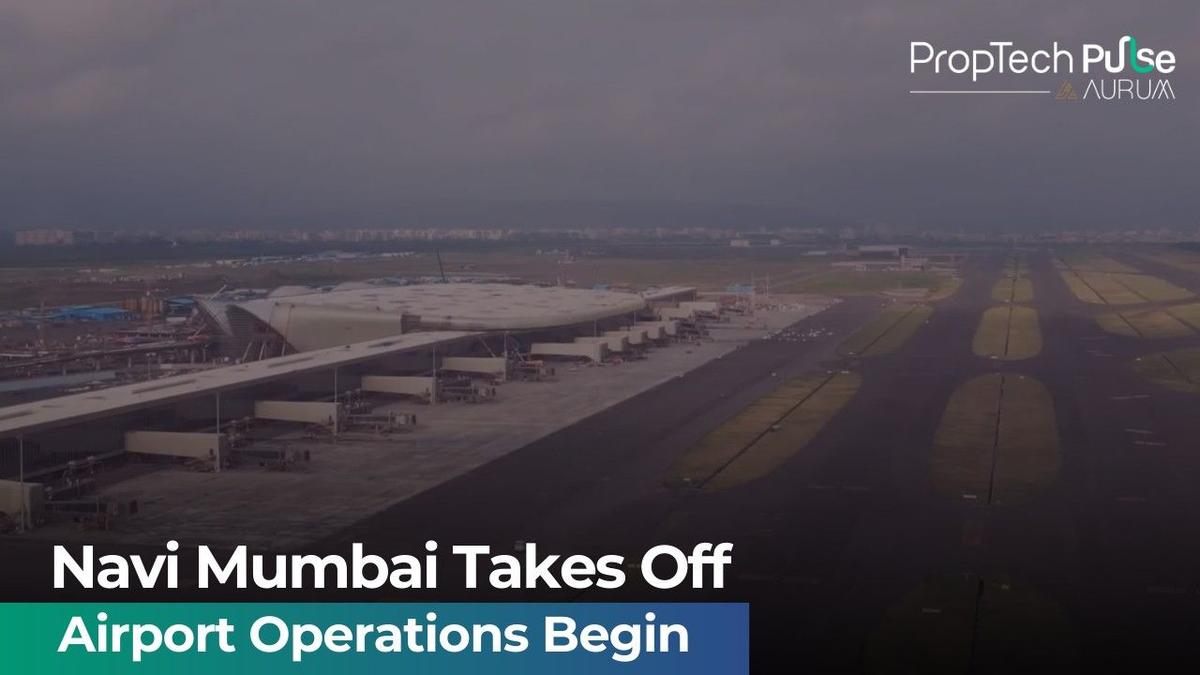
Historic Opening for Navi Mumbai
The long-awaited Navi Mumbai International Airport has officially commenced operations, marking a defining moment for India’s aviation and urban development landscape. On its inaugural day, the airport handled 48 scheduled flights and welcomed nearly 4,000 passengers, signalling the start of a transformative phase for the Mumbai Metropolitan Region. This operational launch is not only an aviation milestone but also a catalyst for long-term real estate growth across Navi Mumbai and adjoining corridors.
Relieving Pressure on Mumbai Airport
The new airport has been developed to decongest the heavily saturated Chhatrapati Shivaji Maharaj International Airport, which has long been operating close to peak capacity. By redistributing passenger traffic, Navi Mumbai Airport is expected to improve overall air traffic efficiency, reduce delays, and support rising demand for both domestic and international travel. For businesses, logistics operators, and airlines, this translates into improved operational flexibility and long-term scalability.
Passenger Experience and Infrastructure
Designed with a strong focus on efficiency and comfort, the airport features modern terminal architecture, advanced security systems, and streamlined passenger movement. From faster check-ins to smoother boarding processes, the airport aims to deliver a globally competitive travel experience. These infrastructure upgrades are aligned with India’s broader push toward digitally enabled transport hubs, ensuring seamless integration with future mobility and smart-city frameworks.
Real Estate and Economic Impact
The operationalisation of Navi Mumbai Airport is already reshaping real estate dynamics in surrounding micro-markets such as Ulwe, Panvel, Dronagiri, and Kharghar. Improved air connectivity is expected to drive demand across residential, commercial, and logistics real estate. Developers are accelerating project launches, while investors are closely tracking appreciation potential in airport-influenced zones. Warehousing, hospitality, office parks, and mixed-use developments are also likely to see heightened traction.
Employment and Regional Growth
Beyond property markets, the airport is expected to generate substantial employment opportunities across aviation services, ground handling, retail, hospitality, and allied sectors. This job creation will further strengthen housing demand and support sustained urbanisation in Navi Mumbai. Improved connectivity is also set to attract corporate offices and global businesses seeking proximity to a major international airport.
Future Expansion Outlook
As flight operations scale up, the airport is projected to handle millions of passengers annually in the coming years, with expanded domestic routes and new international connections. Authorities are expected to phase in additional terminals and cargo facilities, reinforcing Navi Mumbai’s position as a strategic aviation-driven economic hub. For homebuyers, investors, and PropTech players, the airport’s launch represents a long-term structural shift rather than a short-term event.
Conclusion
The launch of Navi Mumbai International Airport marks the beginning of a new growth cycle for the region. By strengthening connectivity, stimulating real estate demand, and accelerating infrastructure-led development, the airport is set to redefine Navi Mumbai’s economic and urban identity. For stakeholders across aviation, real estate, and PropTech, this milestone signals a future anchored in scale, accessibility, and sustained opportunity.
Enjoyed this update? Visit PropTech Pulse for more real estate news and market insights.