New Launch - India Real Estate Report 2026.

Services
Knowledge Hub
Resources
Tools

Ask Pulse Ai
©PropTech Pulse 2025, All rights reserved.


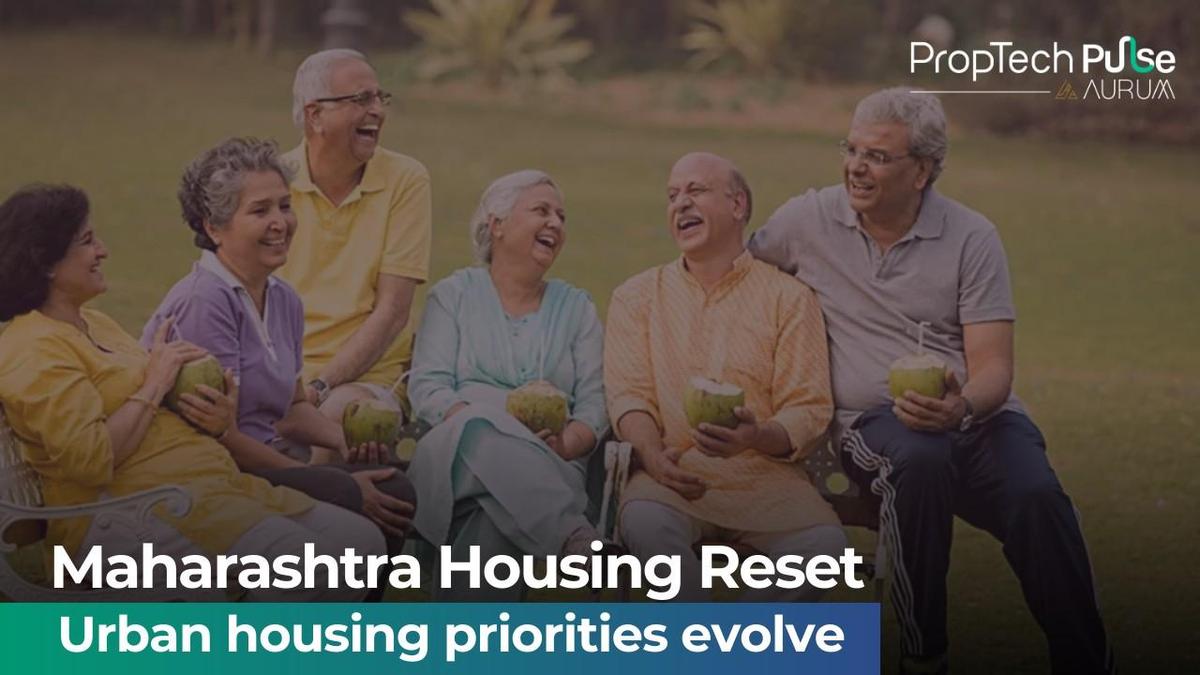
Maharashtra housing policy shifts focus to redevelopment and senior living
In 2025, Maharashtra’s housing landscape entered a decisive phase as the state sharpened its focus on redevelopment, self-redevelopment and senior living to address mounting urban challenges. With cities like Mumbai, Thane and Pune facing severe land constraints, ageing building stock and rising population density, policymakers increasingly prioritised urban renewal over horizontal expansion.
Redevelopment gains prominence amid ageing housing stock
A significant portion of Maharashtra’s urban housing inventory consists of buildings that are several decades old and structurally vulnerable. Redevelopment emerged as the most practical solution to improve safety, enhance infrastructure and unlock additional housing supply within existing city limits. By encouraging redevelopment, the state aims to modernise outdated structures while optimising land use in high-density zones.
Streamlined approval mechanisms and regulatory clarity played a critical role in accelerating redevelopment activity. Housing societies that had long deferred reconstruction due to procedural delays found renewed momentum, particularly in Mumbai, where land scarcity makes redevelopment almost inevitable.
Rise of self-redevelopment empowers housing societies
Alongside traditional developer-led projects, self-redevelopment gained visibility as a viable alternative. This model enables cooperative housing societies to independently redevelop their properties without transferring development rights to external developers. Supported by access to institutional finance and technical guidance, self-redevelopment allows residents to retain ownership control while benefiting from upgraded homes and improved amenities.
State-level initiatives and financial institutions played a key role in building confidence around this approach. As awareness increased, more societies began exploring self-redevelopment as a long-term value-preserving strategy rather than relying solely on private developers.
Senior living housing emerges as a policy priority
Maharashtra’s housing policy in 2025 also reflected changing demographic realities. With a steadily ageing population and evolving family structures, the demand for organised senior living communities gained policy recognition. Purpose-built housing offering healthcare access, security, social engagement and maintenance support is increasingly being encouraged across urban and peripheral locations.
Developers are responding by integrating senior-focused design elements into residential projects, while standalone senior living developments are gaining traction in suburban and satellite markets.
Urban density and infrastructure pressure drive policy realignment
The renewed emphasis on redevelopment and senior living is closely linked to challenges posed by urban density, infrastructure stress and limited greenfield land availability. Redevelopment allows cities to grow vertically while upgrading civic amenities, utilities and transport connectivity. This approach supports more sustainable urban growth compared to outward expansion.
Outlook for Maharashtra’s real estate sector
As redevelopment pipelines expand and acceptance of senior living grows, Maharashtra’s real estate sector is expected to undergo a structural transformation. Developers, financiers and housing societies are increasingly aligning strategies with the state’s urban renewal agenda. The policy shift signals a long-term move toward safer buildings, efficient land use and inclusive housing solutions that respond to demographic and urban realities.
Enjoyed this update? Visit PropTech Pulse for more real estate news and market insights.


