
Ask Pulse Ai
Services
Knowledge Hub
Resources
Tools
Ask Pulse Ai
Services







©PropTech Pulse 2025, All rights reserved.

Introduction
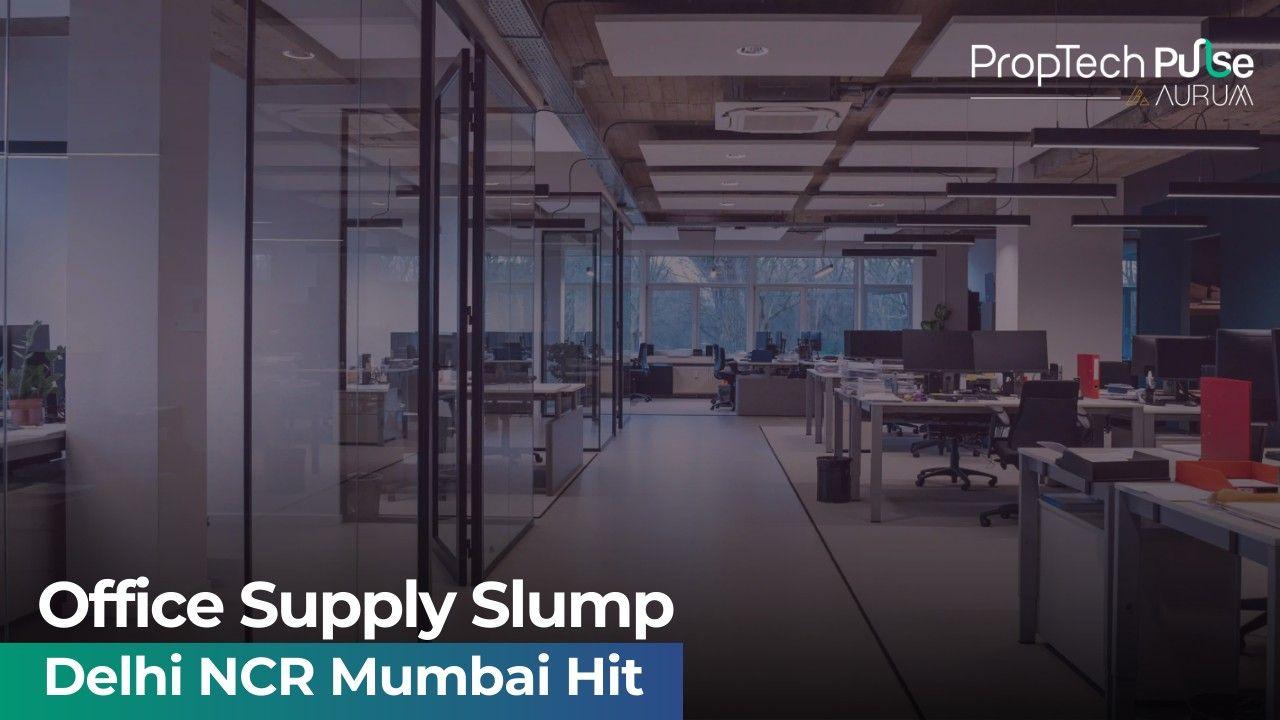
India’s commercial real estate market is undergoing a visible correction, with fresh data indicating a sharp slowdown in new office supply across its largest metros. According to a recent report by Colliers, key markets such as Delhi-NCR and Mumbai have recorded notable declines in office completions, reshaping near-term market dynamics.
Delhi-NCR Sees Supply Contraction
Delhi-NCR, traditionally one of the country’s most active office leasing markets, witnessed a 15% decline in new office supply during the year. This drop comes at a time when demand remains selective, driven largely by global capability centres, technology firms, and flexible workspace operators.
Developers in the region are becoming increasingly cautious, prioritising completion of existing inventory over launching new large-scale projects. Rising construction costs, funding discipline, and a shift toward pre-commitment-led development have contributed to this slowdown in fresh supply additions.
Mumbai Records Steeper Decline
Mumbai, India’s financial capital, reported an even sharper 37% fall in new office completions. The decline reflects a strategic pause by developers amid changing occupier preferences and evolving workplace strategies. While demand for Grade-A offices remains intact in core business districts, developers are recalibrating timelines to align better with absorption trends.
The city’s constrained land availability, longer approval cycles, and higher development costs have further influenced supply decisions. As occupiers increasingly focus on quality, sustainability, and flexibility, speculative construction has taken a back seat.
Changing Office Market Dynamics
The slowdown in new supply does not necessarily signal weak fundamentals. Instead, it points to a broader shift in how office real estate in India is being planned and delivered. Hybrid work models, consolidation of office footprints, and growing preference for flexible office spaces are redefining demand patterns.
Developers and landlords are now focusing on asset upgrades, ESG compliance, and technology integration to remain competitive. In parallel, PropTech adoption is accelerating, helping stakeholders optimise space utilisation and enhance tenant experience.
Implications for Investors and Developers
For investors, limited new supply in top markets could support rental stability and asset valuations over the medium term. Developers, meanwhile, are expected to adopt a more measured approach, emphasising capital efficiency and demand-led project execution.
As India’s office market matures, supply discipline may ultimately strengthen the sector, ensuring healthier occupancy levels and sustainable long-term growth.
Conclusion
The sharp decline in new office supply across Delhi-NCR and Mumbai marks a strategic inflection point for India’s commercial real estate sector. Rather than unchecked expansion, the market is transitioning toward a more balanced, quality-driven growth model shaped by evolving occupier needs and prudent capital deployment.
Enjoyed this update? Visit PropTech Pulse for more real estate news and market insights.


Ask Pulse Ai anything about real estate

Unlock the Latest in Real Estate
News, Infographics, Blogs & More! Delivered to your inbox.