
Services
Knowledge Hub
Resources
Tools
Services







©PropTech Pulse 2025, All rights reserved.

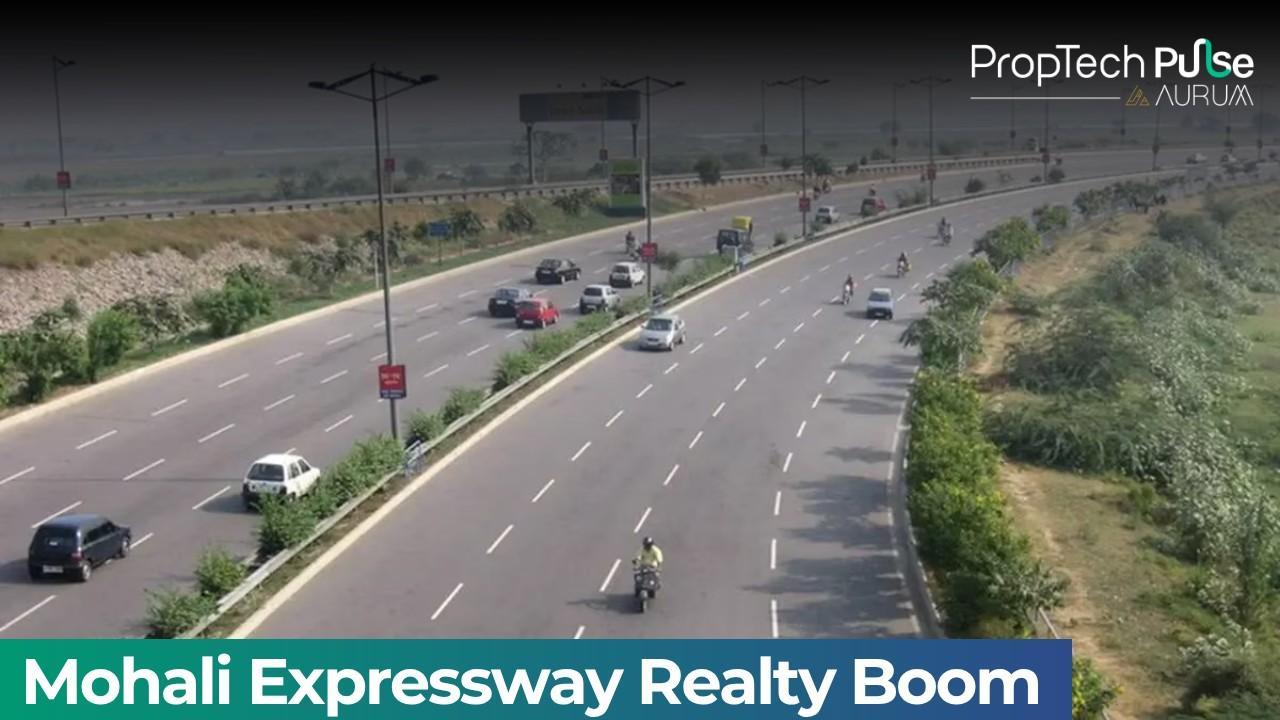
In 2026, Mohali is undergoing a dramatic transformation as expressway-led infrastructure officially replaces traditional proximity as the primary driver of property value. The city’s evolution from a satellite town of Chandigarh to a standalone "Silicon Valley of Punjab" is being powered by massive capital projects that have redefined intercity mobility. Central to this narrative is the PR-7 Airport Road and regional connectivity upgrades, which have successfully integrated once-peripheral sectors into the mainstream urban fabric.
Why Infrastructure is Driving a 25% Realty Surge
The "why" behind this unprecedented boom lies in the drastic reduction of travel times and the surge in institutional trust. Strategic corridors like the Mohali IT City–Kurali Expressway have slashed commutes by up to 45 minutes, creating a "goldmine" for early-stage investors. According to current market reports for April 2026, these connectivity improvements have directly translated into a property price appreciation of 15-25% over the past two to three years. Buyers are increasingly moving away from saturated markets toward Mohali's planned townships, which offer modern amenities and superior ROI potential.
Where the Impact is Most Visible: The New Growth Hubs
Geographically, the momentum is concentrated in high-tech and administrative zones. The Mohali Aerotropolis, a flagship GMADA project, and the burgeoning IT City are witnessing record-high auction benchmarks. These micro-markets, specifically Pockets B, C, and D of Aerotropolis, are benefiting from the expansion of the international airport and proximity to NH-7. Furthermore, the cluster of Sectors 74A, 116, and 117 along the 200ft Mega Airport Road is emerging as the ideal destination for technology-superior office spaces and smart residential hubs.
Importance of Economic and Logistical Integration
The importance of this infrastructure push extends beyond residential housing to the broader economic landscape of the Tricity region. The 31-km six-lane access-controlled corridors are facilitating seamless freight movement, attracting global giants like Infosys, which recently invested ₹300 crore in its Mohali campus. This synergy between faster highways and expanding IT and business campuses creates a sustainable "work-live-play" environment. As regional ring road networks finalize, Mohali’s logistical advantage will continue to attract foreign and domestic institutional capital.
Key Data and Future Outlook for 2026
- Infrastructure projects like the PR-7 road reduce Chandigarh-Mohali travel to 20-30 minutes.
- New sectors spanning 6,285 acres are under development to meet rising demand.
- The Mohali Greenfield Expressway serves as a vital alternative for Delhi-bound traffic.
- Occupancy rates in premium IT parks are nearing all-time highs as of Q1 2026.
Conclusion: Setting a New Benchmark for Smart Living
Ultimately, Mohali’s real estate market in 2026 is no longer defined by its neighbourhood to Chandigarh but by its own world-class infrastructure. The combination of Greenfield expressways, international airport access, and a booming tech sector has de-risked the market for long-term stakeholders. For the modern investor, Mohali represents the most promising growth corridor in North India, where strategic connectivity is effectively unlocking the city’s full economic potential.
Enjoyed this update? Visit PropTech Pulse for more real estate news and market insights.




Unlock the Latest in Real Estate
News, Infographics, Blogs & More! Delivered to your inbox.