
Ask Pulse Ai
Services
Knowledge Hub
Resources
Tools
Ask Pulse Ai
Services







©PropTech Pulse 2025, All rights reserved.

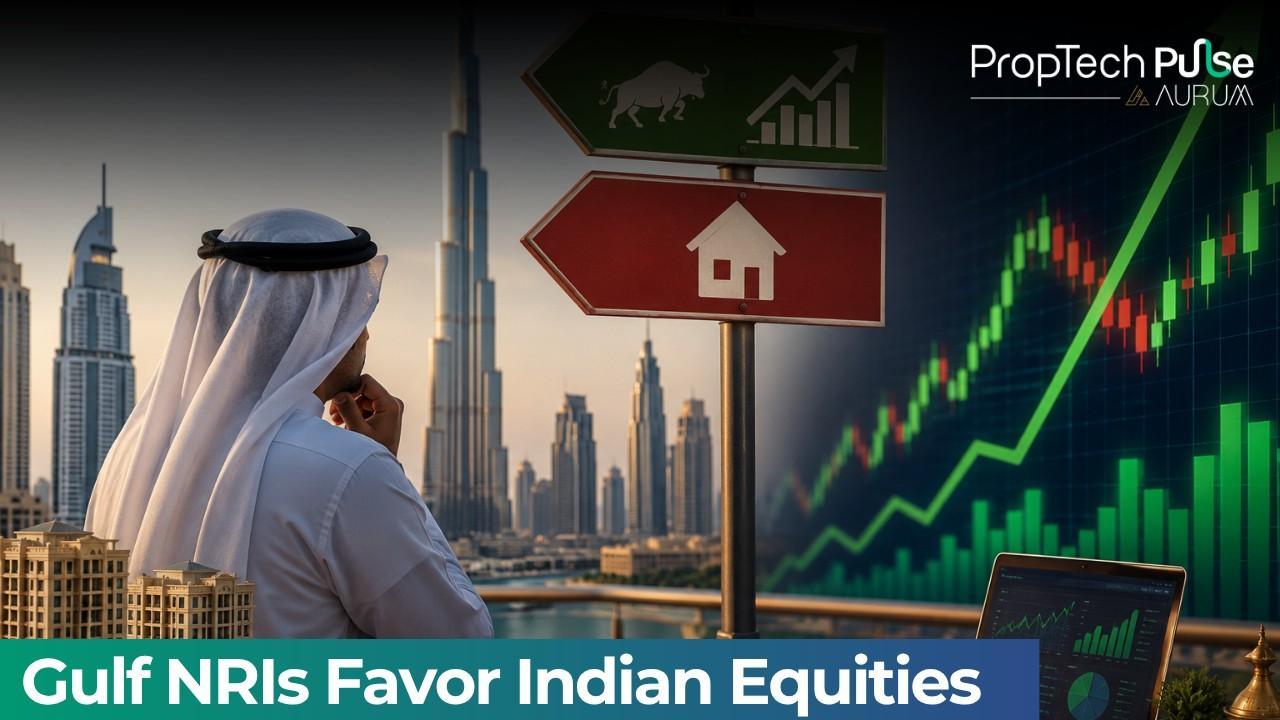
A significant trend is emerging among Non-Resident Indians (NRIs) residing in the Gulf region, as they increasingly pivot their capital from traditional real estate assets toward Indian equities. Historically, real estate served as the bedrock of NRI investments in India, valued for its perceived safety and cultural significance. However, the landscape in 2026 reflects a distinct change in sentiment, with many Gulf-based investors opting to liquidate property holdings to capture the high-growth momentum of the Indian stock market.
Driving Factors: Liquidity and Market Performance
The primary driver behind this transition is the superior liquidity and transparency offered by financial markets compared to physical real estate. While property transactions in India often involve long gestation periods and complex regulatory hurdles, equities provide the flexibility of immediate entry and exit. Key factors fueling this shift include:
- Robust Returns: The Indian equity market has consistently outperformed real estate appreciation in several key urban pockets over the last 24 months.
- Digital Accessibility: The rise of advanced fintech platforms has made it easier for Gulf NRIs to manage NRE/NRO-linked portfolios directly from abroad.
- Sectoral Diversification: Investors are seeking exposure to India's burgeoning tech, renewable energy, and manufacturing sectors through mutual funds and direct stocks.
Real Estate Saturation and Yield Concerns
In many Indian Tier-I cities, the real estate market is facing challenges related to low rental yields and high entry valuations. For Gulf NRIs, who often look for consistent cash flows, the current 2–3% rental yield in residential segments is increasingly less attractive than the potential dividends and capital gains from a well-diversified equity portfolio. Additionally, the burden of property management and maintenance from a distance has prompted many to seek the "hassle-free" nature of digital financial assets.
Growth of Mutual Fund Inflows from the Gulf
Data indicates a steady rise in Systematic Investment Plan (SIP) registrations from the Middle East. Financial advisors in Dubai and Abu Dhabi report a surge in inquiries regarding equity-linked savings schemes (ELSS) and large-cap funds as NRIs align their retirement goals with India's long-term growth story. This influx of foreign capital is providing significant depth to the domestic market, helping it withstand global volatility.
Future Outlook: A Balanced Asset Mix
While the exit from real estate is noticeable, experts suggest that a balanced asset allocation remains the ideal strategy for long-term wealth preservation. While equities currently offer the "growth engine" for NRI portfolios, many continue to hold a smaller portion of their wealth in commercial real estate or Grade-A assets that offer better stability. As India's economy moves toward its goal of becoming the world's third-largest, the appetite for high-performance financial instruments among the Gulf diaspora is expected to remain on a strong upward trajectory.
Enjoyed this update? Visit PropTech Pulse for more real estate news and market insights.




Unlock the Latest in Real Estate
News, Infographics, Blogs & More! Delivered to your inbox.