New Launch - India Real Estate Report 2026.

Services
Knowledge Hub
Resources
Tools

Ask Pulse Ai
©PropTech Pulse 2025, All rights reserved.


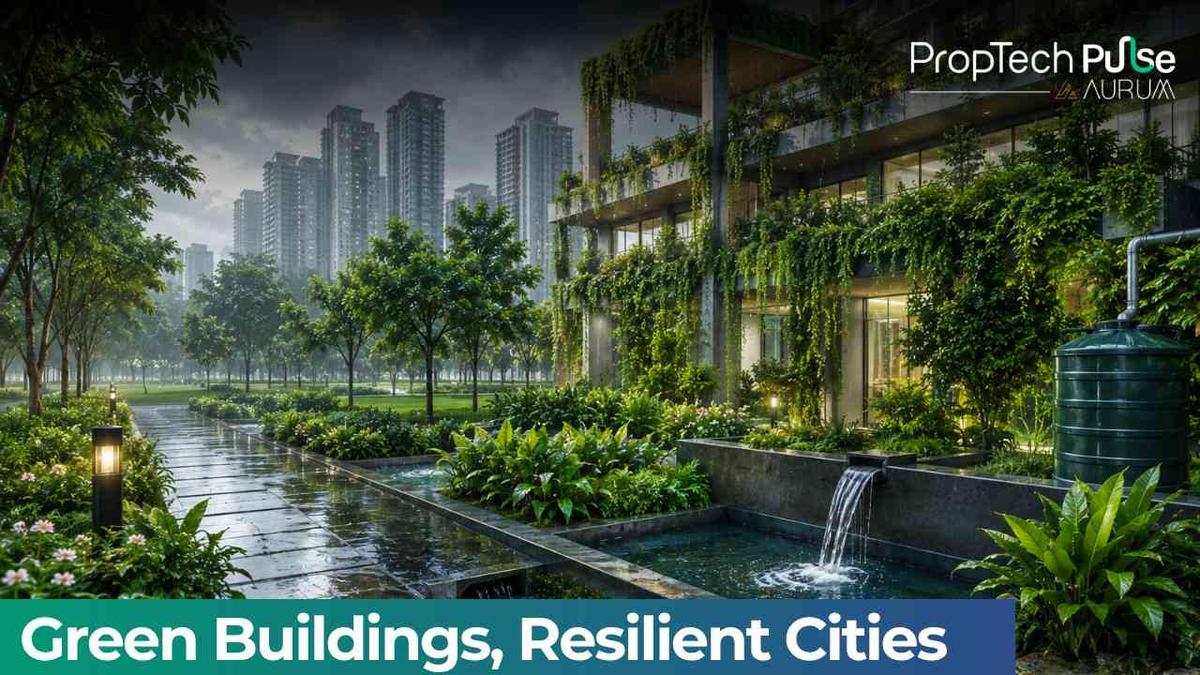
Every year, the southwest monsoon transforms India's landscape, replenishing water resources and supporting millions of livelihoods. It also reminds us of an important reality: our cities must be designed to manage water more efficiently.
Today, real estate is responding with smarter, greener, and more resilient developments. Green buildings are no longer just about sustainability; they are becoming an essential part of building cities that are better prepared for changing weather patterns.
Building with the Monsoon in Mind
Modern real estate developments are increasingly incorporating features that work with nature rather than against it.
Many green buildings now include:
- Rainwater harvesting systems
- Efficient stormwater drainage
- Permeable pavements
- Native landscaping
- Water-efficient plumbing
- Green roofs and open spaces
These features help capture rainwater, reduce surface runoff, and improve water management throughout the year.
Sustainability That Delivers Measurable Results
The adoption of green buildings is creating tangible environmental benefits.
Across India, certified green buildings collectively save an estimated 199.3 billion litres of water every year, demonstrating how sustainable design can significantly improve resource efficiency.
Mumbai also leads the country with over 500 IGBC-certified green buildings, reflecting the growing focus on environmentally responsible urban development.
These numbers highlight a broader industry shift—from simply constructing buildings to creating long-term, sustainable assets.
Why Homebuyers Are Paying Attention
Today's homebuyers are looking beyond location and amenities.
Increasingly, they value communities that offer:
- Better water conservation
- Lower long-term maintenance costs
- Sustainable infrastructure
- Healthier living environments
- Future-ready building design
As environmental awareness grows, sustainability is becoming an important factor in property decisions.
Where PropTech Fits In
Technology is accelerating this transformation.
Modern developments are leveraging PropTech solutions such as:
- Smart water monitoring systems
- IoT-enabled building management
- Automated irrigation
- Energy and water usage analytics
- Predictive maintenance solutions
These innovations help optimise resources while improving operational efficiency for developers, property managers, and residents alike.
Building Resilience for the Future
Climate resilience is becoming an integral part of urban planning.
Developers are increasingly recognising that sustainable buildings not only reduce environmental impact but also improve long-term asset value and enhance the overall living experience.
As cities continue to grow, integrating green infrastructure into real estate will play a crucial role in creating healthier and more resilient communities.
The future of real estate isn't just about building taller or faster.
It's about building smarter.
And as India continues to urbanise, green buildings will help ensure that cities are prepared not only for today's monsoon but also for the decades ahead.
Frequently Asked Questions
Everything you need to know about green buildings and monsoon-ready urban development in India.
Why are green buildings important during the monsoon season?
Water Management
Green buildings are designed with features like rainwater harvesting systems, stormwater drainage, and permeable pavements that help manage heavy rainfall efficiently. Instead of letting monsoon water go to waste or cause flooding, these systems capture and redirect it — reducing surface runoff and recharging groundwater reserves.
How do IGBC-certified buildings help save water?
Certification
IGBC (Indian Green Building Council) certified buildings follow strict sustainability standards that include water-efficient plumbing, recycling systems, and native landscaping that requires less irrigation. Collectively, certified green buildings in India save an estimated 199.3 billion litres of water every year.
What is PropTech and how does it support sustainability?
Technology
PropTech (Property Technology) refers to digital tools and platforms that improve how real estate is designed, managed, and operated. In the context of sustainability, PropTech includes smart water monitoring systems, IoT-enabled building management, automated irrigation, and predictive maintenance solutions — all of which help optimise resource usage and reduce waste.
Do green buildings cost more than conventional buildings?
Investment
While the upfront construction cost of a green building can be marginally higher, the long-term savings on water bills, energy consumption, and maintenance typically offset the initial investment. Many homebuyers now recognise this value, viewing green buildings as cost-effective, future-ready assets rather than a premium expense.
Which Indian city leads in green building adoption?
Industry
Mumbai currently leads India with over 500 IGBC-certified green buildings, reflecting the city's growing commitment to environmentally responsible urban development. Other major cities like Bengaluru, Hyderabad, and Delhi-NCR are also seeing rapid growth in green-certified real estate projects.
Will sustainability become a deciding factor for homebuyers?
Future Outlook
All signs point to yes. As environmental awareness grows and climate events become more frequent, buyers are increasingly prioritising water conservation, sustainable infrastructure, and healthier living environments. Developers who invest in green features now are likely to see stronger demand and better long-term asset value in the years ahead.

Ask Pulse Ai anything about real estate

Unlock the Latest in Real Estate
News, Infographics, Blogs & More! Delivered to your inbox.