
Services






©PropTech Pulse 2025, All rights reserved.
What is a real estate investment horizon?
A real estate investment horizon refers to the planned duration an investor intends to hold a property before selling or exiting the investment. It plays a major role in determining investment strategy, financing decisions, risk exposure, and expected returns.
Types of Investment Horizons
- Short-Term (1–3 Years): Focused on quick resale, property flipping, or short-term appreciation opportunities
- Medium-Term (3–7 Years): Combines rental income with moderate capital appreciation
- Long-Term (7–15+ Years): Focused on wealth creation, land appreciation, and long-term asset accumulation
How Investment Horizon Affects Strategy
-
Short-Term Strategy
- Focus on liquidity and fast capital gains
- Suitable for pre-launch or value-add opportunities
-
Medium-Term Strategy
- Balances rental yield and appreciation potential
- Suitable for stable residential or commercial assets
-
Long-Term Strategy
- Focused on compounding wealth and future appreciation
- Common for land banking and strategic urban growth corridors
Key Factors Influencing Investment Horizon
- Investor age and financial objectives
- Property type and development stage
- Market cycle and economic conditions
- Loan tenure and cash flow requirements
- Tax implications and capital gains planning
Investment Horizon and Tax Planning in India
In India, real estate held for more than 24 months is considered a long-term capital asset. Long-Term Capital Gains (LTCG) tax currently applies at 12.5% without indexation under post-2024 tax provisions, making investment duration an important factor in tax planning and exit strategy.
Why Investment Horizon Matters
- Helps align investment goals with market opportunities
- Improves financing and cash flow planning
- Supports disciplined entry and exit decisions
- Reduces risk of premature selling during unfavorable market conditions
A clearly defined investment horizon is essential in real estate investing because it shapes property selection, financing structure, expected returns, and long-term financial planning. Choosing the right horizon helps investors optimize both profitability and risk management.
Newly Launched Projects

Similar Blogs
Technology and Innovation
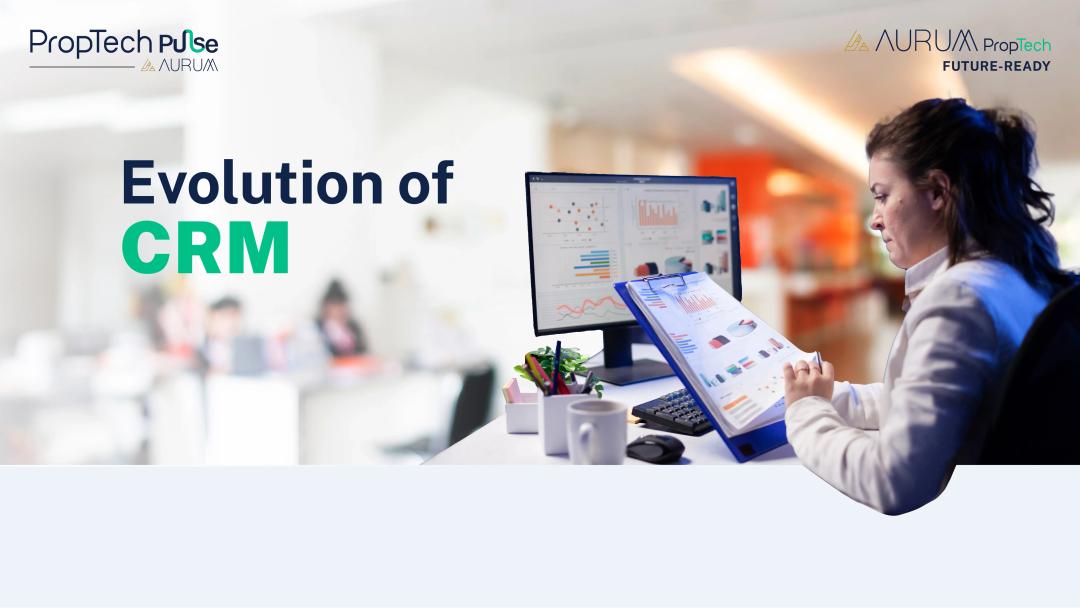
Evolution of Customer Relationship Management tools
‘‘The purpose of a business is to create and keep a customer’’, Peter Drucker, a famous writer, and management consultant said prolifically. The realm of CRM scope covers customer discovery, interactions, service, care, retention, and loyalty. The term Customer Relationship Management (CRM) was coined in the early 1970s when management at business units realized it would be better to be customer emphatic rather than product emphatic. Customer relationship management tools has evolved gradually from Rolodex’s of 1950s to Generative AI in 2020. What started as a record-keeping tool gradually evolved into digital documentation, sales automation, enterprise resource planning, social marketing, to the present age hyper personalised automated communication form. 1956 - First CRM Gadget - Rolodex In 1956s, Danish engineer Hildaur Neilsen, chief engineer of Zephyr American invented Rolodex, a card index system used to store customer contact information. It was a desk gadget that stacked and stored business cards and index cards that people could spin and flip through. Digital Rolodex, Tele sales and advent of computers The 1980s saw an evolution in sales, marketing and customer retention tactics with the advent of digitisation. Tools such as direct mail, brochures, and product catalogues being sent to a database of customers to get them to buy something were prevalently used in the 1980s. Database marketing and digital Rolodex came to the fore. The late 1980s saw the advent of telesales for customer communication. Computers were also accessible for enterprises and became a means of storing information about customers. In 1987, the software programme ACT (Activity Control Technology) was created by Mike Sullivan and Mitch Muhney, officially known as the first CRM software. This was essentially a digital Rolodex that allowed storage and management of the entire customer lifecycle information on the software. With its usage of Customer Relationship Management software, Act! demonstrated the advantages of scalable software that utilized consumer information to help a firm better manage its connections. 1990 - Sales Automation and progression into CRM systems By 1990s, one saw a progression of database management into customer lifecycle management and sales force workflow automation. Tools like enterprise resource planning, and marketing were added to the software’s contact management functions. This was the emergence first CRM systems. Tom Siebel, founder of Sieble Systems, coined the term CRM (Customer Relationship Software) for the first time. The post-introduction of the same CRM took off exponentially, with other companies also providing CRM solutions. Siebel Systems was later acquired by Oracle for over USD 5 billion in 2005. Late 1900s - First Mobile CRM, SaaS business model and Salesforce Inc. Post invention of PDA (Personal Digital Assistant) devices, tasks, emails, and calendar management became mobile. It allowed sales individuals to access customer data from central databases on the go, which proved to be a game changer as one didn’t have to be on the desk to work out these tasks. Salesforce.com was launched in 1999 and offered a new business model, offering software services as subscriptions (SaaS), wherein the upfront implementation cost, effort, and maintenance would be taken care of by Salesforce. 2000 - Cloud based CRM, Open-Source CRM and Social CRM In 2007, internet boom and cloud storage led to the advent and proliferation of Cloud-based CRM. With the increased internet adoption, Salesforce’s subscription model became popular as it could be scaled up very quickly. Open-source software also came to the fore, with the most prominent one being Sugar CRM, invented by computer scientists and ex-IBM and Hewlett-Packard employees Clint Oram, John Roberts, and Jacob Taylor. With the increased proliferation, and exponential growth of social media platforms, CRMs were combined with social media tools to offer SCRM. 2010 - Artificial Intelligence and CRM Artificial intelligence (AI) has changed the CRM space substantially with automation and intelligence. AI can be used for lead scoring, identifying customer needs, and providing recommendations. With enormous data being generated across every consumer by way of their digital footprint, CRM with AI and data analytics makes it simple to extrapolate consumer behaviour and requirements in real-time. 2020 and Now - Generative AI Generative AI is a subset of AI but unique in its ability to learn from underlying patterns to create new data that mirrors the training data set. The power of creation has a multifold impact across industries, and consumer communication is only to benefit from this capability. Managing customer interactions with Gen AI has the potential to enable a better connection between brands and customers. This however requires creative ability to engage customers and ability to execute to deliver better performance results and employee experiences. A combination of Gen AI and CRM can impact functional domains of marketing, sales, commerce, service and customer success. The true potential of Gen AI can be unlocked best when used in combination with predictive AI, voice to text, experience management and workflow optimisation. The CRM journey has reached an interesting point with AI, and the future looks promising for this space. The Total Addressable Market is set to grow to USD 290 billion by 2026. Salesforce Inc, an early mover, and a global market leader grew 10x in revenue in a decade. In 2013, its revenue stood at USD 3.1 billion which stands at USD 34 billion in FY 2022. CRM, which started as a simple Rolodex, has evolved into a complex system laced with artificial intelligence that helps organisations manage customer data and engage them with it in a self-assisted automated format, bringing huge implications for cost, efficiency, and the experience of consumer communication. As we advance further into the coming decades, CRM software systems will become more intelligent, integrated and intuitive with powerful AI capabilities, greater emphasis on self-service, enhanced experience for customers, hyper-personalisation, integrated API networks and ecosystems, and a single source of truth for businesses. Peter Drucker will be smiling in his grave looking at the advancement in this space.

PropTech Pulse Editorial
12th April 2024
AI Agent
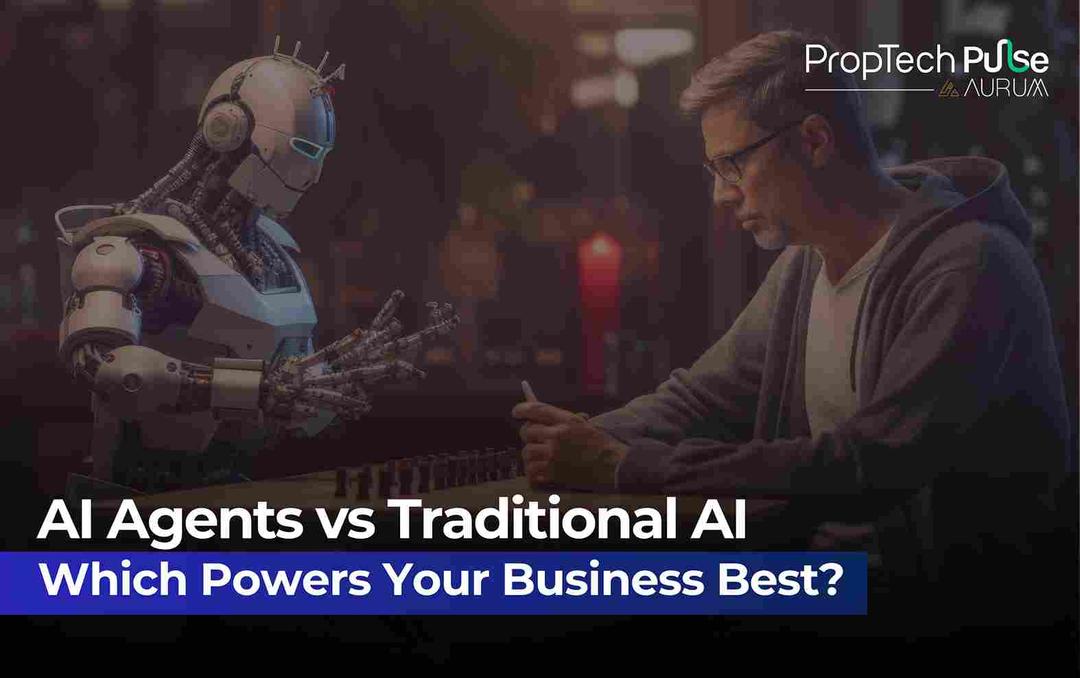
AI Agents vs Traditional AI: Which Powers Your Business Best?
Navigating the evolving world of artificial intelligence (AI) means more than just adopting new technology—it requires a deep understanding of how different AI paradigms shape outcomes for your business. Two primary approaches dominate the landscape: traditional AI systems and modern AI agents. Knowing how each works, their strengths, and their limitations will help you make the right choice to drive growth and competitiveness. What Sets AI Agents Apart? AI agents are autonomous, intelligent systems capable of interacting with their surroundings, collecting information, and executing tasks to achieve specific goals. They don’t need constant human direction; instead, they learn from experiences, adapt to new circumstances, and make informed decisions on their own. For example, in a contact center, an AI agent can independently converse with customers, draw answers from internal documents, resolve queries, and escalate issues only when necessary. Types of AI Agents Simple Reflex Agents: Rely on fixed rules to respond to particular conditions—think basic fraud detection algorithms. Model-Based Reflex Agents: Maintain an internal model to incorporate past states in decision-making, good for adaptive inventory tracking. Goal-Based Agents: Evaluate various strategies to meet objectives, used in robotics or advanced language processing. Utility-Based Agents: Use complex reasoning to select outcomes with the highest value, such as optimizing travel bookings for fastest routes. Learning Agents: Improve continuously, adjusting behaviors based on new input and feedback. Hierarchical Agents: Organize groups of agents in tiers, allowing scalable decomposition of complex jobs. Decoding Traditional AI Systems Traditional AI—sometimes known as rule-based or symbolic AI—solves well-defined problems using explicit rules and logic. These systems excel in structured environments with clear objectives, and typically require significant manual updates when conditions change. Key Features of Traditional AI Rule-Based Systems: Implement “if-then” rules for tasks; common in basic decision support. Decision Trees: Use branching structures for sorting or classification tasks. Supervised Learning Models: Pattern recognition within a narrow, predefined scope. Symbolic Reasoning Engines: Manipulate symbolic logic, ideal for knowledge representation. Deterministic Algorithms: Perform consistently but rigidly with set data and instructions. Single-Turn Interactions: Lack context or memory across sessions. No Initiative or Autonomy: Actions require explicit prompts and do not independently initiate or plan. Comparing AI Agents and Traditional AI: Core Differences Aspect Traditional AI Systems AI Agents Decision Logic Fixed rules, flowcharts Context-aware, neural networks Adaptability manual updates needed Self-optimization/learning Data Handling Structured datasets Processes unstructured data Autonomy Needs explicit prompts Independent, goal-driven behavior Learning No ongoing improvement Continuous improvement Error Response Predictable failures Dynamic recovery/reasoning paths Use Cases Simple, routine tasks Strategic, adaptive applications Where Each Shines: Real-World Examples Industry Traditional AI Use Cases AI Agent Use Cases Customer Service Rule-based chatbots, sentiment analysis Conversational support agents, adaptive assistants Healthcare Medical imaging, risk scoring Diagnostic and medication agents, virtual health aides Finance Credit scoring, rule-based fraud detection Adaptive risk/fraud detection, AI advisors, compliance agents Manufacturing Predictive maintenance, quality control Real-time production and supply chain agents Education Automated grading, content suggestions Adaptive tutors, engagement monitors Transportation Route optimization, traffic analysis Self-driving, dynamic navigation agents Retail Recommendations, inventory management Shopping assistants, autonomous stock ordering How to Decide: Which Is Right for Your Business? Complex, Ever-Changing Needs: Choose AI agents if your business processes are dynamic, involve various data types, and demand real-time adaptation. They're ideal for logistics, customer engagement, and anything requiring nuanced judgment. Structured, Predictable Workflow: Opt for traditional AI where reliability and repeatability are crucial, such as payroll or standard inventory management. Scalability & Flexibility: AI agents can handle a broader set of tasks and adapt without manual updates, supporting seamless growth. User Experience: AI agents enable natural language conversations, making processes intuitive and highly personalized. Compliance & Risk: Traditional AI offers greater predictability and explainability, which is ideal for regulated industries. AI agents may require new oversight strategies due to their autonomous nature. Cost Efficiency: Automating complex workflows with AI agents can cut long-term costs, while the simplicity of traditional AI is suited for well-scoped jobs with limited need for adaptation. Why Embrace AI Agents Now? Independent Decision-Making: AI agents remove operational bottlenecks and enable 24/7 responsiveness. Contextual Learning: They keep evolving with your business, fine-tuning actions as situations change. Cost Savings: Automate and optimize multi-step workflows, freeing up human resources for strategic tasks. Superior User Experience: Proactively personalize and perfect customer interactions. Seamless Scale: Rapidly roll out solutions throughout your organization. Built-in Innovation: With continuous learning, AI agents accelerate the pace of business evolution. Transformative AI Solutions Tailored for You Ready to move your business forward? Modern, AI-powered chatbots and intelligent agents—like those offered by Nurix AI—offer: 24/7 Support: Never miss a customer query. Personalized Interactions: Learn from data for tailored solutions. Easy Integration: Fit into your banking, CRM, or compliance systems smoothly. Robust Security: Industry-leading encryption and regulatory compliance. Relentless Improvement: Always learning, always getting better. Cost Control: Automate routine matters and let your people tackle the toughest jobs. Adopting adaptable AI agents positions your company to excel in an unpredictable world—unlocking growth, fostering innovation, and ensuring you’re ready for whatever comes next.
PropTech Pulse Editorial
25th May 2025
AI Agent
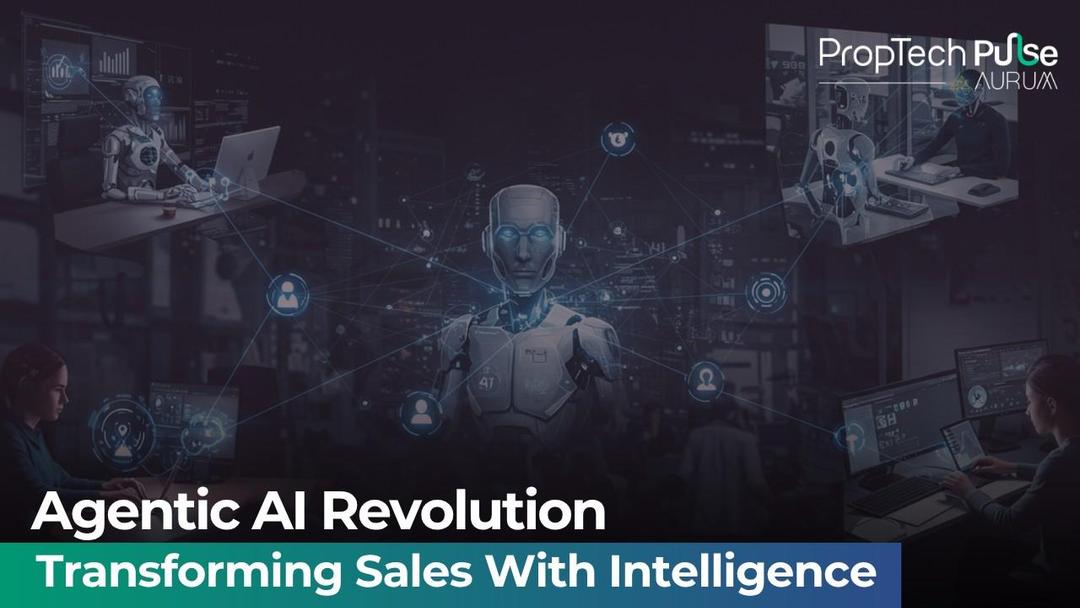
Agentic AI Sales: Boost Engagement and Drive Conversions
Transforming Sales with Agentic AI: The Next Evolution in Customer Engagement Agentic AI is revolutionizing the sales landscape—not with complex interfaces or bulky analytics dashboards, but through intelligent, real-time engagement that drives tangible results. The Modern Sales Hurdle: Achieving Personalization at Scale Today’s buyers demand fast, meaningful, and personalized interactions. Yet, for many sales professionals, scaling that kind of tailored experience is a constant struggle. Teams are often overwhelmed by low-intent leads, manual follow-ups, and a tangle of disconnected tools. Enter agentic AI. Agentic AI sales solutions go beyond basic chatbots. These intelligent digital copilots guide prospects and customers seamlessly through every stage of the sales journey, from initial outreach to ongoing support—working alongside human teams, not replacing them. Supercharging Every Stage of the Sales Funnel Agentic AI doesn’t simply automate—it empowers. Here’s how these AI-driven sales agents enhance performance and engagement throughout the entire funnel: Top-of-Funnel: Amplified Prospecting Executes large-scale, personalized outreach in real time to the most relevant prospects. Rapidly qualifies leads using behavioral cues and intent data. Prioritizes promising accounts through predictive scoring and continuous insights. Impact: More engaged, qualified leads and swifter progression from interest to opportunity. Mid-Funnel: Smart Sales Assistance Manages product inquiries and provides prompt, accurate responses. Handles objections live, helping accelerate deal flow. Recommends optimal next steps based on buyer signals and historical trends. Impact: Substantial lift in lead-to-opportunity conversions and unwavering messaging consistency. Post-Sale: Sustained Customer Success Supports onboarding through interactive guidance and resources. Monitors engagement, proactively detecting churn risk and recommending interventions. Pinpoints upsell and cross-sell opportunities based on usage and customer journey insights. Impact: Higher product adoption, greater retention, and increased customer lifetime value. Proven Results from Agentic AI Sales Adoption 2.5x increase in customer response rates. 20% improvement in opportunity conversion from sales-qualified leads. 15% rise in customer renewals and retention rates. Sales representatives spend more time with high-quality leads, leading to greater job satisfaction. Enhanced analytics and sales process insights empowering smarter decision-making. Reusable sales scripts and messaging, driving consistency across all touchpoints. Agentic AI isn’t about automating for the sake of it—it’s about enabling precision selling, powered by data and built for scalability. Keys to a Successful Agentic AI Rollout To unlock the full value of agentic AI sales agents, a strategic implementation approach is essential: Pinpoint High-Impact Processes Select critical parts of the sales funnel—such as lead qualification or customer follow-up—for intelligent automation. Establish Clear Performance Metrics Monitor KPIs like deal speed, conversion rates, and customer lifetime value to track progress. Ensure Seamless Integration The best AI agents operate harmoniously within your existing ecosystem—CRMs, sales tools, and analytics—without disruption. Enable Continuous Collaboration Create strong feedback loops between AI and sales teams to continuously refine and optimize outcomes. The result: a sales environment where AI agents and human reps collaborate, amplifying capability rather than competing for space. The Future: Where Agentic AI is Heading Agentic AI continues to get smarter. Forthcoming generations will interpret emotion, adapt to intricate buyer behaviors, and anticipate customer needs proactively. This evolution will deepen customer relationships and change the way sales teams connect, build loyalty, and grow revenue. Is Your Team Ready? Consider these questions: Are sales reps focusing their time on the highest-quality leads? Is your sales communication always consistent, on-brand, and tailored to the buyer? Do you have clear visibility into which strategies are working best? If these aren’t solid “yeses,” now is the time to explore what agentic AI sales agents can deliver for your organization.
PropTech Pulse Editorial
27th May 2025
Technology and Innovation
Evolution of Customer Relationship Management tools
‘‘The purpose of a business is to create and keep a customer’’, Peter Drucker, a famous writer, and management consultant said prolifically. The realm of CRM scope covers customer discovery, interactions, service, care, retention, and loyalty. The term Customer Relationship Management (CRM) was coined in the early 1970s when management at business units realized it would be better to be customer emphatic rather than product emphatic. Customer relationship management tools has evolved gradually from Rolodex’s of 1950s to Generative AI in 2020. What started as a record-keeping tool gradually evolved into digital documentation, sales automation, enterprise resource planning, social marketing, to the present age hyper personalised automated communication form. 1956 - First CRM Gadget - Rolodex In 1956s, Danish engineer Hildaur Neilsen, chief engineer of Zephyr American invented Rolodex, a card index system used to store customer contact information. It was a desk gadget that stacked and stored business cards and index cards that people could spin and flip through. Digital Rolodex, Tele sales and advent of computers The 1980s saw an evolution in sales, marketing and customer retention tactics with the advent of digitisation. Tools such as direct mail, brochures, and product catalogues being sent to a database of customers to get them to buy something were prevalently used in the 1980s. Database marketing and digital Rolodex came to the fore. The late 1980s saw the advent of telesales for customer communication. Computers were also accessible for enterprises and became a means of storing information about customers. In 1987, the software programme ACT (Activity Control Technology) was created by Mike Sullivan and Mitch Muhney, officially known as the first CRM software. This was essentially a digital Rolodex that allowed storage and management of the entire customer lifecycle information on the software. With its usage of Customer Relationship Management software, Act! demonstrated the advantages of scalable software that utilized consumer information to help a firm better manage its connections. 1990 - Sales Automation and progression into CRM systems By 1990s, one saw a progression of database management into customer lifecycle management and sales force workflow automation. Tools like enterprise resource planning, and marketing were added to the software’s contact management functions. This was the emergence first CRM systems. Tom Siebel, founder of Sieble Systems, coined the term CRM (Customer Relationship Software) for the first time. The post-introduction of the same CRM took off exponentially, with other companies also providing CRM solutions. Siebel Systems was later acquired by Oracle for over USD 5 billion in 2005. Late 1900s - First Mobile CRM, SaaS business model and Salesforce Inc. Post invention of PDA (Personal Digital Assistant) devices, tasks, emails, and calendar management became mobile. It allowed sales individuals to access customer data from central databases on the go, which proved to be a game changer as one didn’t have to be on the desk to work out these tasks. Salesforce.com was launched in 1999 and offered a new business model, offering software services as subscriptions (SaaS), wherein the upfront implementation cost, effort, and maintenance would be taken care of by Salesforce. 2000 - Cloud based CRM, Open-Source CRM and Social CRM In 2007, internet boom and cloud storage led to the advent and proliferation of Cloud-based CRM. With the increased internet adoption, Salesforce’s subscription model became popular as it could be scaled up very quickly. Open-source software also came to the fore, with the most prominent one being Sugar CRM, invented by computer scientists and ex-IBM and Hewlett-Packard employees Clint Oram, John Roberts, and Jacob Taylor. With the increased proliferation, and exponential growth of social media platforms, CRMs were combined with social media tools to offer SCRM. 2010 - Artificial Intelligence and CRM Artificial intelligence (AI) has changed the CRM space substantially with automation and intelligence. AI can be used for lead scoring, identifying customer needs, and providing recommendations. With enormous data being generated across every consumer by way of their digital footprint, CRM with AI and data analytics makes it simple to extrapolate consumer behaviour and requirements in real-time. 2020 and Now - Generative AI Generative AI is a subset of AI but unique in its ability to learn from underlying patterns to create new data that mirrors the training data set. The power of creation has a multifold impact across industries, and consumer communication is only to benefit from this capability. Managing customer interactions with Gen AI has the potential to enable a better connection between brands and customers. This however requires creative ability to engage customers and ability to execute to deliver better performance results and employee experiences. A combination of Gen AI and CRM can impact functional domains of marketing, sales, commerce, service and customer success. The true potential of Gen AI can be unlocked best when used in combination with predictive AI, voice to text, experience management and workflow optimisation. The CRM journey has reached an interesting point with AI, and the future looks promising for this space. The Total Addressable Market is set to grow to USD 290 billion by 2026. Salesforce Inc, an early mover, and a global market leader grew 10x in revenue in a decade. In 2013, its revenue stood at USD 3.1 billion which stands at USD 34 billion in FY 2022. CRM, which started as a simple Rolodex, has evolved into a complex system laced with artificial intelligence that helps organisations manage customer data and engage them with it in a self-assisted automated format, bringing huge implications for cost, efficiency, and the experience of consumer communication. As we advance further into the coming decades, CRM software systems will become more intelligent, integrated and intuitive with powerful AI capabilities, greater emphasis on self-service, enhanced experience for customers, hyper-personalisation, integrated API networks and ecosystems, and a single source of truth for businesses. Peter Drucker will be smiling in his grave looking at the advancement in this space.
PropTech Pulse Editorial
12th April 2024
AI Agent
AI Agents vs Traditional AI: Which Powers Your Business Best?
Navigating the evolving world of artificial intelligence (AI) means more than just adopting new technology—it requires a deep understanding of how different AI paradigms shape outcomes for your business. Two primary approaches dominate the landscape: traditional AI systems and modern AI agents. Knowing how each works, their strengths, and their limitations will help you make the right choice to drive growth and competitiveness. What Sets AI Agents Apart? AI agents are autonomous, intelligent systems capable of interacting with their surroundings, collecting information, and executing tasks to achieve specific goals. They don’t need constant human direction; instead, they learn from experiences, adapt to new circumstances, and make informed decisions on their own. For example, in a contact center, an AI agent can independently converse with customers, draw answers from internal documents, resolve queries, and escalate issues only when necessary. Types of AI Agents Simple Reflex Agents: Rely on fixed rules to respond to particular conditions—think basic fraud detection algorithms. Model-Based Reflex Agents: Maintain an internal model to incorporate past states in decision-making, good for adaptive inventory tracking. Goal-Based Agents: Evaluate various strategies to meet objectives, used in robotics or advanced language processing. Utility-Based Agents: Use complex reasoning to select outcomes with the highest value, such as optimizing travel bookings for fastest routes. Learning Agents: Improve continuously, adjusting behaviors based on new input and feedback. Hierarchical Agents: Organize groups of agents in tiers, allowing scalable decomposition of complex jobs. Decoding Traditional AI Systems Traditional AI—sometimes known as rule-based or symbolic AI—solves well-defined problems using explicit rules and logic. These systems excel in structured environments with clear objectives, and typically require significant manual updates when conditions change. Key Features of Traditional AI Rule-Based Systems: Implement “if-then” rules for tasks; common in basic decision support. Decision Trees: Use branching structures for sorting or classification tasks. Supervised Learning Models: Pattern recognition within a narrow, predefined scope. Symbolic Reasoning Engines: Manipulate symbolic logic, ideal for knowledge representation. Deterministic Algorithms: Perform consistently but rigidly with set data and instructions. Single-Turn Interactions: Lack context or memory across sessions. No Initiative or Autonomy: Actions require explicit prompts and do not independently initiate or plan. Comparing AI Agents and Traditional AI: Core Differences Aspect Traditional AI Systems AI Agents Decision Logic Fixed rules, flowcharts Context-aware, neural networks Adaptability manual updates needed Self-optimization/learning Data Handling Structured datasets Processes unstructured data Autonomy Needs explicit prompts Independent, goal-driven behavior Learning No ongoing improvement Continuous improvement Error Response Predictable failures Dynamic recovery/reasoning paths Use Cases Simple, routine tasks Strategic, adaptive applications Where Each Shines: Real-World Examples Industry Traditional AI Use Cases AI Agent Use Cases Customer Service Rule-based chatbots, sentiment analysis Conversational support agents, adaptive assistants Healthcare Medical imaging, risk scoring Diagnostic and medication agents, virtual health aides Finance Credit scoring, rule-based fraud detection Adaptive risk/fraud detection, AI advisors, compliance agents Manufacturing Predictive maintenance, quality control Real-time production and supply chain agents Education Automated grading, content suggestions Adaptive tutors, engagement monitors Transportation Route optimization, traffic analysis Self-driving, dynamic navigation agents Retail Recommendations, inventory management Shopping assistants, autonomous stock ordering How to Decide: Which Is Right for Your Business? Complex, Ever-Changing Needs: Choose AI agents if your business processes are dynamic, involve various data types, and demand real-time adaptation. They're ideal for logistics, customer engagement, and anything requiring nuanced judgment. Structured, Predictable Workflow: Opt for traditional AI where reliability and repeatability are crucial, such as payroll or standard inventory management. Scalability & Flexibility: AI agents can handle a broader set of tasks and adapt without manual updates, supporting seamless growth. User Experience: AI agents enable natural language conversations, making processes intuitive and highly personalized. Compliance & Risk: Traditional AI offers greater predictability and explainability, which is ideal for regulated industries. AI agents may require new oversight strategies due to their autonomous nature. Cost Efficiency: Automating complex workflows with AI agents can cut long-term costs, while the simplicity of traditional AI is suited for well-scoped jobs with limited need for adaptation. Why Embrace AI Agents Now? Independent Decision-Making: AI agents remove operational bottlenecks and enable 24/7 responsiveness. Contextual Learning: They keep evolving with your business, fine-tuning actions as situations change. Cost Savings: Automate and optimize multi-step workflows, freeing up human resources for strategic tasks. Superior User Experience: Proactively personalize and perfect customer interactions. Seamless Scale: Rapidly roll out solutions throughout your organization. Built-in Innovation: With continuous learning, AI agents accelerate the pace of business evolution. Transformative AI Solutions Tailored for You Ready to move your business forward? Modern, AI-powered chatbots and intelligent agents—like those offered by Nurix AI—offer: 24/7 Support: Never miss a customer query. Personalized Interactions: Learn from data for tailored solutions. Easy Integration: Fit into your banking, CRM, or compliance systems smoothly. Robust Security: Industry-leading encryption and regulatory compliance. Relentless Improvement: Always learning, always getting better. Cost Control: Automate routine matters and let your people tackle the toughest jobs. Adopting adaptable AI agents positions your company to excel in an unpredictable world—unlocking growth, fostering innovation, and ensuring you’re ready for whatever comes next.
PropTech Pulse Editorial
25th May 2025

Ask Pulse Ai anything about real estate

Unlock the Latest in Real Estate
News, Infographics, Blogs & More! Delivered to your inbox.