

©PropTech Pulse 2025, All rights reserved.

What is an Exclusive Listing?
An Exclusive Listing is a formal agreement granting a single agent or firm the right to market an asset for a predetermined period. No other intermediaries can actively promote the same item during this timeframe. The designated representative takes responsibility for advertising strategies, negotiations, and closing coordination. If the item transacts within the exclusivity window, the agent’s commission is typically secured.
Key Points
- Agent Dedication: Motivates focused efforts, since success directly triggers compensation.
- Contract Duration: Agreements often last weeks or months, with renewals as needed.
- Owner Obligations: Bypassing the agent to finalize a deal independently may still incur fees.
- Reduced Conflicts: Minimizes confusion caused by multiple brokers or overlapping listings.
By consolidating responsibilities under one entity, exclusive listings streamline communication and can foster cohesive, targeted marketing campaigns.
Recent Glossary
What is the yield gap between offices and warehouses?
What is the YEIDA Sector 22D plot scheme?
What is Yamuna Expressway industrial city?
What is the yield spread over G-Secs for REITs?
What is the year-over-year vacancy trend in coworking?
View More...
Recent FAQs
What are the red flags to watch for in a new project brochure?
What are the processing fees and other charges on a home loan?
Can I earn while learning through Pulse University and how is it tracked?
How does age affect the eligibility result in a home loan calculator?
How does the learn and earn model at Pulse University work?
View More...
Insight Pulse
Uncategorized
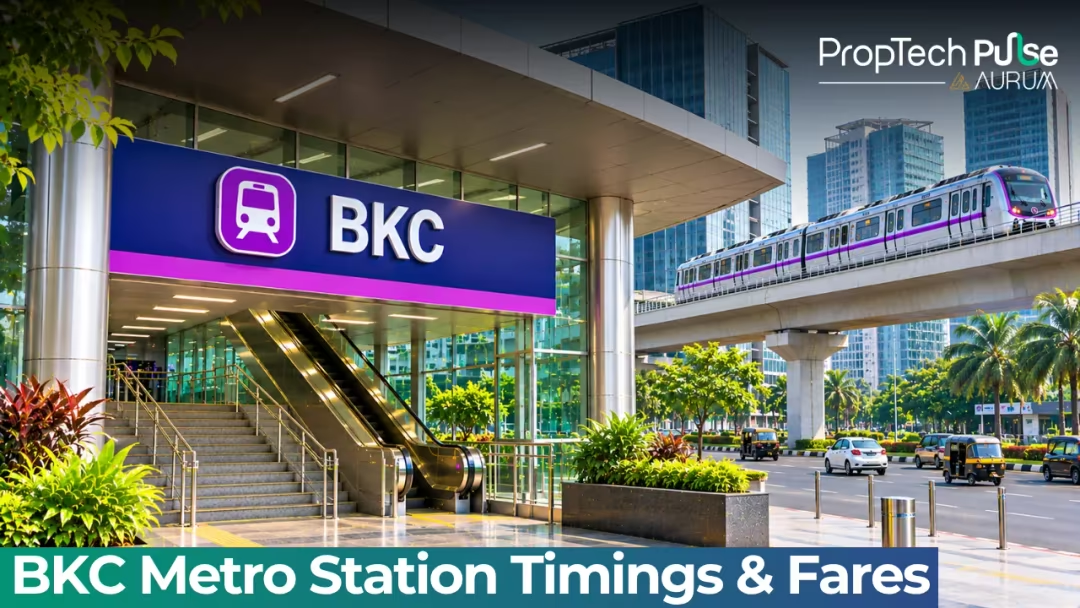
BKC Metro Station Guide: Timings, Fares & Connectivity
Morning commutes in Bandra Kurla Complex usually mean fighting severe gridlock along the Western Express Highway. The new BKC metro station changes that completely. It sits directly under the F-block precinct and acts as the main transit hub for thousands of office workers, investors, and airport passengers moving through this busy business district. Managing property near Sant Dnyaneshwar Nagar requires real data. You need confirmed departure times, an honest look at monthly transport costs, and straightforward details on digital payment options inside. This guide provides those specifics so you can plan your route without guesswork. We also look past basic facts to show how the underground design affects street-level foot traffic. Transit access is quietly pushing up rental rates in nearby western suburbs. Learning the fare zones early helps you cut yearly travel expenses significantly. In this guide Where is the BKC Metro Station located? BKC Metro Timings and Fares Route Map and Metro Connectivity How to Buy and Pay for Your BKC Metro Ticket Facilities Inside the Station Real Estate Impact Around the BQC Aqua Line Frequently asked questions Where is the BKC Metro Station located? The station occupies the space directly under the commercial F-block precinct. It sits within Sant Dnyaneshwar Nagar in Bandra East. Official maps list it as the Kotak Bandra-Kurla Complex station. Engineers buried the terminal deep underground. This protects valuable surface land in one of Asia's densest business zones. Planners kept retail plazas, corporate lobbies, and parks intact upstairs. Six separate entry and exit points spread crowds out effectively. Northern gates lead straight to tech offices, while southern paths target the banking sector. This layout stops pedestrian bottlenecks on the streets. Commuters reach major office buildings within a ten-minute walk. Evaluating investor reactions to the new lines matters greatly. mumbai metro line 3 connectivity impacting bkc real estate growth shows how capital shifts once these routes run at full speed. BKC Metro Timings and Fares Quick answer The BKC metro station operates from approximately 06:15 AM to 11:05 PM daily. Trains depart towards Cuffe Parade first at 06:15 AM and last at 10:50 PM. Trains heading north to Aarey JVLR run from 06:30 AM until 11:05 PM. The minimum fare starts at ₹10 and caps at ₹60 for long journeys. Trains run at a reliable frequency of roughly 6 minutes and 20 seconds during rush hours. Scheduled Departure Times Mumbai commuters cannot afford unpredictable wait times. The timetable aligns strictly with staggered corporate shift timings. BKC Metro Station Direction-wise Schedule Overview Direction First Train Last Train Average Frequency Towards Cuffe Parade (South) 06:15 AM 10:50 PM 6 mins 20 secs Towards Aarey JVLR (North) 06:30 AM 11:05 PM 6 mins 20 secs Frequency slows slightly after 10:00 PM. Intervals stretch closer to ten minutes. Late-night workers disperse across the network quickly. Fare Mechanics Explained Calculating the actual cost impact reveals immediate personal savings. Picture a manager living in Goregaon relying on ride-hailing apps. A peak-hour trip historically cost around ₹250. Riding the metro for that same daily journey caps the expense at just ₹10. That difference removes ₹5,200 from monthly spending over a standard twenty-two-day work cycle. Redirect that cash toward debt payoff or emergency savings. The starting price sets a very accessible minimum. Tickets begin at ₹10 for short trips between nearby stops. Fares scale gradually as riders move toward the line ends. The highest allowed ticket price hits a firm ₹60 cap. This flat amount shields occasional users from heavy charges. Top 5 Things to Do Before Entering BKC Station: Verify your NCMC or RuPay credit card balance before tapping the gate. Keep your bags ready for mandatory scanning. Align yourself near the elevator if carrying heavy luggage. Download the official app to check live coach crowding. Carry a basic identity document as random checks occur near the concourse level. Route Map and Metro Connectivity The wider Mumbai BKC Aqua Line connects scattered industrial zones and residential neighborhoods without touching roads at all. Trains head north past Sakinaka and Powai Circle. They terminate at Acharya Atre Chowk in Mulund. Going west, the tracks bend through Andheri East. They dip under coastal wetlands to reach JNPT. Commuters transferring between the BKC metro station and Chhatrapati Shivaji Maharaj International Airport use a smooth path at the Andheri interchange. Shuttle buses and direct feeder roads bring passengers to Terminal Two in about eight minutes. That beats driving along the Eastern Express Highway during rains. Corporate event planners now require metro routes for guests. Future integration plans promise even tighter meshing with regional rail networks. The planned Income Tax Office interchange hub will eventually bridge cross-city Line 2B extensions. Until those concrete pillars solidify, mapping current pedestrian flow patterns provides crucial intelligence for commercial analysts watching foot traffic. How to Buy and Pay for Your BKC Metro Ticket Cash kiosks still exist, but most passengers avoid them. Using digital payments works best at the BKC metro station. Mumbai Metro relies on the National Common Mobility Card system. Buying one costs a low fee, yet the card offers lower fares and allows free transfers between trains. QR code readers sit next to the main gates. Open a UPI app, scan the screen, and pay instantly. Tap-and-go scanners read almost every RuPay debit and credit card from Indian banks. Make sure your daily card limit passes ₹60. Low limits cause rejections at the gate. Paying digitally saves time during the heavy morning rush. Facilities Inside the Station Underground stations demand precise engineering. Especially when handling daily crowds, the terminal features large escalator banks paired with sturdy elevators. Backup motors power these lifts to stop breakdowns during afternoon peaks. Baggage checks protect everyone on the platform. Backpacks pass through X-ray machines right before entering the paid zone. Inspections take about forty-five seconds. CCTV cameras cover every corner from platform edges to stairwells. Live feeds go to command centers using thermal sensors. Air conditioning runs constantly to keep the station cool. Real Estate Impact Around the BQC Aqua Line New transit lines always shake up local property markets. Research done shortly after launch showed clear numbers shifting across the Mumbai area. Landlords close to transit hubs pushed higher rents. Premium tenants accepted the increase because daily convenience matters more than swimming pools now. Mahim saw a 2.37% jump in lease deals, marking it as an early winner from southern rail growth. Sion followed with a 1.78% rise. Dadar added 1.47% to its rate card. Worli's waterfront zone gained 1.32% just from extra foot traffic. Better transport keeps tenants longer. Managers confidently update contracts steadily. Smart investors know that distance drives returns. current rental trends and locality data for bandra east Daily changes come straight from these new platforms. Separating pros from beginners requires understanding the math. factors explaining how proximity to metro stations affects apartment pricing Experts use specific formulas to predict price jumps after construction finishes. Final Verdict on Commuting From BKC The BKC Aqua Line delivers on its promise. You get smooth movement, tight security checks, and fast digital billing. Commuters should drop paper tokens and switch to NCMC cards. Property watchers need to track vacancy rates near Gates Two through Five. Adapt to these updates, pick faster routes, and buy back evenings lost to traffic. Frequently asked questions When does the first and last metro run from BKC station? The initial southbound service towards Cuffe Parade departs promptly at 06:15 AM, while the first northbound train heading to Aarey JVLR leaves at 06:30 AM. Evening services conclude with the last departing carriage leaving Cuffe Parade direction at 10:50 PM and the northern terminus wrapping up operations at 11:05 PM respectively. Does BKC metro station accept UPI or RuPay credit cards? Yes. Passengers can use any standard UPI app at dedicated QR kiosks to buy instant tickets. Tap-and-go sensors at the automated barriers read nearly all RuPay debit and credit cards from Indian banks without needing physical token swaps. Is the Kotak Bandra-Kurla Complex station underground? Absolutely. The entire facility sits buried below the F-block commercial precinct and Sant Dnyaneshwar Nagar road network. Engineers deliberately chose subterranean construction to preserve valuable surface-level land for retail developments, corporate headquarters, and municipal plazas, avoiding any disruption to existing ground-floor business ecosystems. How long does it take to reach Airport T2 from BKC metro station? Commuters traveling to Chhatrapati Shivaji Maharaj International Airport typically transfer at the Andheri East interchange hub before connecting via shuttle buses or feeder roads. This optimized routing allows passengers to reach Terminal 2 within approximately eight minutes, saving significantly more time compared to driving along the Eastern Express Highway during active traffic peaks. What are the exact minimum and maximum fares for the BKC metro? Ticket pricing begins at a highly accessible base rate of ₹10 for short trips between adjacent stations. As riders travel across longer distances toward either network terminus, the fare scales gradually until hitting a strict maximum cap of ₹60, protecting infrequent users from excessive charges while maintaining balanced operator revenue targets. Enjoyed this blog article? Visit PropTech Pulse for more interesting blogs.

PropTech Pulse Editorial
9th November 2026
Uncategorized
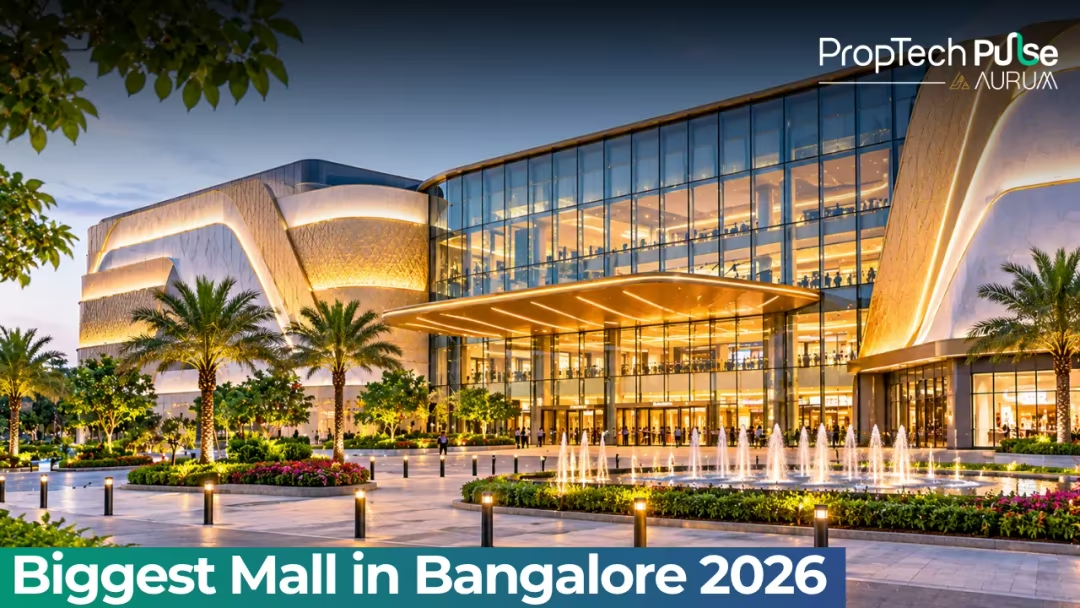
Biggest Mall in Bangalore 2026: Phoenix Mall of Asia
If you are searching for the biggest mall in Bangalore right now, the name is Phoenix Mall of Asia. Located in Devanahalli along the Outer Ring Road, it has quietly taken the title away from legacy shopping centres that dominated the city for the past decade. Beyond hosting fashion brands and food courts, retail hubs in Bangalore dictate transit flow. When shopper footfall rises, nearby rents and resale values follow immediately. Living near a mega-mall often means better rental demand and faster sales when you decide to exit. In this guide Quick Answer: Identifying the largest mall in Bangalore today Top 7 largest malls in Bangalore: ranking by size and location Best malls in Bangalore for lifestyle, dining, and family entertainment The real estate impact: why mall proximity matters for investors Before you buy: choosing your neighbourhood over the mall Frequently asked questions Quick Answer: Identifying the largest mall in Bangalore today Quick answer The current biggest mall in Bangalore is Phoenix Mall of Asia in Devanahalli. Spanning roughly 2.2 million square feet across its retail, hospitality, and entertainment zones, it surpassed older anchors like Mantri Square and Orion Mall in total built-up footprint. Its location along the Outer Ring Road places it inside one of the city's fastest-expanding corridors. The market shifts fast. Developers keep adding square footage as Bangalore stretches outward. What ranked second five years ago might be third today, so measuring the malls against each other requires looking at both leasable area and the catchment population they serve. Top 7 largest malls in Bangalore: ranking by size and location Here is a practical malls in bangalore list sorted by approximate size and location clusters. Numbers in brackets refer to floor space; these are estimates drawn from developer brochures and public filings. List of major shopping malls in Bangalore by size and district (2026) Mall Name Approx. Built-up Area Location Cluster Nearest Metro Station Phoenix Mall of Asia ~2.2 million sq ft North (Devanahalli / ORR) Kadugodi / Silk Institute (future expansions) Mantri Square Mall ~1.3 million sq ft North West (Malleswaram) Mantri Square Metro Orion Mall ~0.8 million sq ft North West (Yeshwantpur / Whitefield border) Sarjapur (Green Line) Lulu International Mall ~1.3 million sq ft West (Binnipete) Cubbon Park / Vidhana Soudha (Blue Line) VR Sancya Galleria ~0.7 million sq ft East (Whitefield) Whitefield Metro Forum Shantiniketan ~0.5 million sq ft North East (Marathahalli) Bettahalsuruppe (Yellow Line) Central Mall ~0.4 million sq ft Central (Malleswaram) MG Road / Sampige Road Phoenix Mall of Asia: the newest heavyweight Located in Devanahalli, Phoenix Mall of Asia sits on land acquired earlier in the ORR stretch. Developers have billed parts of the complex as aiming for the biggest mall in india titles once fully operational across multiple phases. The retail core handles daily needs while the attached hotels and multiplexes bring evening footfall. Traffic congestion on the access roads remains the biggest complaint, which is typical for new ORR projects before parallel feeder roads mature. Mantri Square Mall: North West anchor Mantri Square opened years ago and still commands the dense Malleswaram and Rajajinagar belt. It sits close to established residential pockets, making it a weekend draw for families who do not want to travel far. The layout favours mid-range fashion and supermarket anchors. Check Budigere Cross Bangalore property rates if you live nearby, because rents usually track the footfall created by this centre. Orion Mall: serving the tech corridor Orion Mall bridges Yeshwantpur and the eastern edge towards Whitefield. Its tenant mix leans heavily toward youth brands and quick-service restaurants, matching the demographic of IT professionals working in the nearby tech parks. Parking spaces fill by late afternoon in winter months. Metro upgrades connecting Sarjapur to Peenya improve access for workers coming off shifts. Lulu International Mall: the western giant Spread across Binnipete, Lulu Global Mall targets shoppers crossing from Kanakapura Road and Hosur Road. The supermarket anchor is huge, drawing weekly bulk buyers. Commercial office space surrounds the mall, meaning daytime footfall comes from employees rather than just residents. Construction noise during expansion phases often disrupts neighbouring low-rise buildings. VR Sancya Galleria: Whitefield's central hub Whitefield grew around this mall long before the metro reached it. VR Sancya serves the international community and expats in the area, hence the prevalence of western chains alongside local retailers. The parking design causes bottlenecks on weekends, especially near the car rentals store and electronics showrooms. Forum Shantiniketan: Marathahalli convenience Smaller footprint, high efficiency. Forum Shantiniketan caters to the Marathahalli bridge crowd, capturing people trapped in the junction who prefer a quick dinner or movie. It works best as a stopover rather than a destination for a full-day outing. Central Mall: Malleswaram heritage mix Central Mall slots between older homes and modern high-rises in central Malleswaram. It focuses on affordable clothing and jewellery outlets. The walkability score is high here because local residents can reach the ground-floor shops easily. Best malls in Bangalore for lifestyle, dining, and family entertainment For shoppers, size alone does not define the best malls in bangalore. A smaller centre with well-managed seating areas, clean restrooms, and reliable Valet services often beats a sprawling complex on Saturday afternoons. Dining density: Phoenix Mall of Asia and Lulu International offer the widest spread of cuisine, from street-food inspired plazas to premium steakhouses. Mantri Square strikes a middle ground with mostly fast-casual options. For families bringing young children, look for malls with dedicated play zones and nursing rooms, which Lulu and VR Sancya provide ahead of most peers. Cinema experience: Most large centres host PVR INOX or ScreenX setups. Movie timing drives mall entry spikes. Plan visits between 5 pm and 8 pm if you want to avoid peak rush, unless you are hunting for clearance discounts at apparel stores. Night markets and events: Several malls rotate theme parks and pop-up exhibitions quarterly. The northern malls recently hosted automotive expos and electric vehicle showcases, aligning with Karnataka's push for greener transport infrastructure. The real estate impact: why mall proximity matters for investors This is where the data gets actionable for homebuyers and landlords. Mega-malls alter three property metrics: rental yield, capital appreciation, and resale liquidity. Distance premium: Residential units within one kilometre of a functioning mega-mall typically command a 5% to 8% rent premium compared to identical flats three kilometres away. Landlords benefit from higher occupancy because renters value proximity to grocery stores, pharmacies, and multiplexes over absolute quietness, especially in south and east Bangalore. Appreciation drivers: When a mall opens, construction traffic temporarily suppresses growth for twelve to eighteen months. After handover, nearby project prices usually jump as developers reposition neighbourhood marketing. Buying slightly earlier lets you ride the wave instead of paying the inflated price after footfall stabilises. Liquidity effect: Flats near active retail cores sell faster. Even in soft market conditions, properties with clear lifestyle benefits attract more site visits. Use the rental yield calculator to model how much extra rent justifies paying a higher ticket price near a new development. Metro integration multiplier: The value compounds when a mall pairs with the Namma Metro network. Namma Metro Green Line route map and timings affect commuter behaviour drastically. If a residential society sits closer to the station than the mall itself, that location often wins on daily commute utility while retaining lifestyle access on weekends. Before you buy: choosing your neighbourhood over the mall A giant shopping complex sounds ideal until you face the reality of delivery trucks entering residential streets, late-night service elevators, and weekend gridlock. You do not need to live adjacent to the mall gate to benefit. Targets sitting two to four kilometres away capture the rent premium and the resale speed while keeping night traffic away from your bedroom windows. Check soil reports for the specific ward, verify the encumbrance certificate for the last seven years, and confirm whether the society has proper water storage for summer shortages. A mall promises convenience, but municipal infrastructure dictates whether you actually get it. Frequently asked questions Which is the biggest mall in Bangalore? As of 2026, Phoenix Mall of Asia in Devanahalli holds the title for the biggest mall in Bangalore. Its combined retail, hotel, and entertainment span reaches roughly 2.2 million square feet, surpassing legacy centres like Mantri Square and Orion Mall. The complex sits directly on the Outer Ring Road and functions as a multi-day destination for shoppers from northern districts. What is the second biggest mall in Bangalore? Mantri Square Mall in Malleswaram ranks as the second largest by usable floor space. It covers approximately 1.3 million square feet across six floors. It draws heavy footfall from Malleswaram, Rajajinagar, and Jeevan Bhima Nagar because of its deep roots in a densely populated western residential belt. Where is the Phoenix Mall of Asia located in Bangalore? The mall sits in the Devanahalli zone, positioned along the Outer Ring Road corridor just west of the Kadebulargudda junction. Travelers approaching from Yelahanka or Electronic City both reach it quickly via the elevated highway feeds. Upcoming metro blue line extensions aim to reduce road dependency. Are there any new malls coming up in Bangalore in 2026? Several mixed-use projects in peripheral zones include massive ground-level retail components intended to compete directly with existing centres. Developers are shifting focus toward township-scale developments that bundle cinema plazas, coworking spaces, and grocery hypermarkets under one roof to capture suburban dwellers before they cross into the city core. Does living near a mall lower property values? It rarely lowers overall values, though it can compress growth in the very first phase after opening. Once traffic management settles and footflow proves consistent, prices usually rise above baseline because renters prioritise proximity to supermarkets and cinemas. Buyers should watch for rear-facing windows facing service lanes, which may fetch lower rent. Sources Government of Karnataka, Department of Urban Development: General information on Outer Ring Road development and commercial zoning updates (accessed October 2026) Reserve Bank of India (RBI): Macroeconomic indicators influencing residential property valuations and consumer spending trends (accessed October 2026) Enjoyed this blog article? Visit PropTech Pulse for more interesting blogs.
PropTech Pulse Editorial
9th November 2026

Uncategorized
Kalighat Kolkata 2026: Properties, Metro Link & Prices
Buyers hunting for South Kolkata homes hit a wall when comparing standard budgets against premium micro-markets like Ballygunge and Alipore. Kalighat solves that friction by sitting right between them. It bridges central business districts with southern retail amenities, anchoring one of the city's oldest commercial hubs. This guide shows exactly where your money goes, how the Blue Line performs, and what current kalighat property rates mean for your budget. In this guide About Kalighat, Kolkata Latest Kalighat Property Rates for 2026 Getting Around the Locality Daily Life Amenities and Temple Access Employment Proximity and Capital Growth Buying in Kalighat: Our Honest Pros and Cons Frequently asked questions About Kalighat, Kolkata: A Historic Gateway to the South Quick answer Average flat rates sit around ₹9,100 per square foot for under-construction units, while ready-to-move inventory trades closer to ₹11,950. Located in central south Kolkata, the locality is anchored by the famous Hindu pilgrimage site. The Blue Line services it directly, which fuels strong rental demand because Kasba industrial estates and Southern Avenue retail hubs sit nearby. The neighbourhood stretches from the iconic shrine down towards the lake gardens area. It serves as the functional transition zone between the busy northern business districts and the quieter, premium southern corridors. You get mature social infrastructure without the inflated entry costs of newer township developments. Land parcels remain tight here. Most inventory consists of older walk-ups alongside three to five storey mid-rise apartment buildings constructed over the last decade. Latest Kalighat Property Rates for 2026: Apartments and Plots Ready-to-Move vs Under-Construction: Where your money stretches further New developer launches currently command tighter margins to push sales velocity. Established resale properties trade at a clear premium when purchasing property in Kalighat, because buyers immediately occupy them and begin saving on rent. The gap between launch pricing and resale pricing tells you exactly where the market values completed assets in this Kalighat micro-market. Average transaction rates in Kalighat, October 2026 Transaction type Price per sq ft (super built-up) Under-construction launch ₹8,900 – ₹9,450 Ready-to-move resale ₹11,950 To visualise the actual purchase cost, take a standard three-bedroom flat. Most builders sell these measuring 1,100 square feet super built-up against a usable 850 square feet carpet area. At the prevailing rate of ₹11,950 per square foot, the base property price lands at roughly ₹1.31 crore. Calculate the exact cost using our kolkata stamp duty and registration charges 2025 guide, noting that mandatory outlays jump to roughly ₹1.44 crore before spending on furniture. Verify the project on the RERA act 2016 registry before handing over any token amount. Rental Market Mechanics: Why 54% of available flats are 2 BHK Rental demand for kalighat flats does not mirror national averages. Young families and working professionals dominate the lease market. They actively avoid massive layouts because maintenance costs eat into savings, yet they reject single-room setups because of school commutes and societal expectations. The sweet spot locks firmly on two-bedroom configurations. If you compare buying versus leasing, the math gets blunt. Purchasing the same 1,100 square foot flat here requires a substantial mortgage, yielding an EMI exceeding ₹1.10 lakh at 8.5 percent interest over 20 years. Meanwhile, renting the same flat costs between ₹55,000 and ₹65,000 monthly instead. You save cash upfront, but surrender wealth creation to the landlord. Yield reality: Gross rental yields in established south Kolkata localities rarely exceed 2.5 to 3 percent annually. Do not chase rental income here. Target capital preservation and slow, steady appreciation instead. Getting Around the Locality: Kalighat Metro Station and Key Roads Navigating around Kalighat takes practice. Public transport in the area relies heavily on rail. The metro station drops you directly beneath the commercial strip. Exits fan out toward Hazra Road, Chetla, and the temple precinct. Morning commuters crowd the platforms at 8:30 am, pushing onto crowded carriages headed for Esplanade. The Blue Line runs straight through the locality. Trains connect Dum Dum in North Kolkata to Netaji Subhash Bose Road in the south. The ride to Esplanade takes roughly fifteen minutes. From there, you transfer to the East-West Express Metro for Salt Lake Sector V, avoiding ground-level gridlock entirely. The stretch from Kalighat Metro Station to Gariahat Road sees peak-hour congestion from 8:30 am to 10:30 am and again from 6:00 pm to 8:00 pm. Narrower side lanes feed arterial traffic constantly. If you work in North or Central Kolkata and insist on driving, factor in double the travel time during rush hours compared to off-peak slots. Daily Life Amenities and Visiting the Kalighat Temple Life inside the Kalighat enclave moves at a different pace. Huge crowds gather on Tuesdays and Sundays for special pujas. Footfall swells massively during Kali Puja and the Snan Yatra. Residential residents navigate around processions and temporary barriers. Vehicle owners learn to adjust parking spots accordingly. Healthcare facilities cluster densely within a three kilometre radius. BP Poddar Memorial Hospital offers comprehensive multispeciality services close to the temple gates. MR Bangur Institute of Chest Diseases sits conveniently nearby. Both attract patients from across eastern India, keeping emergency corridors active but well-staffed. Educational institutions range from municipal schools to private English mediums. Parents typically settle families within three kilometres to keep bus commutes manageable. Major retail anchors drive the local economy too. Southern Avenue and Centre Point host sprawling shopping destinations for clothing, electronics, and household goods. You do not need to travel across town for weekly provisioning. Employment Proximity and Long-Term Capital Growth Capital appreciation stems from geography and scarcity. Land availability restricts new large-scale development compared to emerging townships in New Town or Rajarhat. Constant absorption keeps pricing resilient. Industrial and corporate zones sit tightly linked to the locality. The Kasba Industrial Estate rests seven kilometres away. Tangra, another manufacturing and trading belt, sits nine kilometres distant. South City Business Park, hosting major corporate headquarters, lies eight kilometres south. The distance markers sound reasonable on paper, but actual value comes from the transit options bridging them. Historical track records support the trajectory. The micro-market appreciated by over 124 percent between early 2011 and late 2025, climbing from roughly ₹3,300 per square foot to the current benchmarks. That kind of compound growth rewards patience. Buyers entering at launch stage capture the steepest appreciation curve before resale premiums absorb the margin. Buying in Kalighat: Our Honest Pros and Cons The decision hinges entirely on your tolerance for density versus your need for transit speed. If you need direct rail connectivity to Esplanade and want proven south Kolkata social infrastructure without paying Alipore entry fees, this micro-market fits squarely into your parameters. Families prioritising walkable schools and hospitals will find fewer alternatives in central south Kolkata. Conversely, if quiet suburban streets, wide paved avenues, and predictable drive times are non-negotiable, you will struggle here. The cultural heartbeat creates a lively rhythm that simultaneously generates noise, congestion, and limited overnight parking. Match your lifestyle requirements against the actual constraints before booking a viewing. Frequently asked questions What is the current flat rate in Kalighat Kolkata? As of October 2026, new under-construction apartments start around ₹8,900 per square foot, while established ready-to-move units trade closer to ₹11,950 per square foot. These prices include basic construction quality. Premium projects with high-end finishes typically ask for a 10 to 15 percent premium on these base figures. How far is Kalighat from the Salt Lake IT park? Geographically, the locality sits roughly 20 kilometers from the Salt Lake sector V technology hub. However, road conditions make drive times unpredictable. During morning office hours, an unaccustomed commute often takes 60 to 75 minutes. Residents working in north Kolkata generally prefer using the metro network, which cuts travel time significantly. Can I invest in a ready-to-move property in Kalighat? Yes, particularly if you seek immediate rental returns rather than speculative capital gains. The micro-market consistently shows a strong preference for two-bedroom configurations due to young professionals working nearby. Ready-to-move stock avoids under-construction delays entirely, providing steady monthly cash flow from day one. What are the pros and cons of living near Kalighat Metro Station? The main advantage is direct Blue Line access linking you to Esplanade in roughly fifteen minutes and North Kolkata terminals within forty minutes. Streets remain exceptionally active, with top-tier multispecialty hospitals and dense retail markets walking distance from most residential blocks. Traffic congestion remains the biggest drawback for vehicle owners. Sources BMRC Official Site: Blue Line route and station exit information (accessed October 2026) West Bengal Registration Department: Current stamp duty percentages and registration fee structures (accessed October 2026) Directorate of Housing, West Bengal: RERA builder verification and project approval status (accessed October 2026) Enjoyed this blog article? Visit PropTech Pulse for more interesting blogs.
PropTech Pulse Editorial
9th November 2026
Uncategorized
BKC Metro Station Guide: Timings, Fares & Connectivity
Morning commutes in Bandra Kurla Complex usually mean fighting severe gridlock along the Western Express Highway. The new BKC metro station changes that completely. It sits directly under the F-block precinct and acts as the main transit hub for thousands of office workers, investors, and airport passengers moving through this busy business district. Managing property near Sant Dnyaneshwar Nagar requires real data. You need confirmed departure times, an honest look at monthly transport costs, and straightforward details on digital payment options inside. This guide provides those specifics so you can plan your route without guesswork. We also look past basic facts to show how the underground design affects street-level foot traffic. Transit access is quietly pushing up rental rates in nearby western suburbs. Learning the fare zones early helps you cut yearly travel expenses significantly. In this guide Where is the BKC Metro Station located? BKC Metro Timings and Fares Route Map and Metro Connectivity How to Buy and Pay for Your BKC Metro Ticket Facilities Inside the Station Real Estate Impact Around the BQC Aqua Line Frequently asked questions Where is the BKC Metro Station located? The station occupies the space directly under the commercial F-block precinct. It sits within Sant Dnyaneshwar Nagar in Bandra East. Official maps list it as the Kotak Bandra-Kurla Complex station. Engineers buried the terminal deep underground. This protects valuable surface land in one of Asia's densest business zones. Planners kept retail plazas, corporate lobbies, and parks intact upstairs. Six separate entry and exit points spread crowds out effectively. Northern gates lead straight to tech offices, while southern paths target the banking sector. This layout stops pedestrian bottlenecks on the streets. Commuters reach major office buildings within a ten-minute walk. Evaluating investor reactions to the new lines matters greatly. mumbai metro line 3 connectivity impacting bkc real estate growth shows how capital shifts once these routes run at full speed. BKC Metro Timings and Fares Quick answer The BKC metro station operates from approximately 06:15 AM to 11:05 PM daily. Trains depart towards Cuffe Parade first at 06:15 AM and last at 10:50 PM. Trains heading north to Aarey JVLR run from 06:30 AM until 11:05 PM. The minimum fare starts at ₹10 and caps at ₹60 for long journeys. Trains run at a reliable frequency of roughly 6 minutes and 20 seconds during rush hours. Scheduled Departure Times Mumbai commuters cannot afford unpredictable wait times. The timetable aligns strictly with staggered corporate shift timings. BKC Metro Station Direction-wise Schedule Overview Direction First Train Last Train Average Frequency Towards Cuffe Parade (South) 06:15 AM 10:50 PM 6 mins 20 secs Towards Aarey JVLR (North) 06:30 AM 11:05 PM 6 mins 20 secs Frequency slows slightly after 10:00 PM. Intervals stretch closer to ten minutes. Late-night workers disperse across the network quickly. Fare Mechanics Explained Calculating the actual cost impact reveals immediate personal savings. Picture a manager living in Goregaon relying on ride-hailing apps. A peak-hour trip historically cost around ₹250. Riding the metro for that same daily journey caps the expense at just ₹10. That difference removes ₹5,200 from monthly spending over a standard twenty-two-day work cycle. Redirect that cash toward debt payoff or emergency savings. The starting price sets a very accessible minimum. Tickets begin at ₹10 for short trips between nearby stops. Fares scale gradually as riders move toward the line ends. The highest allowed ticket price hits a firm ₹60 cap. This flat amount shields occasional users from heavy charges. Top 5 Things to Do Before Entering BKC Station: Verify your NCMC or RuPay credit card balance before tapping the gate. Keep your bags ready for mandatory scanning. Align yourself near the elevator if carrying heavy luggage. Download the official app to check live coach crowding. Carry a basic identity document as random checks occur near the concourse level. Route Map and Metro Connectivity The wider Mumbai BKC Aqua Line connects scattered industrial zones and residential neighborhoods without touching roads at all. Trains head north past Sakinaka and Powai Circle. They terminate at Acharya Atre Chowk in Mulund. Going west, the tracks bend through Andheri East. They dip under coastal wetlands to reach JNPT. Commuters transferring between the BKC metro station and Chhatrapati Shivaji Maharaj International Airport use a smooth path at the Andheri interchange. Shuttle buses and direct feeder roads bring passengers to Terminal Two in about eight minutes. That beats driving along the Eastern Express Highway during rains. Corporate event planners now require metro routes for guests. Future integration plans promise even tighter meshing with regional rail networks. The planned Income Tax Office interchange hub will eventually bridge cross-city Line 2B extensions. Until those concrete pillars solidify, mapping current pedestrian flow patterns provides crucial intelligence for commercial analysts watching foot traffic. How to Buy and Pay for Your BKC Metro Ticket Cash kiosks still exist, but most passengers avoid them. Using digital payments works best at the BKC metro station. Mumbai Metro relies on the National Common Mobility Card system. Buying one costs a low fee, yet the card offers lower fares and allows free transfers between trains. QR code readers sit next to the main gates. Open a UPI app, scan the screen, and pay instantly. Tap-and-go scanners read almost every RuPay debit and credit card from Indian banks. Make sure your daily card limit passes ₹60. Low limits cause rejections at the gate. Paying digitally saves time during the heavy morning rush. Facilities Inside the Station Underground stations demand precise engineering. Especially when handling daily crowds, the terminal features large escalator banks paired with sturdy elevators. Backup motors power these lifts to stop breakdowns during afternoon peaks. Baggage checks protect everyone on the platform. Backpacks pass through X-ray machines right before entering the paid zone. Inspections take about forty-five seconds. CCTV cameras cover every corner from platform edges to stairwells. Live feeds go to command centers using thermal sensors. Air conditioning runs constantly to keep the station cool. Real Estate Impact Around the BQC Aqua Line New transit lines always shake up local property markets. Research done shortly after launch showed clear numbers shifting across the Mumbai area. Landlords close to transit hubs pushed higher rents. Premium tenants accepted the increase because daily convenience matters more than swimming pools now. Mahim saw a 2.37% jump in lease deals, marking it as an early winner from southern rail growth. Sion followed with a 1.78% rise. Dadar added 1.47% to its rate card. Worli's waterfront zone gained 1.32% just from extra foot traffic. Better transport keeps tenants longer. Managers confidently update contracts steadily. Smart investors know that distance drives returns. current rental trends and locality data for bandra east Daily changes come straight from these new platforms. Separating pros from beginners requires understanding the math. factors explaining how proximity to metro stations affects apartment pricing Experts use specific formulas to predict price jumps after construction finishes. Final Verdict on Commuting From BKC The BKC Aqua Line delivers on its promise. You get smooth movement, tight security checks, and fast digital billing. Commuters should drop paper tokens and switch to NCMC cards. Property watchers need to track vacancy rates near Gates Two through Five. Adapt to these updates, pick faster routes, and buy back evenings lost to traffic. Frequently asked questions When does the first and last metro run from BKC station? The initial southbound service towards Cuffe Parade departs promptly at 06:15 AM, while the first northbound train heading to Aarey JVLR leaves at 06:30 AM. Evening services conclude with the last departing carriage leaving Cuffe Parade direction at 10:50 PM and the northern terminus wrapping up operations at 11:05 PM respectively. Does BKC metro station accept UPI or RuPay credit cards? Yes. Passengers can use any standard UPI app at dedicated QR kiosks to buy instant tickets. Tap-and-go sensors at the automated barriers read nearly all RuPay debit and credit cards from Indian banks without needing physical token swaps. Is the Kotak Bandra-Kurla Complex station underground? Absolutely. The entire facility sits buried below the F-block commercial precinct and Sant Dnyaneshwar Nagar road network. Engineers deliberately chose subterranean construction to preserve valuable surface-level land for retail developments, corporate headquarters, and municipal plazas, avoiding any disruption to existing ground-floor business ecosystems. How long does it take to reach Airport T2 from BKC metro station? Commuters traveling to Chhatrapati Shivaji Maharaj International Airport typically transfer at the Andheri East interchange hub before connecting via shuttle buses or feeder roads. This optimized routing allows passengers to reach Terminal 2 within approximately eight minutes, saving significantly more time compared to driving along the Eastern Express Highway during active traffic peaks. What are the exact minimum and maximum fares for the BKC metro? Ticket pricing begins at a highly accessible base rate of ₹10 for short trips between adjacent stations. As riders travel across longer distances toward either network terminus, the fare scales gradually until hitting a strict maximum cap of ₹60, protecting infrequent users from excessive charges while maintaining balanced operator revenue targets. Enjoyed this blog article? Visit PropTech Pulse for more interesting blogs.
PropTech Pulse Editorial
9th November 2026
Uncategorized
Biggest Mall in Bangalore 2026: Phoenix Mall of Asia
If you are searching for the biggest mall in Bangalore right now, the name is Phoenix Mall of Asia. Located in Devanahalli along the Outer Ring Road, it has quietly taken the title away from legacy shopping centres that dominated the city for the past decade. Beyond hosting fashion brands and food courts, retail hubs in Bangalore dictate transit flow. When shopper footfall rises, nearby rents and resale values follow immediately. Living near a mega-mall often means better rental demand and faster sales when you decide to exit. In this guide Quick Answer: Identifying the largest mall in Bangalore today Top 7 largest malls in Bangalore: ranking by size and location Best malls in Bangalore for lifestyle, dining, and family entertainment The real estate impact: why mall proximity matters for investors Before you buy: choosing your neighbourhood over the mall Frequently asked questions Quick Answer: Identifying the largest mall in Bangalore today Quick answer The current biggest mall in Bangalore is Phoenix Mall of Asia in Devanahalli. Spanning roughly 2.2 million square feet across its retail, hospitality, and entertainment zones, it surpassed older anchors like Mantri Square and Orion Mall in total built-up footprint. Its location along the Outer Ring Road places it inside one of the city's fastest-expanding corridors. The market shifts fast. Developers keep adding square footage as Bangalore stretches outward. What ranked second five years ago might be third today, so measuring the malls against each other requires looking at both leasable area and the catchment population they serve. Top 7 largest malls in Bangalore: ranking by size and location Here is a practical malls in bangalore list sorted by approximate size and location clusters. Numbers in brackets refer to floor space; these are estimates drawn from developer brochures and public filings. List of major shopping malls in Bangalore by size and district (2026) Mall Name Approx. Built-up Area Location Cluster Nearest Metro Station Phoenix Mall of Asia ~2.2 million sq ft North (Devanahalli / ORR) Kadugodi / Silk Institute (future expansions) Mantri Square Mall ~1.3 million sq ft North West (Malleswaram) Mantri Square Metro Orion Mall ~0.8 million sq ft North West (Yeshwantpur / Whitefield border) Sarjapur (Green Line) Lulu International Mall ~1.3 million sq ft West (Binnipete) Cubbon Park / Vidhana Soudha (Blue Line) VR Sancya Galleria ~0.7 million sq ft East (Whitefield) Whitefield Metro Forum Shantiniketan ~0.5 million sq ft North East (Marathahalli) Bettahalsuruppe (Yellow Line) Central Mall ~0.4 million sq ft Central (Malleswaram) MG Road / Sampige Road Phoenix Mall of Asia: the newest heavyweight Located in Devanahalli, Phoenix Mall of Asia sits on land acquired earlier in the ORR stretch. Developers have billed parts of the complex as aiming for the biggest mall in india titles once fully operational across multiple phases. The retail core handles daily needs while the attached hotels and multiplexes bring evening footfall. Traffic congestion on the access roads remains the biggest complaint, which is typical for new ORR projects before parallel feeder roads mature. Mantri Square Mall: North West anchor Mantri Square opened years ago and still commands the dense Malleswaram and Rajajinagar belt. It sits close to established residential pockets, making it a weekend draw for families who do not want to travel far. The layout favours mid-range fashion and supermarket anchors. Check Budigere Cross Bangalore property rates if you live nearby, because rents usually track the footfall created by this centre. Orion Mall: serving the tech corridor Orion Mall bridges Yeshwantpur and the eastern edge towards Whitefield. Its tenant mix leans heavily toward youth brands and quick-service restaurants, matching the demographic of IT professionals working in the nearby tech parks. Parking spaces fill by late afternoon in winter months. Metro upgrades connecting Sarjapur to Peenya improve access for workers coming off shifts. Lulu International Mall: the western giant Spread across Binnipete, Lulu Global Mall targets shoppers crossing from Kanakapura Road and Hosur Road. The supermarket anchor is huge, drawing weekly bulk buyers. Commercial office space surrounds the mall, meaning daytime footfall comes from employees rather than just residents. Construction noise during expansion phases often disrupts neighbouring low-rise buildings. VR Sancya Galleria: Whitefield's central hub Whitefield grew around this mall long before the metro reached it. VR Sancya serves the international community and expats in the area, hence the prevalence of western chains alongside local retailers. The parking design causes bottlenecks on weekends, especially near the car rentals store and electronics showrooms. Forum Shantiniketan: Marathahalli convenience Smaller footprint, high efficiency. Forum Shantiniketan caters to the Marathahalli bridge crowd, capturing people trapped in the junction who prefer a quick dinner or movie. It works best as a stopover rather than a destination for a full-day outing. Central Mall: Malleswaram heritage mix Central Mall slots between older homes and modern high-rises in central Malleswaram. It focuses on affordable clothing and jewellery outlets. The walkability score is high here because local residents can reach the ground-floor shops easily. Best malls in Bangalore for lifestyle, dining, and family entertainment For shoppers, size alone does not define the best malls in bangalore. A smaller centre with well-managed seating areas, clean restrooms, and reliable Valet services often beats a sprawling complex on Saturday afternoons. Dining density: Phoenix Mall of Asia and Lulu International offer the widest spread of cuisine, from street-food inspired plazas to premium steakhouses. Mantri Square strikes a middle ground with mostly fast-casual options. For families bringing young children, look for malls with dedicated play zones and nursing rooms, which Lulu and VR Sancya provide ahead of most peers. Cinema experience: Most large centres host PVR INOX or ScreenX setups. Movie timing drives mall entry spikes. Plan visits between 5 pm and 8 pm if you want to avoid peak rush, unless you are hunting for clearance discounts at apparel stores. Night markets and events: Several malls rotate theme parks and pop-up exhibitions quarterly. The northern malls recently hosted automotive expos and electric vehicle showcases, aligning with Karnataka's push for greener transport infrastructure. The real estate impact: why mall proximity matters for investors This is where the data gets actionable for homebuyers and landlords. Mega-malls alter three property metrics: rental yield, capital appreciation, and resale liquidity. Distance premium: Residential units within one kilometre of a functioning mega-mall typically command a 5% to 8% rent premium compared to identical flats three kilometres away. Landlords benefit from higher occupancy because renters value proximity to grocery stores, pharmacies, and multiplexes over absolute quietness, especially in south and east Bangalore. Appreciation drivers: When a mall opens, construction traffic temporarily suppresses growth for twelve to eighteen months. After handover, nearby project prices usually jump as developers reposition neighbourhood marketing. Buying slightly earlier lets you ride the wave instead of paying the inflated price after footfall stabilises. Liquidity effect: Flats near active retail cores sell faster. Even in soft market conditions, properties with clear lifestyle benefits attract more site visits. Use the rental yield calculator to model how much extra rent justifies paying a higher ticket price near a new development. Metro integration multiplier: The value compounds when a mall pairs with the Namma Metro network. Namma Metro Green Line route map and timings affect commuter behaviour drastically. If a residential society sits closer to the station than the mall itself, that location often wins on daily commute utility while retaining lifestyle access on weekends. Before you buy: choosing your neighbourhood over the mall A giant shopping complex sounds ideal until you face the reality of delivery trucks entering residential streets, late-night service elevators, and weekend gridlock. You do not need to live adjacent to the mall gate to benefit. Targets sitting two to four kilometres away capture the rent premium and the resale speed while keeping night traffic away from your bedroom windows. Check soil reports for the specific ward, verify the encumbrance certificate for the last seven years, and confirm whether the society has proper water storage for summer shortages. A mall promises convenience, but municipal infrastructure dictates whether you actually get it. Frequently asked questions Which is the biggest mall in Bangalore? As of 2026, Phoenix Mall of Asia in Devanahalli holds the title for the biggest mall in Bangalore. Its combined retail, hotel, and entertainment span reaches roughly 2.2 million square feet, surpassing legacy centres like Mantri Square and Orion Mall. The complex sits directly on the Outer Ring Road and functions as a multi-day destination for shoppers from northern districts. What is the second biggest mall in Bangalore? Mantri Square Mall in Malleswaram ranks as the second largest by usable floor space. It covers approximately 1.3 million square feet across six floors. It draws heavy footfall from Malleswaram, Rajajinagar, and Jeevan Bhima Nagar because of its deep roots in a densely populated western residential belt. Where is the Phoenix Mall of Asia located in Bangalore? The mall sits in the Devanahalli zone, positioned along the Outer Ring Road corridor just west of the Kadebulargudda junction. Travelers approaching from Yelahanka or Electronic City both reach it quickly via the elevated highway feeds. Upcoming metro blue line extensions aim to reduce road dependency. Are there any new malls coming up in Bangalore in 2026? Several mixed-use projects in peripheral zones include massive ground-level retail components intended to compete directly with existing centres. Developers are shifting focus toward township-scale developments that bundle cinema plazas, coworking spaces, and grocery hypermarkets under one roof to capture suburban dwellers before they cross into the city core. Does living near a mall lower property values? It rarely lowers overall values, though it can compress growth in the very first phase after opening. Once traffic management settles and footflow proves consistent, prices usually rise above baseline because renters prioritise proximity to supermarkets and cinemas. Buyers should watch for rear-facing windows facing service lanes, which may fetch lower rent. Sources Government of Karnataka, Department of Urban Development: General information on Outer Ring Road development and commercial zoning updates (accessed October 2026) Reserve Bank of India (RBI): Macroeconomic indicators influencing residential property valuations and consumer spending trends (accessed October 2026) Enjoyed this blog article? Visit PropTech Pulse for more interesting blogs.
PropTech Pulse Editorial
9th November 2026

Ask Pulse Ai anything about real estate

Unlock the Latest in Real Estate
News, Infographics, Blogs & More! Delivered to your inbox.

