

Services
FOR BUYERS & RENTERS
FOR REAL ESTATE DEVELOPERS








Refer other Connectors &
Multiply IncomeRefer other Connectors
& Multiply Income
Refer KuberX & earn
commission on every
loan they get
disbursed.


Scan & Download
©PropTech Pulse 2025, All rights reserved.

What is Economic Obsolescence?
Economic Obsolescence reflects a loss in asset value driven by external economic forces beyond the owner’s direct control. Examples include regional downturns, infrastructural relocations, or shifting consumer patterns diminishing the asset’s desirability. Even if the asset itself remains structurally sound, intangible market changes might curtail profitability or demand.
Key Points
- External Influences: Factors like new highways bypassing older shopping corridors or factories closing, reducing foot traffic.
- Beyond Physical Condition: Not about wear-and-tear, more about environmental or industry trends.
- Valuation Impact: Reduces assessed worth, potentially lowering appraisals and future sale prices.
- Adaptation: Sometimes reversible through strategic repurposing or wait-and-see approaches if market conditions rebound.
Owners must monitor local developments, consumer preferences, and regulatory shifts to mitigate economic obsolescence risks and preserve an asset’s competitive edge.
Recent Glossary
What are the benefits of z-score based property risk modeling?
What are the benefits of zakat calculation on real estate assets?
How is zero-emission construction equipment used in real estate?
How do zonal price index for urban housing markets work?
What is the meaning of zero-touch tenant onboarding technology?
View More...
Recent FAQs
How do construction firms use digital twins to plan phased renovations of an occupied building?
How do AR apps let buyers see a home's proposed solar panel layout before installation?
How do developers balance embodied carbon reduction with rising material costs?
What is a virtual open house and how does it differ from a live-streamed showing?
How do tokenization platforms handle inheritance when a token holder passes away?
View More...
Insight Pulse

Uncategorized
Types of Home Loans in India: Complete Guide for Buyers
Open any bank's page on types of home loans and you'll find ten or twelve listed one after another. Construction loan, NRI loan, floating rate loan, top-up loan. It looks like a menu. It isn't. Those names mix three separate questions. What is the money for? How does the interest rate behave? And does the borrower fit a special category? Every home loan answers all three. A floating-rate construction loan for a woman borrower is one loan, not three. This guide to the types of home loans in India takes those questions one at a time. At the end there's a table to match your situation to the right loan. In this guide Types of home loans in India at a glance Loans by purpose: what the money is for Is a balance transfer worth it? A worked example Fixed, floating or hybrid: loans by interest rate Special loans for NRIs, women and PMAY applicants Loan against property is not a home loan Which home loan do you need? Frequently asked questions Types of home loans in India at a glance Quick answer The main types of home loans in India are purchase, construction, plot, composite, home improvement, extension, top-up, balance transfer and bridge loans. Each can come with a fixed, floating or hybrid rate. NRIs, women borrowers and PMAY-eligible families can get versions with different terms or subsidies. Home loan types by purpose, with typical limits and tax treatment Loan type Use it for How much you can borrow Tax benefit (old regime) Home purchase Buying a new or resale flat or house Up to 75% to 90% of value, per RBI limits Interest under 24(b) and principal under 80C Construction Building a house on land you own Based on the construction estimate, released in stages Yes, after construction is complete Plot (land) Buying a residential plot Often 70% to 80% of plot value None on the plot alone Composite Buying a plot and building on it, in one loan Plot plus construction cost Yes, once the house is built Home improvement Repairs, waterproofing, painting, rewiring Based on the contractor's estimate Interest only, capped at ₹30,000 a year Home extension Adding a room or a floor Based on the approved plan and estimate Interest and principal, as for construction Top-up Extra money on an existing home loan Depends on repayment record and property value Only if used for a house, with proof Balance transfer Moving your loan to a cheaper lender Your outstanding amount, often with a top-up Continues as before Bridge Buying a new home before selling the old one Part of the old home's expected sale value Generally none Below, each of these types of home loans gets its own section: when it makes sense, and where the fine print catches people. Loans by purpose: what the money is for This is the choice that matters most. It decides how much you can borrow, how the money is released and what tax benefit you get. Home purchase loan The standard one, and what most people mean by "home loan". It pays for a ready flat, an under-construction flat from a builder, or a resale house. RBI caps how much a bank can lend. It's 90% of value for homes up to ₹30 lakh, 80% up to ₹75 lakh, and 75% above that. Stamp duty and registration don't count towards the value. Our guide onhow to buy a house in Indiashows what that means in cash. For an under-construction flat, the bank pays the builder in stages as work progresses. Until the full amount is out, you pay only interest on what's been paid out, called pre-EMI. Home construction loan Own the land already? This is the loan for building on it. The bank checks the approved building plan and the architect's cost estimate, then releases money in three or four stages: foundation, structure, roofing, finishing. Before each release, someone from the bank usually visits the site. So keep the work on schedule, because a stalled site means a stalled loan. Plot loan For buying a residential plot. Lenders are pickier here. The plot usually has to be inside municipal or development authority limits, with clear title and approved layout. Agricultural land doesn't qualify. Many lenders also expect you to start building within a set period, often two to five years, depending on the lender. And the interest isn't tax-deductible while the land is empty. That's a real difference from a purchase loan, and many buyers find out only at tax time. Composite loan A plot loan and a construction loan in one. You get a single sanction, one set of paperwork and one EMI. The plot amount is paid out first and the construction amount follows in stages. If you already know you'll build, this is usually simpler than taking two loans. It also makes the whole amount eligible for tax benefits once the house is complete. Home improvement and home extension loans An improvement loan covers repairs and upgrades like waterproofing, rewiring, flooring, a new kitchen. An extension loan pays for adding space, such as an extra room or a floor, and needs an approved plan from the municipal body. The tax treatment differs, and it's easy to miss. For a self-occupied home under the old regime, repair loan interest is capped at ₹30,000 a year within the ₹2 lakh limit. Principal gets no 80C benefit. An extension loan is treated like construction, so both interest and principal can qualify. Furniture isn't covered. Improvement loans pay for work on the structure and fixed fittings. Sofas, appliances and loose furniture usually aren't eligible. For those, lenders will point you to a top-up or a personal loan. Top-up loan If you've repaid an existing home loan well for a year or more, most lenders will lend you extra on top of it. You can use the money for almost anything: school fees, a car, a family wedding. The rate is typically a little higher than your home loan but far below a personal loan. The tenure usually can't go past what's left on the original loan. One caution. Tax benefits apply only if you use the top-up to buy, build or repair a house and can show receipts. Spend it on a car and there's no deduction. Balance transfer loan You move your outstanding loan to a new lender offering a lower rate. The new lender pays off the old one and collects your original property papers. It's worth doing only when the saving comfortably beats the switching costs, which the next section works out. Bridge loan A short loan, usually for one to two years, for people buying a new home before they've sold the old one. It's repaid from the sale proceeds. Rates run higher than regular home loans, and not every lender offers one. If your old flat takes longer to sell than expected, the pressure builds fast. Only take one if the sale is realistic within the loan period. Is a balance transfer worth it? A worked example Say you owe ₹50 lakh with 15 years left, at 9%. Another bank offers 8.25%. Both rates are examples, not current offers. Current lender (9%) New lender (8.25%) Monthly EMI ₹50,713 ₹48,507 Total interest over 15 years ₹41.3 lakh ₹37.3 lakh Switching costs None About ₹45,000, assumed (processing fee with GST, legal and valuation, stamp duty on the new mortgage) Net saving About ₹3.5 lakh over the term; costs recovered in roughly 20 months A ₹2,206 drop in EMI pays back ₹45,000 of costs in about 20 months. After that, it's pure saving. So this switch is worth making. Now change one thing. With only five years left, most of your interest is already paid, and the same switch saves far less. As a rough rule, a transfer pays off when the rate gap is at least half a percentage point and there are ten or more years to go. Before you move, ask your current lender to match the rate. Many banks will cut it for a one-time conversion fee of a few thousand rupees. You keep the saving without any paperwork. [AUTHOR INSIGHT: how often existing lenders agree to reprice when a borrower shows a competing offer, based on what you've seen.] Fixed, floating or hybrid: loans by interest rate Any of the loans above comes with one of three rate structures. For most borrowers, this choice matters less than people think, but the details are worth knowing. Factor Floating Fixed Hybrid How the rate moves Follows a benchmark; for banks, usually the RBI repo rate Stays the same for the fixed period Fixed for the first 2 to 5 years, then floating Starting rate Lowest Usually higher than floating In between Prepayment charges None for individuals Can apply Can apply during the fixed period Suits Most salaried borrowers with some room in the budget Borrowers who need a fixed EMI to budget Borrowers who want certainty for the first few years Since October 2019, new floating-rate home loans from banks have had to be linked to an external benchmark, and most banks use the repo rate. The rate must be reset at least once every three months, so RBI cuts reach you fairly quickly. Housing finance companies aren't bound by that rule. They price loans on their own internal benchmark, so a rate cut can take longer to reach you, or reach you only in part. It's not a reason to avoid HFCs, which often approve self-employed borrowers more easily. Just ask how their rate is set before you sign. Many "fixed" home loans in India aren't fixed for the whole term. Read the agreement for a reset clause. RBI rules also require lenders to offer you a switch between fixed and floating at reset, with charges disclosed upfront. Still on an old MCLR or base-rate loan? If your loan is from before October 2019, check what benchmark it follows. Older benchmarks often move slowly. Moving to a repo-linked rate with the same bank can cut your EMI for a small fee. Special loans for NRIs, women and PMAY applicants NRI home loans NRIs and OCIs can take home loans to buy residential property in India, though not agricultural land, plantations or farmhouses under FEMA rules. EMIs are paid from an NRE or NRO account, or from rental income in India. Expect more paperwork: overseas salary slips, a work contract, passport and visa copies, and often a power of attorney for someone in India to handle registration. Some lenders also offer NRIs shorter tenures than resident borrowers. Home loans for women These are regular home loans, but several lenders shave a little off the rate, often around 0.05%, when a woman is the main borrower or co-owner. It sounds small. The bigger savings are elsewhere. Several states charge lower stamp duty when a woman buys, including Maharashtra and Delhi. And if a couple are both co-owners and co-borrowers, each can claim tax deductions separately under the old regime. See our guide to home loans for womenfor the details. PMAY interest subsidy Under PMAY-Urban 2.0, eligible families buying their first pucca home can get an interest subsidy, paid into the loan account. Broadly, household income must be up to ₹9 lakh a year and the property worth up to ₹35 lakh. The loan can go up to ₹25 lakh, with subsidy on the first ₹8 lakh. It's not a separate loan type. You apply through a participating bank or HFC while taking a normal purchase or construction loan. If your income is anywhere near the limit, ask the lender about it at the start, not after sanction. Loan against property is not a home loan People mix these up all the time, partly because both are secured on a house. A loan against property (LAP) is money borrowed against a property you already own, for any purpose, whether that's a business, a wedding or a medical bill. It usually costs more than a home loan, runs for a shorter term and lends a smaller share of the property's value. It also gets none of the home loan tax benefits unless the money actually goes into buying or building a house. If you need money for something other than a home, compare LAP with a top-up. For small amounts, see our comparison of personal loans and home loans. Which home loan do you need? Find the row that fits you. Then pick the rate type, which for most people means floating. Your situation Loan to ask for Check before you apply Buying a ready or builder flat Home purchase loan RERA registration and your cash for charges Buying land now, building in the next year or two Composite loan Approved layout and a realistic construction timeline Buying land with no firm plan to build Plot loan, or wait No tax benefit until you build Building on land you own Construction loan Approved plan and architect's estimate Adding a room or floor Home extension loan Municipal approval for the extension Repairs or upgrades Home improvement loan Only ₹30,000 interest deduction a year Already paying a loan at a high rate Balance transfer, after asking your bank to reprice Rate gap and years left Need money for something other than a house Top-up loan No tax benefit for non-housing use Buying before selling your current home Bridge loan How quickly your flat will realistically sell If you're still unsure after this, look at the tax angle. Two loans can have the same EMI and very different after-tax costs, especially plot and improvement loans. And check your credit scorebefore applying, since it decides the rate more than the loan type does. When you're ready to apply, our home loan documents checklist and guide to pre-approval cover the next steps. Enjoyed this blog article? Visit PropTech Pulse for more interesting blogs.

PropTech Pulse Editorial
29th September 2026
Uncategorized
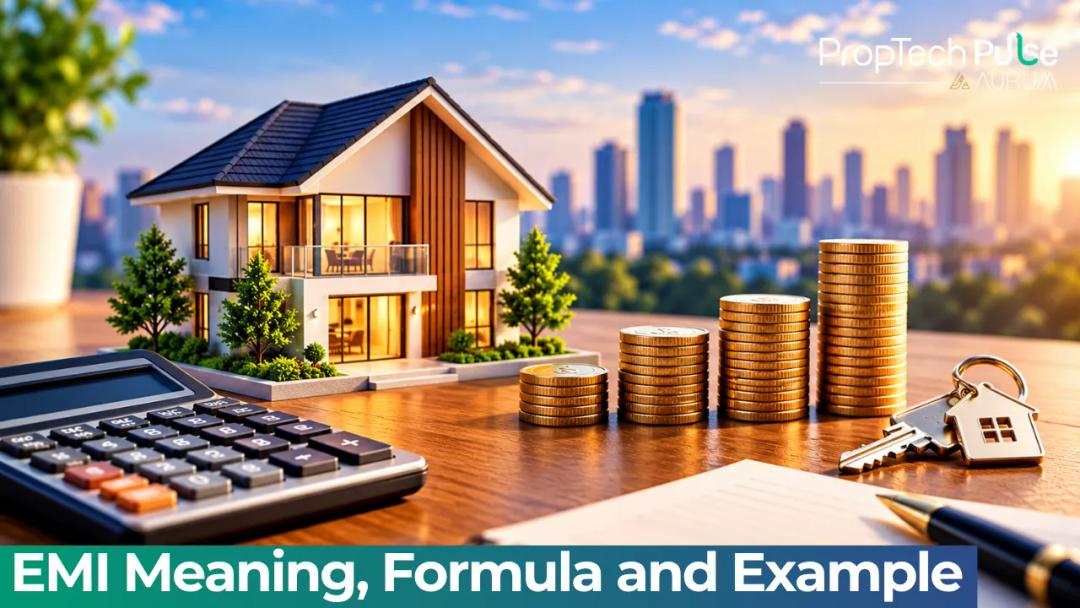
What Is an EMI? Meaning, Formula and Example
So, what is an EMI? It stands for equated monthly instalment, and it's the fixed amount you pay your lender every month until a loan is fully repaid. Each payment covers two things: interest on what you still owe, and a slice of the loan itself. On a ₹50 lakh home loan at 8.5% for 20 years, the EMI comes to about ₹43,391. Use the home loan EMI calculator to test your own numbers while you read, because the interesting part is how that ₹43,391 behaves over 240 months. In this guide What is an EMI, in plain terms? The EMI formula, with a worked example Why the first years feel like you're paying only interest Tenure: lower EMI, much higher cost What changes your EMI How much EMI is safe to take What the EMI doesn't cover How to bring the burden down Before you sign the sanction letter Frequently asked questions What is an EMI, in plain terms? Three numbers decide it: the loan amount (principal), the interest rate, and the tenure. Change any one and the EMI moves. The word "equated" matters. The amount stays the same each month, but what it is made of doesn't. Early on, most of it is interest. Later, most of it is principal. The bank calculates interest every month on the balance you still owe, which is called the reducing balance method. EMIs aren't only for homes. Car loans, personal loans and consumer durable purchases work the same way. This guide uses home loans because that's where the amounts are largest and the mistakes are costliest. For the wider picture on rates, see the home loan interest rate guide. The EMI formula, with a worked example Here's the formula lenders use: EMI = P × r × (1 + r)n ÷ [(1 + r)n − 1] P is the loan amount. The letter r is the monthly interest rate (annual rate ÷ 12 ÷ 100). The letter n is the number of months. Beginners slip on r and n more than anything else: use months, not years, and a monthly rate, not the annual one. Take ₹50 lakh at 8.5% a year for 20 years. The rate and tenure below are illustrative, not a quote from any bank. Step Working Result Loan amount (P) Given ₹50,00,000 Monthly rate (r) 8.5 ÷ 12 ÷ 100 0.007083 Number of months (n) 20 × 12 240 EMI Formula above ₹43,391 (rounded) Total repaid 43,391 × 240 ₹1.04 crore Total interest 1.04 crore − 50 lakh ₹54.14 lakh Source: Author's calculation using the standard reducing-balance formula. Read that last row again. Over 20 years you pay back the loan and then a bit more than the loan again in interest. That's not a trick; it's what 8.5% for two decades does. If your bank's figure differs by a few rupees, it's usually rounding or how the first instalment date is handled. Banks' own tools, like the HDFC home loan EMI calculator, will match within that margin. Why the first years feel like you're paying only interest Month 1 on the same loan: interest is ₹50,00,000 × 0.007083 = ₹35,417. The rest of your EMI, ₹7,974, reduces the loan. So 82% of your first payment is interest. After five years you've paid 60 EMIs, or about ₹26.03 lakh. Of that, roughly ₹20.10 lakh went to interest and only ₹5.94 lakh to principal. You still owe about ₹44.06 lakh. Interest dominates the early EMIs; principal takes over in the second half of the loan. This is why closing a loan early, or prepaying in the first few years, saves so much. And it's why a buyer who sells after five years is often surprised by the outstanding balance, which has to be cleared before the sale proceeds reach them. See TDS on sale of property for what else to expect at sale. Tenure: lower EMI, much higher cost Banks and builders love to show the smallest possible EMI, and you get it by stretching the tenure. Here's what that does to the same ₹50 lakh at 8.5%. Tenure Monthly EMI Total Interest 15 years ₹49,237 ₹38.63 lakh 20 years ₹43,391 ₹54.14 lakh 25 years ₹40,261 ₹70.78 lakh 30 years ₹38,446 ₹88.40 lakh Source: Author's calculation, ₹50 lakh at 8.5% a year (illustrative rate). Going from 15 to 30 years saves you ₹10,791 a month. It costs ₹49.77 lakh more in interest. Tip: Take the longest tenure the budget needs, then treat the shorter tenure as your real target. Prepay when you can. Our note on how to reduce home loan tenure shows how. What changes your EMI Amount, rate and tenure, as said. The rate is the one you don't fully control, and it depends on what kind of loan you have. On a fixed rate, the EMI stays put for the fixed period. On a floating rate, it moves when your lender changes its rate, which follows the RBI's policy repo rate. The RBI's website shows the repo rate at 5.25% as of 29 September 2026. Check the latest MPC decision at rbi.org.in. Here's how much a rate difference matters on the same loan: Interest Rate EMI (₹50 lakh, 20 years) 8.0% ₹41,822 8.5% ₹43,391 9.0% ₹44,986 9.5% ₹46,607 Source: Author's calculation. Rates are illustrative. Half a percentage point is roughly ₹1,600 a month here. Many lenders don't raise the EMI when rates go up; they quietly stretch the tenure instead. If your rate rises from 8.5% to 9% after year five and the EMI stays put, the remaining 15 years become about 16. You won't notice until you check your statement, so check it. It's also a good reason to read up on fixed vs floating interest rates before you choose. How much EMI is safe to take Lenders look at your fixed obligations to income ratio (FOIR): all your EMIs plus other fixed payments, as a share of monthly income. The cut-off varies by lender and by income, so ask yours. Try the home loan eligibility calculator for a first estimate. Being eligible isn't the same as being comfortable. My rule: keep total EMIs, including the car loan and the personal loan, under about 40% of take-home pay. Above that, one medical bill or a delayed bonus starts to hurt. Your credit history also sets the rate you're offered, and so the EMI. A higher score usually gets a better rate, so it's worth checking your CIBIL score before applying and reading the CIBIL score guide if it's low. Missed EMIs are reported and can affect your credit profile. Repeated defaults can also lead to recovery action by the lender. What the EMI doesn't cover The EMI is only one line in the cost of a home. Before you fix a budget, account for: Pre-EMI on under-construction flats. The bank releases money in stages as the builder hits milestones, and you pay interest only on the amount released until the full EMI starts. Check the payment plan and the project's RERA status. Processing fees and insurance. These are charged on top, and a lender-sold policy can be added to the loan amount. Read the home loan insurance guide before saying yes. Stamp duty and registration. Banks don't lend for these, so it comes from your savings. Check stamp duty charges by state. On tax: under the old regime, the interest and principal parts of your EMI can qualify for deductions, up to their applicable limits. Under the new regime, tax treatment for a self-occupied home loan differs. Check the current provisions under the Income-tax Act before relying on any deduction. The home loan tax benefits guide explains the applicable cases. How to bring the burden down Prepay first. On our example, adding just ₹5,000 to every EMI closes the loan in about 15 years 7 months instead of 20, and cuts total interest from ₹54.14 lakh to about ₹40.25 lakh, a saving near ₹13.9 lakh. Check the applicable RBI rules and your lender's terms before making a prepayment. Second, check your rate every year or two. If your lender's rate is well above what new customers get, a home loan balance transfer may cut the EMI, and the loan transfer calculator shows whether the saving beats the switching cost. More ideas are in these ways to reduce your home loan EMI burden. Before you sign the sanction letter Run the EMI at a rate one percentage point higher than today's, and see whether you'd still be fine. If yes, go ahead. If not, borrow less or put in a bigger down payment. Keep your papers ready too; the home loan documentation checklist can help you prepare the required documents. If you're still deciding whether to buy at all, read rent vs buy first, then compare offers on the Pulse home loan page. Enjoyed this blog article? Visit PropTech Pulse for more interesting blogs.
PropTech Pulse Editorial
29th September 2026

Uncategorized
Builders in Dindigul 2026: Homes Built for Modern Living
Dindigul is an important city and district in southern Tamil Nadu. Its market covers land plots, independent homes, apartments, villas, and commercial properties. The district also includes well-known towns like Palani, Batlagundu, Oddanchatram, and Kodaikanal, giving buyers a lot of choice beyond just Dindigul city. Land and plotted developments are a big part of this market, more so than in many other Tamil Nadu cities. Choosing a builder takes more than comparing brand names. Always check location, title, approvals, and construction quality. In this guide, we will look at the top builders in Dindigul. How We Picked These Companies There is no official government list for this. So we used a simple method. We looked at: How active the company is across Dindigul district What kinds of projects it builds Its presence in trusted property listings and TNRERA records Public facts, where available This list is a guide, not an investment tip. The Top 10 Builders in Dindigul 1. VR Builders Works in: Nallampatty, Seelapadi, Chettinayakampatti, Thadikombu, Kodaikanal Builds: Homes, villas, and land plots VR Builders is based in Dindigul, with an office in R.M. Colony. Its portfolio spans independent houses, villas, and land across several parts of the district. This makes it a good name for buyers looking beyond apartments, toward independent homes or land. 2. G Square Housing Works in: Ponnagaram, Dindigul Builds: Land plots G Square Housing focuses mainly on plotted development across South India, including a project called G Square Blue Hills in Ponnagaram. This makes it a good option for buyers who want to purchase land and build their own home later. Always verify layout approval, title, and utility infrastructure before buying a plot. 3. V City Developers Works in: Batlagundu Builds: Land plots V City Developers has two projects, V City Kodai Grand Legacy and V City Kodai Vels Garden, both in Batlagundu. One sits along the Batlagundu-Kodaikanal road, making it relevant for buyers considering the route toward Kodaikanal. 4. Casagrand Works in: Pallangi, Kodaikanal Builds: Land plots Casagrand is a major Chennai-based developer with a wider presence across Tamil Nadu. Its Dindigul district projects include Casagrand The Hilltop Phase 1 and Casagrand Hillmont, both plotted developments in Kodaikanal. Always assess the specific project rather than assuming the company's broader reputation applies equally everywhere. 5. Mani Property Developers Works in: Vadamadurai, Dindigul Builds: Land plots Mani Property Developers is headquartered in Karur and also works across Tiruchirappalli, Coimbatore, and Dindigul. It has residential plot offerings in Vadamadurai. This makes it relevant for buyers researching property in the wider Dindigul district, not just the city center. 6. Dream Properties Kovai Works in: Oddanchatram Builds: Homes and land Dream Properties Kovai is based in Coimbatore but has property activity in Oddanchatram, in western Dindigul district. The company describes its work as covering planning, design, construction, and marketing of real estate. Always check the exact location and ownership documentation for any specific property. 7. LandHub Properties Works in: Chinnalapatti, Dindigul Builds: Land and property services LandHub Properties is based in Tiruchirappalli and lists Dindigul among the areas it serves, including activity around Chinnalapatti. The key focus should always be the individual property and its documentation, not just the company name. 8. Shri Anugrahaa Homes Works in: Vilpatti, Kodaikanal Builds: Land plots Shri Anugrahaa Homes has a plotted project called Shri Anugrahaa Heavenly Haven Plots in Vilpatti. This makes it relevant for buyers interested in land around Kodaikanal and the hill-station market. Kodaikanal properties need extra checks on terrain, road access, and water availability. 9. Elephantine Enterprises Works in: Moonjikal, Kodaikanal Builds: Land plots Elephantine Enterprises started in 2013 and works across Chennai, Kodaikanal, and Dindigul. Its project, Elephantine Tales in Moonjikal, is a large plotted development in the district. Always examine title, land use, and access carefully for Kodaikanal land. 10. Sowrem Promoters Works in: Kodaikanal, Dindigul district Builds: Land plots and villas Sowrem Promoters started in 2012 and has a project called Onyx Paradise, offering residential plots and villas in Kodaikanal. The company says the project has DTCP approval and RERA registration. Check the exact location, terrain, and documentation carefully before investing in hill-station property like this. How We Ranked These Companies We did not use brand fame alone to rank these builders. Local presence mattered a lot. We wanted companies genuinely active across Dindigul district, including its smaller towns. Listing activity was checked too. We looked at how often each builder appeared in trusted property listings. Project variety was another factor, including homes, villas, and land plots. Public information helped confirm what facts we could verify. Because of this method, our list may differ from other lists online. That is normal, since different methods lead to different results. Where to Buy: Key Areas in Dindigul Dindigul city is the district's main urban center, with established neighborhoods, schools, and hospitals. Palani is a well-known town, supported by tourism, religious travel, and local commerce. Batlagundu sits strategically on the route toward Kodaikanal, popular for plotted development. Oddanchatram is an important commercial and agricultural center, home to activity from Dream Properties Kovai. Nilakottai is another established town, with a mix of independent houses and plotted developments. Kodaikanal is its own distinct property market, attracting interest in villas, plots, and holiday homes. Several developers, including Casagrand and Sowrem Promoters, are active here. Since the terrain and environment are different from the plains, always do extra checks before buying land here. Types of Homes Available in Dindigul 2 BHK flats suit small families and first-time buyers, though apartments are just one part of this market. Check carpet area and maintenance before deciding. 3 BHK flats suit bigger families, though availability varies a lot between Dindigul city and smaller towns. Compare actual usable area, not just the advertised size. Residential plots are a big part of the local market, spread across Dindigul city, Batlagundu, Palani, and other towns. Always verify title, layout approval, and utility access. Independent houses and villas offer more privacy than apartments. Check both land documents and building approvals before buying. Commercial property is in demand too, thanks to Dindigul's role as a business center. Check visibility, access, and tenant demand before investing. What to Check Before Choosing a Builder Being on this list does not mean every project is perfect. Always check the details yourself. Here is a simple checklist: TNRERA registration. Check the official portal for promoter and project details. Land and layout documents. Especially important for plots. Verify ownership, layout approval, and road access. Location. Check proximity to schools, hospitals, and major roads. For Kodaikanal, also check terrain and road conditions. Site inspection. For finished homes, inspect the building yourself. For under-construction ones, compare actual progress with what's registered. Full cost. Add up registration, taxes, maintenance, and other charges beyond the base price. The agreement. Read the sale agreement and property documents carefully. Get legal advice for larger purchases. Doing this small bit of homework can save you a lot of trouble later. Why New Projects in Dindigul Deserve a Closer Look Dindigul district continues to see new property registrations, spanning both residential buildings and plotted layouts across areas like Palani, Athoor, and Oddanchatram. Builders like V City Developers, G Square Housing, Casagrand, and Elephantine Enterprises all have active projects across the district and Kodaikanal. Always tell the difference between a genuinely new launch, an under-construction project, and an older property being resold. Check regulatory records before making a booking. Final Thoughts Dindigul has a wide mix of local and regional builders, with a strong focus on land and plotted development. VR Builders, G Square Housing, and V City Developers bring solid local and regional experience. Casagrand, Mani Property Developers, and Dream Properties Kovai add more choices across the wider district. LandHub Properties, Shri Anugrahaa Homes, Elephantine Enterprises, and Sowrem Promoters round out the list, mostly focused on Kodaikanal's land market. This list is a good place to start if you are exploring real estate in Dindigul. But no list can pick the perfect home for you. Always check the RERA status, legal papers, location, and price. Visit the site. Ask questions. A little research today can help you make a smart choice tomorrow. Disclaimer: This ranking is for general information only. It is based on publicly available facts. Rankings may change based on new data and methods. Please do your own research before making any real estate or investment decision. Enjoyed this blog article? Visit PropTech Pulse for more interesting blogs.
PropTech Pulse Editorial
17th September 2026
Uncategorized
Types of Home Loans in India: Complete Guide for Buyers
Open any bank's page on types of home loans and you'll find ten or twelve listed one after another. Construction loan, NRI loan, floating rate loan, top-up loan. It looks like a menu. It isn't. Those names mix three separate questions. What is the money for? How does the interest rate behave? And does the borrower fit a special category? Every home loan answers all three. A floating-rate construction loan for a woman borrower is one loan, not three. This guide to the types of home loans in India takes those questions one at a time. At the end there's a table to match your situation to the right loan. In this guide Types of home loans in India at a glance Loans by purpose: what the money is for Is a balance transfer worth it? A worked example Fixed, floating or hybrid: loans by interest rate Special loans for NRIs, women and PMAY applicants Loan against property is not a home loan Which home loan do you need? Frequently asked questions Types of home loans in India at a glance Quick answer The main types of home loans in India are purchase, construction, plot, composite, home improvement, extension, top-up, balance transfer and bridge loans. Each can come with a fixed, floating or hybrid rate. NRIs, women borrowers and PMAY-eligible families can get versions with different terms or subsidies. Home loan types by purpose, with typical limits and tax treatment Loan type Use it for How much you can borrow Tax benefit (old regime) Home purchase Buying a new or resale flat or house Up to 75% to 90% of value, per RBI limits Interest under 24(b) and principal under 80C Construction Building a house on land you own Based on the construction estimate, released in stages Yes, after construction is complete Plot (land) Buying a residential plot Often 70% to 80% of plot value None on the plot alone Composite Buying a plot and building on it, in one loan Plot plus construction cost Yes, once the house is built Home improvement Repairs, waterproofing, painting, rewiring Based on the contractor's estimate Interest only, capped at ₹30,000 a year Home extension Adding a room or a floor Based on the approved plan and estimate Interest and principal, as for construction Top-up Extra money on an existing home loan Depends on repayment record and property value Only if used for a house, with proof Balance transfer Moving your loan to a cheaper lender Your outstanding amount, often with a top-up Continues as before Bridge Buying a new home before selling the old one Part of the old home's expected sale value Generally none Below, each of these types of home loans gets its own section: when it makes sense, and where the fine print catches people. Loans by purpose: what the money is for This is the choice that matters most. It decides how much you can borrow, how the money is released and what tax benefit you get. Home purchase loan The standard one, and what most people mean by "home loan". It pays for a ready flat, an under-construction flat from a builder, or a resale house. RBI caps how much a bank can lend. It's 90% of value for homes up to ₹30 lakh, 80% up to ₹75 lakh, and 75% above that. Stamp duty and registration don't count towards the value. Our guide onhow to buy a house in Indiashows what that means in cash. For an under-construction flat, the bank pays the builder in stages as work progresses. Until the full amount is out, you pay only interest on what's been paid out, called pre-EMI. Home construction loan Own the land already? This is the loan for building on it. The bank checks the approved building plan and the architect's cost estimate, then releases money in three or four stages: foundation, structure, roofing, finishing. Before each release, someone from the bank usually visits the site. So keep the work on schedule, because a stalled site means a stalled loan. Plot loan For buying a residential plot. Lenders are pickier here. The plot usually has to be inside municipal or development authority limits, with clear title and approved layout. Agricultural land doesn't qualify. Many lenders also expect you to start building within a set period, often two to five years, depending on the lender. And the interest isn't tax-deductible while the land is empty. That's a real difference from a purchase loan, and many buyers find out only at tax time. Composite loan A plot loan and a construction loan in one. You get a single sanction, one set of paperwork and one EMI. The plot amount is paid out first and the construction amount follows in stages. If you already know you'll build, this is usually simpler than taking two loans. It also makes the whole amount eligible for tax benefits once the house is complete. Home improvement and home extension loans An improvement loan covers repairs and upgrades like waterproofing, rewiring, flooring, a new kitchen. An extension loan pays for adding space, such as an extra room or a floor, and needs an approved plan from the municipal body. The tax treatment differs, and it's easy to miss. For a self-occupied home under the old regime, repair loan interest is capped at ₹30,000 a year within the ₹2 lakh limit. Principal gets no 80C benefit. An extension loan is treated like construction, so both interest and principal can qualify. Furniture isn't covered. Improvement loans pay for work on the structure and fixed fittings. Sofas, appliances and loose furniture usually aren't eligible. For those, lenders will point you to a top-up or a personal loan. Top-up loan If you've repaid an existing home loan well for a year or more, most lenders will lend you extra on top of it. You can use the money for almost anything: school fees, a car, a family wedding. The rate is typically a little higher than your home loan but far below a personal loan. The tenure usually can't go past what's left on the original loan. One caution. Tax benefits apply only if you use the top-up to buy, build or repair a house and can show receipts. Spend it on a car and there's no deduction. Balance transfer loan You move your outstanding loan to a new lender offering a lower rate. The new lender pays off the old one and collects your original property papers. It's worth doing only when the saving comfortably beats the switching costs, which the next section works out. Bridge loan A short loan, usually for one to two years, for people buying a new home before they've sold the old one. It's repaid from the sale proceeds. Rates run higher than regular home loans, and not every lender offers one. If your old flat takes longer to sell than expected, the pressure builds fast. Only take one if the sale is realistic within the loan period. Is a balance transfer worth it? A worked example Say you owe ₹50 lakh with 15 years left, at 9%. Another bank offers 8.25%. Both rates are examples, not current offers. Current lender (9%) New lender (8.25%) Monthly EMI ₹50,713 ₹48,507 Total interest over 15 years ₹41.3 lakh ₹37.3 lakh Switching costs None About ₹45,000, assumed (processing fee with GST, legal and valuation, stamp duty on the new mortgage) Net saving About ₹3.5 lakh over the term; costs recovered in roughly 20 months A ₹2,206 drop in EMI pays back ₹45,000 of costs in about 20 months. After that, it's pure saving. So this switch is worth making. Now change one thing. With only five years left, most of your interest is already paid, and the same switch saves far less. As a rough rule, a transfer pays off when the rate gap is at least half a percentage point and there are ten or more years to go. Before you move, ask your current lender to match the rate. Many banks will cut it for a one-time conversion fee of a few thousand rupees. You keep the saving without any paperwork. [AUTHOR INSIGHT: how often existing lenders agree to reprice when a borrower shows a competing offer, based on what you've seen.] Fixed, floating or hybrid: loans by interest rate Any of the loans above comes with one of three rate structures. For most borrowers, this choice matters less than people think, but the details are worth knowing. Factor Floating Fixed Hybrid How the rate moves Follows a benchmark; for banks, usually the RBI repo rate Stays the same for the fixed period Fixed for the first 2 to 5 years, then floating Starting rate Lowest Usually higher than floating In between Prepayment charges None for individuals Can apply Can apply during the fixed period Suits Most salaried borrowers with some room in the budget Borrowers who need a fixed EMI to budget Borrowers who want certainty for the first few years Since October 2019, new floating-rate home loans from banks have had to be linked to an external benchmark, and most banks use the repo rate. The rate must be reset at least once every three months, so RBI cuts reach you fairly quickly. Housing finance companies aren't bound by that rule. They price loans on their own internal benchmark, so a rate cut can take longer to reach you, or reach you only in part. It's not a reason to avoid HFCs, which often approve self-employed borrowers more easily. Just ask how their rate is set before you sign. Many "fixed" home loans in India aren't fixed for the whole term. Read the agreement for a reset clause. RBI rules also require lenders to offer you a switch between fixed and floating at reset, with charges disclosed upfront. Still on an old MCLR or base-rate loan? If your loan is from before October 2019, check what benchmark it follows. Older benchmarks often move slowly. Moving to a repo-linked rate with the same bank can cut your EMI for a small fee. Special loans for NRIs, women and PMAY applicants NRI home loans NRIs and OCIs can take home loans to buy residential property in India, though not agricultural land, plantations or farmhouses under FEMA rules. EMIs are paid from an NRE or NRO account, or from rental income in India. Expect more paperwork: overseas salary slips, a work contract, passport and visa copies, and often a power of attorney for someone in India to handle registration. Some lenders also offer NRIs shorter tenures than resident borrowers. Home loans for women These are regular home loans, but several lenders shave a little off the rate, often around 0.05%, when a woman is the main borrower or co-owner. It sounds small. The bigger savings are elsewhere. Several states charge lower stamp duty when a woman buys, including Maharashtra and Delhi. And if a couple are both co-owners and co-borrowers, each can claim tax deductions separately under the old regime. See our guide to home loans for womenfor the details. PMAY interest subsidy Under PMAY-Urban 2.0, eligible families buying their first pucca home can get an interest subsidy, paid into the loan account. Broadly, household income must be up to ₹9 lakh a year and the property worth up to ₹35 lakh. The loan can go up to ₹25 lakh, with subsidy on the first ₹8 lakh. It's not a separate loan type. You apply through a participating bank or HFC while taking a normal purchase or construction loan. If your income is anywhere near the limit, ask the lender about it at the start, not after sanction. Loan against property is not a home loan People mix these up all the time, partly because both are secured on a house. A loan against property (LAP) is money borrowed against a property you already own, for any purpose, whether that's a business, a wedding or a medical bill. It usually costs more than a home loan, runs for a shorter term and lends a smaller share of the property's value. It also gets none of the home loan tax benefits unless the money actually goes into buying or building a house. If you need money for something other than a home, compare LAP with a top-up. For small amounts, see our comparison of personal loans and home loans. Which home loan do you need? Find the row that fits you. Then pick the rate type, which for most people means floating. Your situation Loan to ask for Check before you apply Buying a ready or builder flat Home purchase loan RERA registration and your cash for charges Buying land now, building in the next year or two Composite loan Approved layout and a realistic construction timeline Buying land with no firm plan to build Plot loan, or wait No tax benefit until you build Building on land you own Construction loan Approved plan and architect's estimate Adding a room or floor Home extension loan Municipal approval for the extension Repairs or upgrades Home improvement loan Only ₹30,000 interest deduction a year Already paying a loan at a high rate Balance transfer, after asking your bank to reprice Rate gap and years left Need money for something other than a house Top-up loan No tax benefit for non-housing use Buying before selling your current home Bridge loan How quickly your flat will realistically sell If you're still unsure after this, look at the tax angle. Two loans can have the same EMI and very different after-tax costs, especially plot and improvement loans. And check your credit scorebefore applying, since it decides the rate more than the loan type does. When you're ready to apply, our home loan documents checklist and guide to pre-approval cover the next steps. Enjoyed this blog article? Visit PropTech Pulse for more interesting blogs.
PropTech Pulse Editorial
29th September 2026
Uncategorized
What Is an EMI? Meaning, Formula and Example
So, what is an EMI? It stands for equated monthly instalment, and it's the fixed amount you pay your lender every month until a loan is fully repaid. Each payment covers two things: interest on what you still owe, and a slice of the loan itself. On a ₹50 lakh home loan at 8.5% for 20 years, the EMI comes to about ₹43,391. Use the home loan EMI calculator to test your own numbers while you read, because the interesting part is how that ₹43,391 behaves over 240 months. In this guide What is an EMI, in plain terms? The EMI formula, with a worked example Why the first years feel like you're paying only interest Tenure: lower EMI, much higher cost What changes your EMI How much EMI is safe to take What the EMI doesn't cover How to bring the burden down Before you sign the sanction letter Frequently asked questions What is an EMI, in plain terms? Three numbers decide it: the loan amount (principal), the interest rate, and the tenure. Change any one and the EMI moves. The word "equated" matters. The amount stays the same each month, but what it is made of doesn't. Early on, most of it is interest. Later, most of it is principal. The bank calculates interest every month on the balance you still owe, which is called the reducing balance method. EMIs aren't only for homes. Car loans, personal loans and consumer durable purchases work the same way. This guide uses home loans because that's where the amounts are largest and the mistakes are costliest. For the wider picture on rates, see the home loan interest rate guide. The EMI formula, with a worked example Here's the formula lenders use: EMI = P × r × (1 + r)n ÷ [(1 + r)n − 1] P is the loan amount. The letter r is the monthly interest rate (annual rate ÷ 12 ÷ 100). The letter n is the number of months. Beginners slip on r and n more than anything else: use months, not years, and a monthly rate, not the annual one. Take ₹50 lakh at 8.5% a year for 20 years. The rate and tenure below are illustrative, not a quote from any bank. Step Working Result Loan amount (P) Given ₹50,00,000 Monthly rate (r) 8.5 ÷ 12 ÷ 100 0.007083 Number of months (n) 20 × 12 240 EMI Formula above ₹43,391 (rounded) Total repaid 43,391 × 240 ₹1.04 crore Total interest 1.04 crore − 50 lakh ₹54.14 lakh Source: Author's calculation using the standard reducing-balance formula. Read that last row again. Over 20 years you pay back the loan and then a bit more than the loan again in interest. That's not a trick; it's what 8.5% for two decades does. If your bank's figure differs by a few rupees, it's usually rounding or how the first instalment date is handled. Banks' own tools, like the HDFC home loan EMI calculator, will match within that margin. Why the first years feel like you're paying only interest Month 1 on the same loan: interest is ₹50,00,000 × 0.007083 = ₹35,417. The rest of your EMI, ₹7,974, reduces the loan. So 82% of your first payment is interest. After five years you've paid 60 EMIs, or about ₹26.03 lakh. Of that, roughly ₹20.10 lakh went to interest and only ₹5.94 lakh to principal. You still owe about ₹44.06 lakh. Interest dominates the early EMIs; principal takes over in the second half of the loan. This is why closing a loan early, or prepaying in the first few years, saves so much. And it's why a buyer who sells after five years is often surprised by the outstanding balance, which has to be cleared before the sale proceeds reach them. See TDS on sale of property for what else to expect at sale. Tenure: lower EMI, much higher cost Banks and builders love to show the smallest possible EMI, and you get it by stretching the tenure. Here's what that does to the same ₹50 lakh at 8.5%. Tenure Monthly EMI Total Interest 15 years ₹49,237 ₹38.63 lakh 20 years ₹43,391 ₹54.14 lakh 25 years ₹40,261 ₹70.78 lakh 30 years ₹38,446 ₹88.40 lakh Source: Author's calculation, ₹50 lakh at 8.5% a year (illustrative rate). Going from 15 to 30 years saves you ₹10,791 a month. It costs ₹49.77 lakh more in interest. Tip: Take the longest tenure the budget needs, then treat the shorter tenure as your real target. Prepay when you can. Our note on how to reduce home loan tenure shows how. What changes your EMI Amount, rate and tenure, as said. The rate is the one you don't fully control, and it depends on what kind of loan you have. On a fixed rate, the EMI stays put for the fixed period. On a floating rate, it moves when your lender changes its rate, which follows the RBI's policy repo rate. The RBI's website shows the repo rate at 5.25% as of 29 September 2026. Check the latest MPC decision at rbi.org.in. Here's how much a rate difference matters on the same loan: Interest Rate EMI (₹50 lakh, 20 years) 8.0% ₹41,822 8.5% ₹43,391 9.0% ₹44,986 9.5% ₹46,607 Source: Author's calculation. Rates are illustrative. Half a percentage point is roughly ₹1,600 a month here. Many lenders don't raise the EMI when rates go up; they quietly stretch the tenure instead. If your rate rises from 8.5% to 9% after year five and the EMI stays put, the remaining 15 years become about 16. You won't notice until you check your statement, so check it. It's also a good reason to read up on fixed vs floating interest rates before you choose. How much EMI is safe to take Lenders look at your fixed obligations to income ratio (FOIR): all your EMIs plus other fixed payments, as a share of monthly income. The cut-off varies by lender and by income, so ask yours. Try the home loan eligibility calculator for a first estimate. Being eligible isn't the same as being comfortable. My rule: keep total EMIs, including the car loan and the personal loan, under about 40% of take-home pay. Above that, one medical bill or a delayed bonus starts to hurt. Your credit history also sets the rate you're offered, and so the EMI. A higher score usually gets a better rate, so it's worth checking your CIBIL score before applying and reading the CIBIL score guide if it's low. Missed EMIs are reported and can affect your credit profile. Repeated defaults can also lead to recovery action by the lender. What the EMI doesn't cover The EMI is only one line in the cost of a home. Before you fix a budget, account for: Pre-EMI on under-construction flats. The bank releases money in stages as the builder hits milestones, and you pay interest only on the amount released until the full EMI starts. Check the payment plan and the project's RERA status. Processing fees and insurance. These are charged on top, and a lender-sold policy can be added to the loan amount. Read the home loan insurance guide before saying yes. Stamp duty and registration. Banks don't lend for these, so it comes from your savings. Check stamp duty charges by state. On tax: under the old regime, the interest and principal parts of your EMI can qualify for deductions, up to their applicable limits. Under the new regime, tax treatment for a self-occupied home loan differs. Check the current provisions under the Income-tax Act before relying on any deduction. The home loan tax benefits guide explains the applicable cases. How to bring the burden down Prepay first. On our example, adding just ₹5,000 to every EMI closes the loan in about 15 years 7 months instead of 20, and cuts total interest from ₹54.14 lakh to about ₹40.25 lakh, a saving near ₹13.9 lakh. Check the applicable RBI rules and your lender's terms before making a prepayment. Second, check your rate every year or two. If your lender's rate is well above what new customers get, a home loan balance transfer may cut the EMI, and the loan transfer calculator shows whether the saving beats the switching cost. More ideas are in these ways to reduce your home loan EMI burden. Before you sign the sanction letter Run the EMI at a rate one percentage point higher than today's, and see whether you'd still be fine. If yes, go ahead. If not, borrow less or put in a bigger down payment. Keep your papers ready too; the home loan documentation checklist can help you prepare the required documents. If you're still deciding whether to buy at all, read rent vs buy first, then compare offers on the Pulse home loan page. Enjoyed this blog article? Visit PropTech Pulse for more interesting blogs.
PropTech Pulse Editorial
29th September 2026

Ask Pulse Ai anything about real estate

Unlock the Latest in Real Estate
News, Infographics, Blogs & More! Delivered to your inbox.