

©PropTech Pulse 2025, All rights reserved.

What is Home Loan Eligibility?
Home Loan Eligibility refers to qualifying criteria lenders assess before approving financing for a residence. Commonly, they evaluate credit scores, stable income, and existing debt obligations. Certain thresholds—like debt-to-income ratios—must be met, indicating the borrower’s ability to handle monthly installments without distress.
Key Points:
- Income Verification: Employers or tax returns confirm stability and longevity of earnings.
- Credit Health: Credit histories and FICO-like scores measure trustworthiness.
- Collateral Assessment: The asset’s worth is appraised for potential recovery if defaults occur.
- Policy Variation: Requirements differ among institutions and loan types.
Meeting eligibility fosters smoother approvals, better interest rates, and higher borrowing limits, ensuring prospective occupants can secure comfortable financing within safe risk parameters for both parties.
Recent Glossary
What is the yield gap between offices and warehouses?
What is the YEIDA Sector 22D plot scheme?
What is Yamuna Expressway industrial city?
What is the yield spread over G-Secs for REITs?
What is the year-over-year vacancy trend in coworking?
View More...
Recent FAQs
What are the red flags to watch for in a new project brochure?
What are the processing fees and other charges on a home loan?
Can I earn while learning through Pulse University and how is it tracked?
How does age affect the eligibility result in a home loan calculator?
How does the learn and earn model at Pulse University work?
View More...
Insight Pulse

Uncategorized
Municipalika 2026 Delhi: Smart Cities Expo, 9–11 Dec
India's cities are being rebuilt in real time. New water networks, waste systems, metro lines and digital governance platforms are all being planned, tendered and delivered across the country. Municipalika 2026 is where the people commissioning these projects meet the people who design, build and run them. The event takes place from 9 to 11 December 2026 at Hall 6, Bharat Mandapam, New Delhi. Municipalika is one of India's leading smart cities and urban development events. It is built for both the B2B and B2G sides of the urban ecosystem. Over three days, it brings together municipal leaders, government departments, architects, contractors, builders and solution providers to tackle the challenges facing India's growing cities. The Event at a Glance Municipalika 2026 combines a large exhibition with a policy conference, an innovation challenge and an awards ceremony. The expected scale includes: 300+ exhibitors showcasing products, technologies and services for cities. 10,000+ trade visitors from across the urban development sector. 3,000+ conference delegates taking part in policy and planning discussions. 550+ architects and planners looking for new ideas and solutions. 120+ media representatives covering the event. The exhibition is open from 11:00 AM to 6:00 PM on all three days. Why Municipalika Matters Urban India is growing fast, and cities are under pressure to deliver better services to more people. Clean water, efficient waste management, reliable transport, affordable housing and responsive governance are no longer long-term goals. They are urgent needs. Meeting them requires large public investment and close collaboration between government and industry. What sets Municipalika apart is who is in the room. Many of the people who write urban tenders and make procurement decisions attend the event. Suppliers can meet buyers directly, understand their priorities and learn what is coming next. Holding the event in Delhi, close to central ministries and policymakers, adds weight to the conversations. It also gives attendees a chance to hear about urban policy directly from the source. Sectors on the Agenda The Municipalika conference looks at how policy, technology, planning and collaboration can make cities safer, better connected and more sustainable. The agenda covers the full range of municipal responsibilities: Water: Supply networks, treatment, distribution and conservation to meet growing urban demand. Waste: Collection, processing and recycling systems that help cities stay clean and reduce landfill. Mobility: Metro lines, public transport, road infrastructure and smarter traffic management. Housing: Affordable and sustainable housing for India's expanding urban population. Public works: The roads, buildings and civic infrastructure that keep cities running. Digital governance: Technology platforms that make city services more transparent, efficient and citizen-friendly. Climate resilience: Planning and infrastructure that help cities withstand floods, heat and other climate risks. Three Days, the Full Urban Agenda Municipalika 2026 is more than an exhibition. Several programmes run side by side, so visitors can meet suppliers, hear from government and see new ideas in one visit: The Municipalika Conference, which focuses on urban policy, planning and implementation. The Urban Innovation Challenge 2026, a national challenge that highlights fresh solutions for city problems. The UIC Awards Ceremony, which recognises standout ideas and projects from the challenge. The exhibition floor, where companies showcase products and services across every urban sector. Featured sessions on the topics shaping the future of Indian cities. Direct access to government, giving industry a rare chance to engage with decision-makers. Who Attends The event brings together the full chain of people who shape urban projects, from those who commission them to those who design, build and manage them. Attendees include: Mayors and municipal commissioners who lead city administrations and set priorities. Public Works Departments (PWDs) responsible for civic infrastructure. EPC contractors and builders who deliver large-scale projects on the ground. Architects and urban planners who design the spaces cities depend on. Facility managers who keep buildings and public assets running smoothly. Resident Welfare Associations (RWAs) who represent the communities that urban projects serve. The PropTech and Real Estate Angle For real estate developers and PropTech companies, Municipalika offers a valuable view of how Indian cities are changing. Urban infrastructure has a direct effect on property values, project viability and where people choose to live and work. A new metro line, an upgraded water network or better waste management can transform a neighbourhood. Digital governance is also opening new opportunities for technology providers. Data-driven planning, smart utilities, digital approvals and connected public services are becoming part of how cities operate. Municipalika is a chance to understand what cities need and to build relationships with the people making those decisions. Tips for Making the Most of Your Visit Register early to secure your place before registration closes. Pick your sectors and plan which conference sessions and exhibitors to visit. Prepare to meet government buyers with clear information on how your solution solves city challenges. Follow the Urban Innovation Challenge to spot new ideas and potential partners. Follow up after the event to turn conversations into projects. Final Thoughts Municipalika 2026 brings India's urban agenda into one hall for three focused days. With hundreds of exhibitors, thousands of delegates and direct access to the people shaping city policy, it is an important event for anyone working in urban development, infrastructure or real estate. If your work touches the future of Indian cities, Bharat Mandapam is the place to be this December. Frequently asked questions What is Municipalika 2026? Municipalika 2026 is a smart cities and urban development event in New Delhi. It brings together the government bodies that commission urban projects and the companies that design, build and run them, through an exhibition, a policy conference, an innovation challenge and an awards ceremony. When and where is Municipalika 2026? The event runs from 9 to 11 December 2026 in Hall 6, Bharat Mandapam, New Delhi. It is open from 11:00 AM to 6:00 PM each day. How big is the event? Municipalika 2026 expects 300+ exhibitors, 10,000+ trade visitors, 3,000+ delegates, 550+ architects and planners, and 120+ media representatives. Which sectors does the event cover? The agenda covers water, waste, mobility, housing, public works, digital governance and climate resilience. Who should attend? The event suits mayors, municipal commissioners, PWDs, EPC contractors, builders, architects, urban planners, facility managers and RWAs, as well as companies offering solutions for cities. What happens alongside the exhibition? Alongside the exhibition, Municipalika runs a policy conference, featured sessions, the Urban Innovation Challenge 2026 and the UIC Awards Ceremony. It also offers direct access to government decision-makers. How can I register? You can register through the Municipalika 2026 event page on PropTech Pulse. Registration closes before the event, so it's best to sign up early. Upcoming event Register for Municipalika 2026 Meet the mayors, commissioners, planners and builders shaping India's cities, all in one hall for three days. Date: 9–11 December 2026 Time: 11:00 AM – 6:00 PM Venue: Hall 6, Bharat Mandapam, New Delhi Register now

PropTech Pulse Editorial
12th November 2026
Uncategorized
Toilet Vastu for Flats: Directions, Shared Walls & Remedies
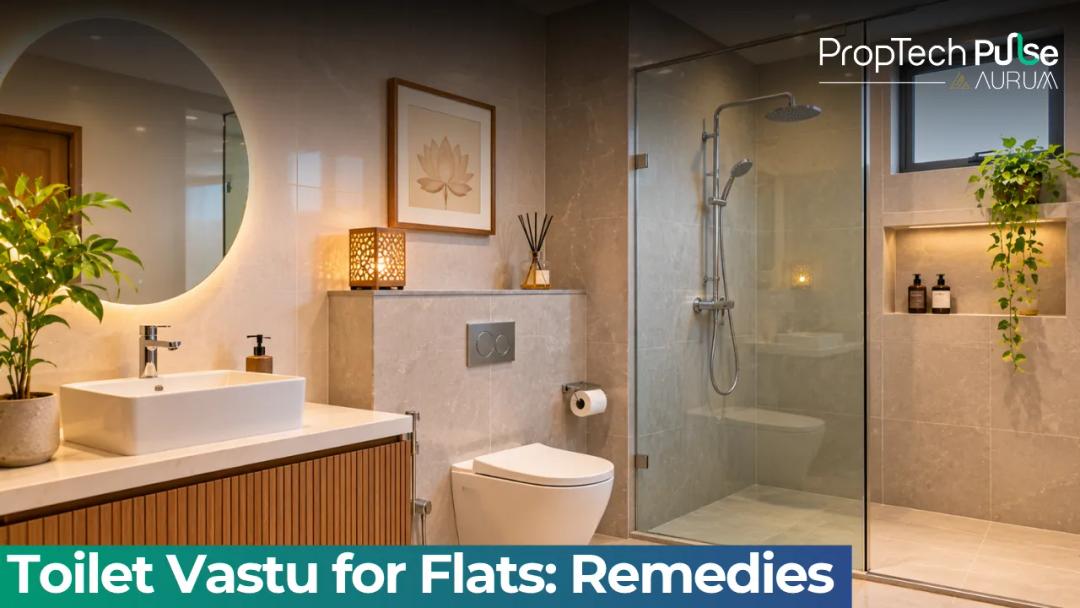
Buying a flat means living with the builder's plumbing shaft. When a toilet vastu clash hits a second-floor unit, panic usually follows. You might want to budget for slab demolition or hire a consultant. But before you spend money, know this: toilet direction as per vastu relies heavily on orientation and daily habits. You can manage the room without moving walls. In high-rise towers, the soil stack dictates layout, which forces us to focus on what actually shifts energy: fixture positioning, ventilation routines, and the boundaries of the shared walls. This guide breaks down practical corrections that work within stacked apartments. Stop worrying about static concrete. Start managing the factors you control. In this guide Toilet Vastu in Modern Flats: Why the Soil Stack Decides Everything Attached Bathroom Vastu: The Shared-Wall Rules That Matter Toilet Direction as Per Vastu: Orientation of the Seat While Sitting Bathroom Vastu for Flat Owners: What You Can Change Without Demolition Tiered Vastu Corrections: Routine Maintenance Before Traditional Symbols Knowing When to Shift Wet Rooms and How to Get Tailored Space Mapping Frequently asked questions Toilet Vastu in Modern Flats: Why the soil stack decides everything Quick answer Ideally place the toilet in the west or north-west quadrant. Keep the wash basin near the north or east to catch morning light. Face south or north while using the commode. Handle shared walls carefully by avoiding direct backing toward sacred spaces or kitchen stoves. Bathing zones handle the water element. Commodes manage the waste. Classical shastra requires opposite directional treatment for each. Water brings stability, while waste clears stagnation. Place your wash basin near the north or east to catch morning light. The western commode sits outside that field entirely. Treat both fixtures as separate units. A combined approach causes placement confusion. Aim for the north-west or west corners. These quadrants support the air and earth elements needed to clear heavy energies. Compact floor plans often force bathrooms into the south-east corner instead. That places the room near the kitchen fire zone. Angle the toilet door away from the cooking platform. Hang a heavy curtain or install a louvered vent to break the direct line of sight. Moving a riser through three upper floors rarely satisfies building codes. Handle a northeast placement with patience and strict maintenance. Run an oversized exhaust fan during every shower. Paint the walls pale yellow or off-white to bounce light into the damp corner. Set a small glass jar of coarse sea salt near the drain. Swap the salts monthly to pull lingering moisture out of the tiles. Attached bathroom vastu: The shared-wall rules that matter A master suite raises immediate anxiety when the bed touches a drainage wall. Shared boundaries operate on a strict priority hierarchy. Never place a pooja room or an active cooking platform behind a toilet partition. Energy travels freely through unfinished plaster. Continuous flushing vibrations disrupt the silence of a meditation space. Keep the mandir where it stands, but add mass to the dividing wall. Mount a thick wooden panel or tall bookshelf against the partition. Position brass tikkas or small oil lamps on the shelf facing the bathroom. Run a quiet electric heater behind that wall during monsoons. Dry warmth balances the excess humidity effectively. Apply the same logic to kitchen platforms. Fire colliding with water triggers thermal stress in traditional physics. Move the gas hob to the north-east corner of the kitchen. Mount the exhaust switch on the north wall instead of the west. Under-stair toilets show up often in duplex conversions. Face the commode north or south in that tight volume. Drape fabric runners over the stair risers to soften the downward energy hitting the ceiling. Buyers investigating how important is vastu for flat resale care deeply about layout choices. Breathable wall finishes and functional ventilation usually outweigh minor directional tweaks during property valuation. Toilet direction as per vastu: Orientation of the seat while sitting Outer shell direction sets the stage. Seat orientation handles the daily ritual. Face south or face north while using the commode. Both positions ground you and align your body with the magnetic pull. Avoid facing east during use. Solar radiation clashes with relaxation protocols. Tilt the vanity mirror slightly left or right. Prevent your reflection from hitting the water tank directly. Glass magnifies whatever direction it faces. A centered toilet vastu mirror amplifies stagnant energy bouncing back into the room. Aim it toward the doorway instead. Pull fresh airflow inward naturally. Watch the exhaust fan blades from below. Verify clockwise rotation. Correct spinning pushes hot, damp air straight toward the terrace or common duct. Reverse rotation traps humidity inside the ceiling cavity. Mold grows on false-board edges and PVC panels warp over time. Bathroom Vastu for Flat Owners: What you can change without demolition True magnetic direction hides behind modern construction materials. Steel rebars, aluminum grilles, and concealed conduits skew handheld compass readings by fifteen to twenty degrees. Stand in the center facing the main door, not the outer facade. Map the four walls from inside, then arrange the furniture accordingly. Washing machines occupy the north-east corner in many modern washrooms due to space limits. Lift the appliance onto a raised rubber mat with four suction cups. Absorb vibration noise and interrupt direct contact between the metal chassis and the sensitive floor tile. Swap standard bulbs for warm white 2700K LEDs. Cool blue light signals alertness, defeating the relaxation purpose of the space. Clutter traps negative flow. Stacked toiletries, dried towels, and leaking pipes create physical blockages that mirror energetic congestion. Clear shelves weekly. Fix dripping faucets immediately, even slow drips. Replace worn-out pan gasket seals, because sewage smell constantly resets the baseline atmosphere. Explore why vastu compliance in residential design matters when evaluating future purchases. Developers prioritizing clean sightlines reduce remediation headaches later. Tiered Vastu Corrections: Routine maintenance before traditional symbols Five structural habits shift room dynamics faster than expensive idols. Close the toilet lid when not in use. Run cross-ventilation for twenty minutes after every bath cycle. Avoid placing brooms or mops against the wall facing the exit. Scrub the drain cover monthly with mild vinegar to clear surface scum. Never store heavy luggage inside the bathroom. Dead weight suppresses natural upward currents. Traditional interventions require minimal aesthetic disruption. Lay a thin copper foil strip beneath the threshold stone during renovation. Press a small copper coin into the adhesive mortar near the entrance frame. Hold camphor in your palm, spin it clockwise three times, and extinguish it in the dry corner farthest from the commode. Perform this once a fortnight. The practice clears particulate matter. A subtle floral trace keeps the space feeling fresh upon entry. Architects sometimes reference aquarium placements near entryways. This mirrors the established fish bowl placement and species rules suggesting life near positive energy vents. Bring live pothos or money plants near the bathroom doorway. Soften hard architectural lines and filter indoor air quality actively. Knowing when to shift wet rooms and how to get tailored space mapping Demolishing tiled surfaces and chasing new piping paths costs more than most initial token deposits. Commit to major structural changes only if the wet room cuts through the southeast core, backs onto a sacred shrine, or opens into the main entrance foyer. Otherwise, rely on rigorous upkeep, correct seating angles, and disciplined ventilation cycles. Irregular beams or precise sector mapping demand specialized attention. Browse the current Pulse Vastu Packages to connect with consultants specializing in complex urban layouts. Frequently asked questions What is the best direction for toilet in flat as per vastu? Ideally place it in the west or north-west quadrant. West supports the earth element required to clear waste, while north-west helps move stale air outward. Avoid the northeast completely, as that corner governs spiritual clarity and must remain free of drainage and plumbing fixtures. Can we keep toilet in northeast corner? Relocating a toilet in the northeast is difficult because builders lock it onto vertical soil pipes. If stuck there, mitigate damage using bright lighting, large-capacity exhaust fans, and coarse salt jars changed monthly. Keep the door shut constantly and paint walls pale yellow to bounce light into the densest part of the apartment. How to correct wrong toilet direction in vastu? Focus on seat orientation rather than absolute room placement. Face south or north while using the commode to align with magnetic poles. Angle vanity mirrors slightly to prevent stagnant reflections. Maintain rigorous cross-ventilation after every shower cycle and fix all dripping taps instantly to stop energy loss. Should toilet door face north or south? Both north and south orientations work well for bathroom doors, grounding the passage safely. Ensure the door swings inward smoothly without banging against tiles. Add a thick curtain or bamboo blind for added privacy, and keep the hallway adjacent to the door uncluttered to encourage steady airflow past the entrance. Is attached bathroom bad as per vastu? Master en-suites are not inherently negative if managed correctly. Prioritize boundaries by never sharing a wall with a pooja space or the main kitchen stove. Place heavy furniture like wardrobes against the shared partition to add mass, install a compact electric heater during humid months, and maintain strict drying routines to keep the zone balanced. Enjoyed this blog article? Visit PropTech Pulse for more interesting blogs.
PropTech Pulse Editorial
12th November 2026
Uncategorized
Sleeping Direction as per Vastu: Best Options & Fixes
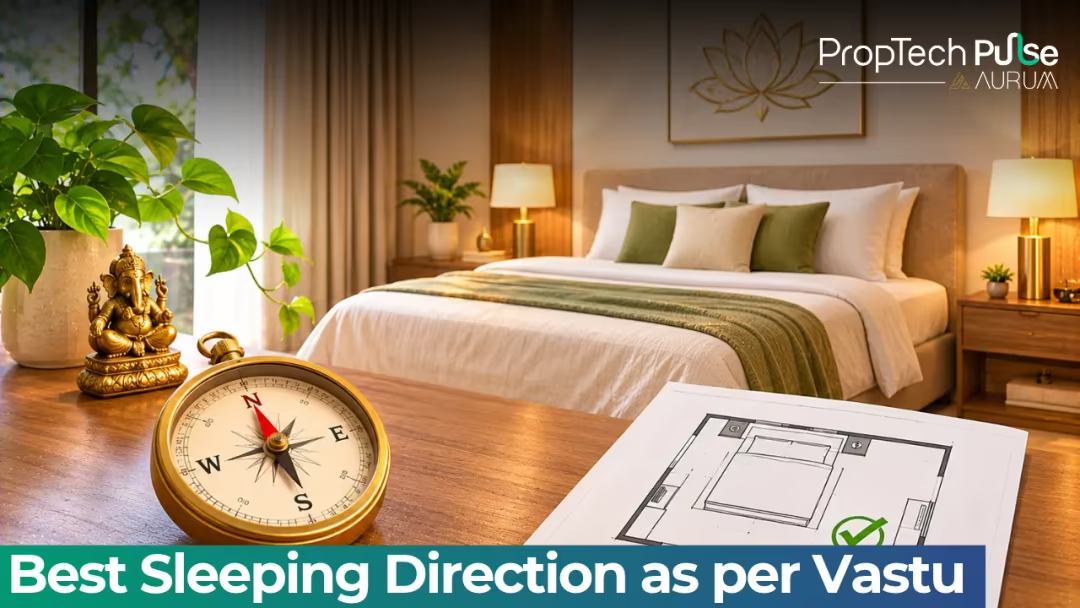
Many Indian homeowners worry about their sleeping direction as per vastu when they first move into a rented flat or buy a new apartment. It feels like a minor detail, but tradition insists that getting the alignment wrong disrupts your rest and drains your energy. Knowing the correct layout helps you plan a bedroom that actually supports deep sleep, whether you are starting fresh or simply rearranging a cramped studio. This breakdown covers every compass point. You will see why South and East are preferred, and what happens if you ignore the rules. We also explain how to handle fixed walls when choosing your traditional alignment. Read this before shifting your mattress or buying second hand furniture online. In this guide What sleeping direction as per vastu says about the best direction to sleep Why you should think twice about the North and West directions What happens if your bedroom layout doesn’t support Vastu sleeping alignment Final decision rule: Comfort beats rigid geometry Frequently asked questions What sleeping direction as per vastu says about the best direction to sleep Quick answer Sleeping direction as per vastu strongly recommends placing your head towards the South or the East. These two orientations align your body with natural energy flows, helping you wake up refreshed and focused. Skip the North to avoid restless nights. The South remains the absolute top choice for working adults. Traditional texts claim the head acts as a positive magnetic pole while Earth pulls negatively towards the geographic South. When your head faces that southern pull, opposite poles attract. This steady connection stops your nervous system from fighting internal tension. Practically speaking, readers often report deeper sleep cycles. Your body stops compensating for subtle resistance overnight. Sleep studies confirm that proper orientation cuts down on nighttime tossing. You will notice faster recovery times whenever the head faces the earth’s magnetic equator. East sits comfortably in second place. Students and professionals who rely on sharp mental focus usually pick this orientation. Facing East connects you directly with morning sunlight. That light triggers natural circadian rhythms and primes your brain for early study sessions. If you share a room with a child preparing for board exams, rotate their bed so their forehead points directly toward the sunrise. Choosing the right bed orientation requires testing a few layouts first. A slight tilt works far better than forcing a perfect grid against the wall. Before buying curtains or moving heavy furniture, verify your actual compass bearing. Smartphone apps give quick readings, but always double check near windows. Metal window frames and nearby elevators distort digital magnetometers. Walk outside to the balcony for an accurate reading, then map that vector back inside. Your head position relative to true south matters far more than which wall looks nicest. Measure twice, adjust slowly, and track your sleep quality over a full moon cycle. Traditional Vastu alignments for bedroom beds Direction Recommended For Why It Works Potential Downside South Deep sleepers, working professionals Aligns body with Earth's magnetic field for calmness Requires a large enough room to place the bed against the South wall East Students, knowledge seekers Connects with rising sun energy for mental clarity Takes space away from wardrobes on the East wall West Restless sleepers (sometimes) Grounds excessive high-energy movement Can cause lighter sleep phases North Avoid by most traditions Believed to cause magnetic repulsion and fatigue Limits flexible furniture placement near the door Why you should think twice about the North and West directions North usually gets cut from shortlists entirely. The old rule states that your skull operates as a miniature north pole. Laying parallel to terrestrial lines forces both poles to face the same direction. Like magnets repelling each other, this creates invisible pressure. Shift workers often report heavier fatigue when they test this alignment for just a week. Human biology does not run on literal iron magnets though. Many consultants now dismiss the fear tactics surrounding northern beds. They argue that psychological comfort outweighs any theoretical magnetic clash. Skipping the northern orientation still leaves plenty of flexibility. You can easily fit a king-size mattress without guessing where corners land. West introduces restless vibrations. Ancient manuals link this quadrant to fire and movement. Placing your head here frequently leads to fragmented REM phases or intense dreaming. People with chronic stress or mild anxiety usually find their heart rates spike slightly at night. Turning east or south stabilizes things quickly. If your floorplan forces a western headboard, try swapping your pillowcase for a heavy cotton weave. The added weight dampens light tossing and anchors your nervous system during transition periods. What happens if your bedroom layout doesn’t support Vastu sleeping alignment Compact apartments rarely hand you a blank canvas. Developers place doors wherever square footage allows, while balconies eat into corners. Staring at a misaligned bed keeps you awake far longer than violating a rule ever could. Focus on what you can change today. You can tweak several elements without drilling through tiles. Shift the mattress first. Six inches changes enough magnetic vector to satisfy tradition. Lay a woven mat under the pillow instead of a standard cushion. Cotton breathes better and redirects static charge away from the brain stem. Adding a dense rug beneath the frame grounds sudden floor vibrations. These cheap swaps cost almost nothing yet drastically improve perceived alignment. Electronics matter more than most owners realize. Wi Fi routers pulse electromagnetic waves straight through drywall. Phones on bedside tables emit weak radio frequency spikes while charging. Keep gadgets on a shelf three feet away. If mirrors bounce light onto your face at dawn, drape a linen curtain over them until sunset. Dimming visual stimuli trains your pineal gland to produce melatonin faster. While fixing a bedroom takes patience, keeping hallways clear prevents stagnant air. Check out this interior design guide for Indian homes to learn how to arrange furniture for better airflow. Pair that with a dedicated practical layout for designing a pooja room further down the hall. Aligning your bedroom properly means balancing ancient geometry with modern living spaces. Real adjustments happen at the mattress level, not the construction crew level. Small shifts yield big returns. Focus on routine consistency alongside gentle orientation tweaks. Pro tip: Always ensure your feet do not point directly at the main bedroom door. An open line of sight creates subconscious alertness that keeps sleep light. Turn the bed sideways or place a small screen at the foot of the bed if space allows. Final decision rule: Comfort beats rigid geometry Start with southern alignment whenever square footage permits. Fall back to eastern orientation for students. Treat western placements as temporary solutions. Always weigh these fundamentals against your actual square footage. If a specific spot blocks hallway noise, catches morning light, and avoids staring at exposed brick, choose that location immediately. Tradition guides us toward easier living, not structural engineering puzzles. Trust your baseline comfort levels first. Monitor airflow and window angles second. Test any arrangement for seven full nights before accepting it permanently. Real results come from consistent routines, not perfect compass points. Maintain dark curtains, cool temperatures, and screen-free evenings regardless of headboard angle. Sleep quality improves dramatically once mental pressure drops. Use our Live Vastu Check feature only when complex rooms create genuine deadlocks. Otherwise, trust your instincts and get some rest tonight. Frequently asked questions Can we sleep with head facing north as per Vastu? No. Traditional Vastu Shastra strongly advises against this because the Earth's magnetic pull clashes with the body's natural energy field. Lying parallel to the magnetic axis is believed to cause physical fatigue and disrupt deep sleep. If you cannot avoid it, try shifting your mattress by a few inches or using a thicker pillow to change the angle slightly. What is the best direction to sleep for good health? The South direction remains the most reliable choice for overall well-being. It aligns the head with Earth's magnetic field, reducing internal stress and promoting longer periods of REM sleep. Many healthy adults in India choose this alignment because it naturally encourages the body to rest deeply without sudden interruptions. Is it bad to sleep with head towards west? West generally introduces higher energy levels that can lead to restless nights. While some consultants allow it occasionally, the fiery influence of this direction often triggers vivid dreams and lighter sleep cycles. People prone to anxiety or chronic insomnia usually find that moving their head toward the East yields much steadier results. How to fix a bedroom if the door blocks ideal placement? Shift the bed closer to the center of the room so your feet do not aim straight at the doorway. An open path creates subconscious alertness. You can also place a small side table or decorative screen at the foot of the bed to break the direct line of sight and improve energy flow. Enjoyed this blog article? Visit PropTech Pulse for more interesting blogs.
PropTech Pulse Editorial
12th November 2026
Uncategorized
Municipalika 2026 Delhi: Smart Cities Expo, 9–11 Dec
India's cities are being rebuilt in real time. New water networks, waste systems, metro lines and digital governance platforms are all being planned, tendered and delivered across the country. Municipalika 2026 is where the people commissioning these projects meet the people who design, build and run them. The event takes place from 9 to 11 December 2026 at Hall 6, Bharat Mandapam, New Delhi. Municipalika is one of India's leading smart cities and urban development events. It is built for both the B2B and B2G sides of the urban ecosystem. Over three days, it brings together municipal leaders, government departments, architects, contractors, builders and solution providers to tackle the challenges facing India's growing cities. The Event at a Glance Municipalika 2026 combines a large exhibition with a policy conference, an innovation challenge and an awards ceremony. The expected scale includes: 300+ exhibitors showcasing products, technologies and services for cities. 10,000+ trade visitors from across the urban development sector. 3,000+ conference delegates taking part in policy and planning discussions. 550+ architects and planners looking for new ideas and solutions. 120+ media representatives covering the event. The exhibition is open from 11:00 AM to 6:00 PM on all three days. Why Municipalika Matters Urban India is growing fast, and cities are under pressure to deliver better services to more people. Clean water, efficient waste management, reliable transport, affordable housing and responsive governance are no longer long-term goals. They are urgent needs. Meeting them requires large public investment and close collaboration between government and industry. What sets Municipalika apart is who is in the room. Many of the people who write urban tenders and make procurement decisions attend the event. Suppliers can meet buyers directly, understand their priorities and learn what is coming next. Holding the event in Delhi, close to central ministries and policymakers, adds weight to the conversations. It also gives attendees a chance to hear about urban policy directly from the source. Sectors on the Agenda The Municipalika conference looks at how policy, technology, planning and collaboration can make cities safer, better connected and more sustainable. The agenda covers the full range of municipal responsibilities: Water: Supply networks, treatment, distribution and conservation to meet growing urban demand. Waste: Collection, processing and recycling systems that help cities stay clean and reduce landfill. Mobility: Metro lines, public transport, road infrastructure and smarter traffic management. Housing: Affordable and sustainable housing for India's expanding urban population. Public works: The roads, buildings and civic infrastructure that keep cities running. Digital governance: Technology platforms that make city services more transparent, efficient and citizen-friendly. Climate resilience: Planning and infrastructure that help cities withstand floods, heat and other climate risks. Three Days, the Full Urban Agenda Municipalika 2026 is more than an exhibition. Several programmes run side by side, so visitors can meet suppliers, hear from government and see new ideas in one visit: The Municipalika Conference, which focuses on urban policy, planning and implementation. The Urban Innovation Challenge 2026, a national challenge that highlights fresh solutions for city problems. The UIC Awards Ceremony, which recognises standout ideas and projects from the challenge. The exhibition floor, where companies showcase products and services across every urban sector. Featured sessions on the topics shaping the future of Indian cities. Direct access to government, giving industry a rare chance to engage with decision-makers. Who Attends The event brings together the full chain of people who shape urban projects, from those who commission them to those who design, build and manage them. Attendees include: Mayors and municipal commissioners who lead city administrations and set priorities. Public Works Departments (PWDs) responsible for civic infrastructure. EPC contractors and builders who deliver large-scale projects on the ground. Architects and urban planners who design the spaces cities depend on. Facility managers who keep buildings and public assets running smoothly. Resident Welfare Associations (RWAs) who represent the communities that urban projects serve. The PropTech and Real Estate Angle For real estate developers and PropTech companies, Municipalika offers a valuable view of how Indian cities are changing. Urban infrastructure has a direct effect on property values, project viability and where people choose to live and work. A new metro line, an upgraded water network or better waste management can transform a neighbourhood. Digital governance is also opening new opportunities for technology providers. Data-driven planning, smart utilities, digital approvals and connected public services are becoming part of how cities operate. Municipalika is a chance to understand what cities need and to build relationships with the people making those decisions. Tips for Making the Most of Your Visit Register early to secure your place before registration closes. Pick your sectors and plan which conference sessions and exhibitors to visit. Prepare to meet government buyers with clear information on how your solution solves city challenges. Follow the Urban Innovation Challenge to spot new ideas and potential partners. Follow up after the event to turn conversations into projects. Final Thoughts Municipalika 2026 brings India's urban agenda into one hall for three focused days. With hundreds of exhibitors, thousands of delegates and direct access to the people shaping city policy, it is an important event for anyone working in urban development, infrastructure or real estate. If your work touches the future of Indian cities, Bharat Mandapam is the place to be this December. Frequently asked questions What is Municipalika 2026? Municipalika 2026 is a smart cities and urban development event in New Delhi. It brings together the government bodies that commission urban projects and the companies that design, build and run them, through an exhibition, a policy conference, an innovation challenge and an awards ceremony. When and where is Municipalika 2026? The event runs from 9 to 11 December 2026 in Hall 6, Bharat Mandapam, New Delhi. It is open from 11:00 AM to 6:00 PM each day. How big is the event? Municipalika 2026 expects 300+ exhibitors, 10,000+ trade visitors, 3,000+ delegates, 550+ architects and planners, and 120+ media representatives. Which sectors does the event cover? The agenda covers water, waste, mobility, housing, public works, digital governance and climate resilience. Who should attend? The event suits mayors, municipal commissioners, PWDs, EPC contractors, builders, architects, urban planners, facility managers and RWAs, as well as companies offering solutions for cities. What happens alongside the exhibition? Alongside the exhibition, Municipalika runs a policy conference, featured sessions, the Urban Innovation Challenge 2026 and the UIC Awards Ceremony. It also offers direct access to government decision-makers. How can I register? You can register through the Municipalika 2026 event page on PropTech Pulse. Registration closes before the event, so it's best to sign up early. Upcoming event Register for Municipalika 2026 Meet the mayors, commissioners, planners and builders shaping India's cities, all in one hall for three days. Date: 9–11 December 2026 Time: 11:00 AM – 6:00 PM Venue: Hall 6, Bharat Mandapam, New Delhi Register now
PropTech Pulse Editorial
12th November 2026
Uncategorized
Toilet Vastu for Flats: Directions, Shared Walls & Remedies
Buying a flat means living with the builder's plumbing shaft. When a toilet vastu clash hits a second-floor unit, panic usually follows. You might want to budget for slab demolition or hire a consultant. But before you spend money, know this: toilet direction as per vastu relies heavily on orientation and daily habits. You can manage the room without moving walls. In high-rise towers, the soil stack dictates layout, which forces us to focus on what actually shifts energy: fixture positioning, ventilation routines, and the boundaries of the shared walls. This guide breaks down practical corrections that work within stacked apartments. Stop worrying about static concrete. Start managing the factors you control. In this guide Toilet Vastu in Modern Flats: Why the Soil Stack Decides Everything Attached Bathroom Vastu: The Shared-Wall Rules That Matter Toilet Direction as Per Vastu: Orientation of the Seat While Sitting Bathroom Vastu for Flat Owners: What You Can Change Without Demolition Tiered Vastu Corrections: Routine Maintenance Before Traditional Symbols Knowing When to Shift Wet Rooms and How to Get Tailored Space Mapping Frequently asked questions Toilet Vastu in Modern Flats: Why the soil stack decides everything Quick answer Ideally place the toilet in the west or north-west quadrant. Keep the wash basin near the north or east to catch morning light. Face south or north while using the commode. Handle shared walls carefully by avoiding direct backing toward sacred spaces or kitchen stoves. Bathing zones handle the water element. Commodes manage the waste. Classical shastra requires opposite directional treatment for each. Water brings stability, while waste clears stagnation. Place your wash basin near the north or east to catch morning light. The western commode sits outside that field entirely. Treat both fixtures as separate units. A combined approach causes placement confusion. Aim for the north-west or west corners. These quadrants support the air and earth elements needed to clear heavy energies. Compact floor plans often force bathrooms into the south-east corner instead. That places the room near the kitchen fire zone. Angle the toilet door away from the cooking platform. Hang a heavy curtain or install a louvered vent to break the direct line of sight. Moving a riser through three upper floors rarely satisfies building codes. Handle a northeast placement with patience and strict maintenance. Run an oversized exhaust fan during every shower. Paint the walls pale yellow or off-white to bounce light into the damp corner. Set a small glass jar of coarse sea salt near the drain. Swap the salts monthly to pull lingering moisture out of the tiles. Attached bathroom vastu: The shared-wall rules that matter A master suite raises immediate anxiety when the bed touches a drainage wall. Shared boundaries operate on a strict priority hierarchy. Never place a pooja room or an active cooking platform behind a toilet partition. Energy travels freely through unfinished plaster. Continuous flushing vibrations disrupt the silence of a meditation space. Keep the mandir where it stands, but add mass to the dividing wall. Mount a thick wooden panel or tall bookshelf against the partition. Position brass tikkas or small oil lamps on the shelf facing the bathroom. Run a quiet electric heater behind that wall during monsoons. Dry warmth balances the excess humidity effectively. Apply the same logic to kitchen platforms. Fire colliding with water triggers thermal stress in traditional physics. Move the gas hob to the north-east corner of the kitchen. Mount the exhaust switch on the north wall instead of the west. Under-stair toilets show up often in duplex conversions. Face the commode north or south in that tight volume. Drape fabric runners over the stair risers to soften the downward energy hitting the ceiling. Buyers investigating how important is vastu for flat resale care deeply about layout choices. Breathable wall finishes and functional ventilation usually outweigh minor directional tweaks during property valuation. Toilet direction as per vastu: Orientation of the seat while sitting Outer shell direction sets the stage. Seat orientation handles the daily ritual. Face south or face north while using the commode. Both positions ground you and align your body with the magnetic pull. Avoid facing east during use. Solar radiation clashes with relaxation protocols. Tilt the vanity mirror slightly left or right. Prevent your reflection from hitting the water tank directly. Glass magnifies whatever direction it faces. A centered toilet vastu mirror amplifies stagnant energy bouncing back into the room. Aim it toward the doorway instead. Pull fresh airflow inward naturally. Watch the exhaust fan blades from below. Verify clockwise rotation. Correct spinning pushes hot, damp air straight toward the terrace or common duct. Reverse rotation traps humidity inside the ceiling cavity. Mold grows on false-board edges and PVC panels warp over time. Bathroom Vastu for Flat Owners: What you can change without demolition True magnetic direction hides behind modern construction materials. Steel rebars, aluminum grilles, and concealed conduits skew handheld compass readings by fifteen to twenty degrees. Stand in the center facing the main door, not the outer facade. Map the four walls from inside, then arrange the furniture accordingly. Washing machines occupy the north-east corner in many modern washrooms due to space limits. Lift the appliance onto a raised rubber mat with four suction cups. Absorb vibration noise and interrupt direct contact between the metal chassis and the sensitive floor tile. Swap standard bulbs for warm white 2700K LEDs. Cool blue light signals alertness, defeating the relaxation purpose of the space. Clutter traps negative flow. Stacked toiletries, dried towels, and leaking pipes create physical blockages that mirror energetic congestion. Clear shelves weekly. Fix dripping faucets immediately, even slow drips. Replace worn-out pan gasket seals, because sewage smell constantly resets the baseline atmosphere. Explore why vastu compliance in residential design matters when evaluating future purchases. Developers prioritizing clean sightlines reduce remediation headaches later. Tiered Vastu Corrections: Routine maintenance before traditional symbols Five structural habits shift room dynamics faster than expensive idols. Close the toilet lid when not in use. Run cross-ventilation for twenty minutes after every bath cycle. Avoid placing brooms or mops against the wall facing the exit. Scrub the drain cover monthly with mild vinegar to clear surface scum. Never store heavy luggage inside the bathroom. Dead weight suppresses natural upward currents. Traditional interventions require minimal aesthetic disruption. Lay a thin copper foil strip beneath the threshold stone during renovation. Press a small copper coin into the adhesive mortar near the entrance frame. Hold camphor in your palm, spin it clockwise three times, and extinguish it in the dry corner farthest from the commode. Perform this once a fortnight. The practice clears particulate matter. A subtle floral trace keeps the space feeling fresh upon entry. Architects sometimes reference aquarium placements near entryways. This mirrors the established fish bowl placement and species rules suggesting life near positive energy vents. Bring live pothos or money plants near the bathroom doorway. Soften hard architectural lines and filter indoor air quality actively. Knowing when to shift wet rooms and how to get tailored space mapping Demolishing tiled surfaces and chasing new piping paths costs more than most initial token deposits. Commit to major structural changes only if the wet room cuts through the southeast core, backs onto a sacred shrine, or opens into the main entrance foyer. Otherwise, rely on rigorous upkeep, correct seating angles, and disciplined ventilation cycles. Irregular beams or precise sector mapping demand specialized attention. Browse the current Pulse Vastu Packages to connect with consultants specializing in complex urban layouts. Frequently asked questions What is the best direction for toilet in flat as per vastu? Ideally place it in the west or north-west quadrant. West supports the earth element required to clear waste, while north-west helps move stale air outward. Avoid the northeast completely, as that corner governs spiritual clarity and must remain free of drainage and plumbing fixtures. Can we keep toilet in northeast corner? Relocating a toilet in the northeast is difficult because builders lock it onto vertical soil pipes. If stuck there, mitigate damage using bright lighting, large-capacity exhaust fans, and coarse salt jars changed monthly. Keep the door shut constantly and paint walls pale yellow to bounce light into the densest part of the apartment. How to correct wrong toilet direction in vastu? Focus on seat orientation rather than absolute room placement. Face south or north while using the commode to align with magnetic poles. Angle vanity mirrors slightly to prevent stagnant reflections. Maintain rigorous cross-ventilation after every shower cycle and fix all dripping taps instantly to stop energy loss. Should toilet door face north or south? Both north and south orientations work well for bathroom doors, grounding the passage safely. Ensure the door swings inward smoothly without banging against tiles. Add a thick curtain or bamboo blind for added privacy, and keep the hallway adjacent to the door uncluttered to encourage steady airflow past the entrance. Is attached bathroom bad as per vastu? Master en-suites are not inherently negative if managed correctly. Prioritize boundaries by never sharing a wall with a pooja space or the main kitchen stove. Place heavy furniture like wardrobes against the shared partition to add mass, install a compact electric heater during humid months, and maintain strict drying routines to keep the zone balanced. Enjoyed this blog article? Visit PropTech Pulse for more interesting blogs.
PropTech Pulse Editorial
12th November 2026

Ask Pulse Ai anything about real estate

Unlock the Latest in Real Estate
News, Infographics, Blogs & More! Delivered to your inbox.

