

Services
FOR BUYERS & RENTERS
FOR REAL ESTATE DEVELOPERS








Refer other Connectors &
Multiply IncomeRefer other Connectors
& Multiply Income
Refer KuberX & earn
commission on every
loan they get
disbursed.


Scan & Download
©PropTech Pulse 2025, All rights reserved.

What is Unimproved Land?
Unimproved Land is raw, undeveloped terrain lacking utilities, infrastructure, or zoning modifications. Owners may develop it for agriculture, commercial projects, or residential expansion.
Key Points:
- No Infrastructure: Lacks roads, electricity, or water lines.
- Lower Initial Cost: Priced below developed plots.
- Long-Term Investment: Potential for appreciation post-development.
- Zoning Considerations: Restrictions may affect land use.
Unimproved land offers flexibility but requires extensive planning before active utilization.
Recent Glossary
What are the benefits of z-score based property risk modeling?
What are the benefits of zakat calculation on real estate assets?
How is zero-emission construction equipment used in real estate?
How do zonal price index for urban housing markets work?
What is the meaning of zero-touch tenant onboarding technology?
View More...
Recent FAQs
How do construction firms use digital twins to plan phased renovations of an occupied building?
How do AR apps let buyers see a home's proposed solar panel layout before installation?
How do developers balance embodied carbon reduction with rising material costs?
What is a virtual open house and how does it differ from a live-streamed showing?
How do tokenization platforms handle inheritance when a token holder passes away?
View More...
Insight Pulse

Uncategorized
What Is RERA? Buyer Rights, Rules and Project Checks
Before RERA, a buyer who paid a booking amount had little way to check the builder's approvals, the real area or the handover date. If the project stalled, the buyer faced a long fight with few rules to lean on. So what is RERA? This guide explains who it covers, what it gives a buyer, what it asks of a builder and where its protection stops. In this guide What RERA is Which projects it covers What it gives buyers What it asks of builders A worked example on ₹1 crore How to check a project How complaints work What RERA does not do How to decide Frequently asked questions What RERA is Quick answer RERA is the Real Estate (Regulation and Development) Act, 2016. It requires builders to register covered projects with a state authority, share plans and timelines publicly, and follow rules on payments and delays. Buyers get a way to verify a project and a place to complain. It covers most under-construction projects, not every property. It aims to bring openness and discipline to real estate. Each state sets up its own authority and rules under it. To see how it works in your state, start with the Pulse RERA page, which points you to the current state-level resources. Which projects it covers RERA mainly targets the sale of under-construction property. The Act sets size limits for registration. Projects below them, and completed projects with an occupancy certificate before the Act began, are generally outside it. Who the Act covers and what each must do PartyCovered whenMain duty Promoter or builderSelling a covered projectRegister the project, disclose details, keep to the registered plan and datesReal estate agentDealing in a registered projectRegister with the authority and follow the Act's rulesBuyer or allotteeBuying in a registered projectPay as agreed and use the Act's remedies if the promoter defaults Source: author's summary of the RERA Act, 2016. Land is a state subject, so thresholds, forms and fees differ across states. Always check the rules of the state where the project sits. What it gives buyers The Act gives buyers a short list of protections. Each one is tied to a section, and each should be checked against your own agreement. Key buyer protections under RERA ProtectionWhat it meansCheck Public project detailsPlans, approvals, timelines and status are on the authority's portalAdvance capNo more than 10% of the cost before a registered agreement for saleCarpet area basisArea is stated as carpet areaSeparate project accountA share of buyers' money is kept for that projectDelay remedyInterest for delay or a refund with interestDefect liabilityStructural defects reported in the Act's period are fixed by the promoter Source: author's summary of the RERA Act, 2016; confirm section numbers and state rules. The note on loading factor explains why the carpet area basis matters for what you pay per sq ft. What it asks of builders A builder has to register before advertising or selling. It must publish key details, update progress and keep to the sanctioned plan. Buyers' money must go to the project, and handover must meet the promised date. Breaking these rules can lead to penalties. The registration number should appear on advertisements and agreements, which is why you ask for it in writing. A worked example on ₹1 crore Take a flat priced at ₹1 crore in a registered project. The Act caps the advance before a registered agreement for sale at 10%. That is ₹10 lakh. The Act expects a share of your payments to sit in a separate project account. At 70%, ₹70 lakh of your ₹1 crore is meant for the project. Now say you have paid ₹40 lakh and possession is 12 months late. Assume a delay interest rate of 10.5% a year. Interest is 40,00,000 × 0.105, or ₹4.2 lakh. The rate and the amounts are assumptions to show the method. Your agreement and state rules decide what applies. An order for interest also takes time to recover. How to check a project Ask for the number. Get the RERA registration number in writing. Use the state portal. Type the address yourself rather than following a chat link. Search the project. Use the number, name or promoter. Match the facts. Promoter, location, carpet area and dates must match your papers. Read the updates. Look for recent progress filings and any orders. Keep a copy. Save a dated screenshot or PDF. For the other documents to ask for, read the property legal verification guide. How complaints work A buyer in a registered project can complain to the state authority or its adjudicating officer. Appeals go to a state appellate tribunal. Keep your agreement, receipts and written messages together. Send the promoter a written notice before you file. A property lawyer can tell you which route fits and how long recovery may take. What RERA does not do So what is RERA in practice? A filter, not a guarantee. It does not check title for you, rate the builder's quality or promise on-time delivery. It also mainly covers under-construction projects, so resale flats usually fall outside it. Read the occupancy certificate note for what proves a finished building is ready. The notes on sale deed and UDS cover the paper and the land share that RERA registration does not. How to decide Decision rule: search the project on the state RERA portal yourself before paying any booking amount. Match the promoter, carpet area and dates to your papers, then add a lawyer's title check. If any step fails, walk away or ask in writing. Treat registration as the first check, not the last. After it, compare builders, read the agreement and plan your costs. The Pulse property buying guide covers the path from search to possession. Frequently asked questions When did RERA come into force? The Real Estate (Regulation and Development) Act, 2016 was passed in 2016, and most of its provisions came into force from 1 May 2017. States then notified their own rules and set up authorities, so timing and details differ by state . Does RERA apply to every property? No. It covers projects above the Act's size limits, and it mainly protects buyers in under-construction projects. Small projects and completed ones with an occupancy certificate before the Act began are usually outside it. Check your state rules for the exact limits . Who can file a RERA complaint? A buyer or allottee in a registered project can file a complaint with the state authority or its adjudicating officer. Promoters and agents can also be brought before it. The forms, fees and timelines vary by state, so check the state portal . Is a RERA registered project safe to buy? It is safer than an unregistered one, but registration is not a guarantee. It does not check title for you or promise delivery on time. Combine it with a lawyer's title check, approvals from the local body and a read of the agreement. What is the penalty if a builder does not register? The Act provides for penalties on promoters who sell covered projects without registration, including a fine linked to the project cost. The exact amount and process are set in the Act and state rules . Sources India Code: Real Estate (Regulation and Development) Act, 2016 [VERIFY: section references and current amendments] (accessed October 2026) Ministry of Housing and Urban Affairs: RERA implementation and state authorities [VERIFY: current pages on RERA] (accessed October 2026) Author's calculations: ₹1 crore flat with 10% advance cap, 70% project account share and delay interest at an assumed rate Enjoyed this blog article? Visit PropTech Pulse for more interesting blogs.

PropTech Pulse Editorial
13th October 2026

Uncategorized
Telangana RERA: How to Check Projects and HMDA Approval
In Hyderabad, a plot or flat is often quoted in square yards, a flat in square feet and a rate in lakhs per yard. A buyer can lose track of the price before they ever look at the paperwork. Checking the project on the official RERA portal and converting every number to one unit gets you back on solid ground. This guide explains how Telangana RERA works for a buyer. It covers how to check a project, how it differs from HMDA approval, a worked plot price example in square yards, and how to complain about delays. In this guide What Telangana RERA is How to check a project RERA, HMDA and other approvals Plots, layouts and LRS A worked plot price example Red flags Delays and complaints How to decide Frequently asked questions What Telangana RERA is Quick answer Telangana RERA is the state regulator under the RERA Act, 2016. It registers projects and agents, publishes project details and hears buyer complaints. Search the project's registration number on the official portal, then confirm the layout or building approval separately. Match the promoter, dates and area to your papers before you pay. The Real Estate (Regulation and Development) Act, 2016 is called RERA. It asks promoters to register covered projects and disclose plans, approvals and timelines. The Pulse RERA page gives the national picture. How to check a project Ask for the number. Get the registration number in writing. Use the official site. Type the address yourself. Search the project. Use the project search by number, name, promoter or district. Match the facts. Promoter, location, area and completion date must match your papers. Read the updates. Look for recent progress filings and any orders. Keep a copy. Save a dated screenshot or PDF. If the project is missing, ask the promoter to explain in writing. The property legal verification guide lists the other documents to ask for. RERA, HMDA and other approvals Registration is one check among several. Each answers a different question. What each check tells you CheckQuestion it answersWho confirms it RERA registrationIs the project registered and are its dates on record?Telangana RERA portalLayout or building permissionIs the layout or building permitted and does the build match it?HMDA or the local planning body Land useDoes the land use allow this kind of project?Planning authorityCompletion proofIs the finished building cleared for use?Local body; see the occupancy certificate noteTitle and encumbrancesDoes the seller own the land free of disputes?A property lawyer Source: author's checklist; confirm current Telangana processes with each body. The note on the occupancy certificate explains what proves a finished building is ready. Plots, layouts and LRS Open plots are common around Hyderabad. A plotted development above the Act's size limits can fall under RERA. Plots in unapproved layouts may need regularisation under a state scheme, often called LRS. Ask whether your plot sits in an approved layout or needs regularisation, and get the answer in writing. Walk the plot with the layout plan. Check that your plot number, road width and open space match what you were shown. A worked plot price example Plots here are priced per square yard. Say a plot is 200 sq yd at an assumed ₹1.1 lakh per sq yd. The price is 200 × 1,10,000, which is ₹2.2 crore. One square yard is 9 square feet. The plot is 200 × 9, or 1,800 sq ft. So the price per sq ft is 2,20,00,000 ÷ 1,800, about ₹12,222. Use this when you compare a plot with a flat quoted per sq ft. These figures are made up to show the method. For quick conversions, use the Pulse unit converters, and read the note on UDS when you buy a flat with a share of land. Red flags No registration number. Ask for it in writing, in ads and in the agreement. A number that opens a different project. Stop and ask why. Plot not on the approved layout. Do not pay until it is resolved. Mixed units in the quote. Ask for the total price and the area in one unit. Old updates. No progress filings for several quarters. Pressure and cash. Quick deadlines or cash payments. Delays and complaints If possession is late, start with your agreement. Note the promised date, the registered date and what you have paid. Send the promoter a written notice first. Then approach the authority. The Act allows interest on delay or a refund. Compare builders before you commit. Start with the Pulse list of builders in Hyderabad. The infographic on Hyderabad per sq ft pricing gives a price reference. Plan for the costs of buying too. See Hyderabad stamp duty and registration charges or the page for Telangana as a whole. How to decide Decision rule: before paying any booking amount, verify the RERA number yourself, confirm layout or building permission with the planning body and convert the price to one unit. If any of these is unclear, walk away or ask in writing. Treat registration as the first check, not the last. After it, read the agreement, check title and compare builders. The Pulse property buying guide covers the path from search to possession. Frequently asked questions What is Telangana RERA? Telangana RERA is the Telangana Real Estate Regulatory Authority. It registers projects and agents, publishes project details and hears buyer complaints under the RERA Act, 2016. The portal and authority names have been updated in places, so use the current official site . How do I check a project on Telangana RERA? Take the registration number from the seller and search it on the official Telangana RERA website. Match the project name, promoter, location and dates to your papers. Then check the layout or building permission with the planning authority . Does RERA apply to open plots in Hyderabad? It can apply to plotted developments above the Act's size limits, so a layout sold as plots may be on the portal. RERA does not replace layout approval, so check that separately with the planning authority . What is the difference between HMDA approval and RERA registration? HMDA approval, or approval from another planning body, covers whether the layout or building is permitted. RERA registration lets the promoter sell the project and puts its details on record. A sound purchase needs both, each checked with its own office . What can I do if a Telangana RERA project is late? Send the promoter a written notice, then approach the authority. The Act provides for interest on delay or a refund with interest. Keep your agreement, receipts and messages together before you file . Sources Telangana Real Estate Regulatory Authority: registered projects, agents, orders and complaints [VERIFY: current portal address and sections] (accessed October 2026) Hyderabad Metropolitan Development Authority: layout and building permissions in the HMDA area [VERIFY: current website and process] (accessed October 2026) India Code: Real Estate (Regulation and Development) Act, 2016 [VERIFY: section references and current amendments] (accessed October 2026) Author's calculations: plot price per sq ft from an assumed rate per sq yd Enjoyed this blog article? Visit PropTech Pulse for more interesting blogs.
PropTech Pulse Editorial
13th October 2026
Uncategorized
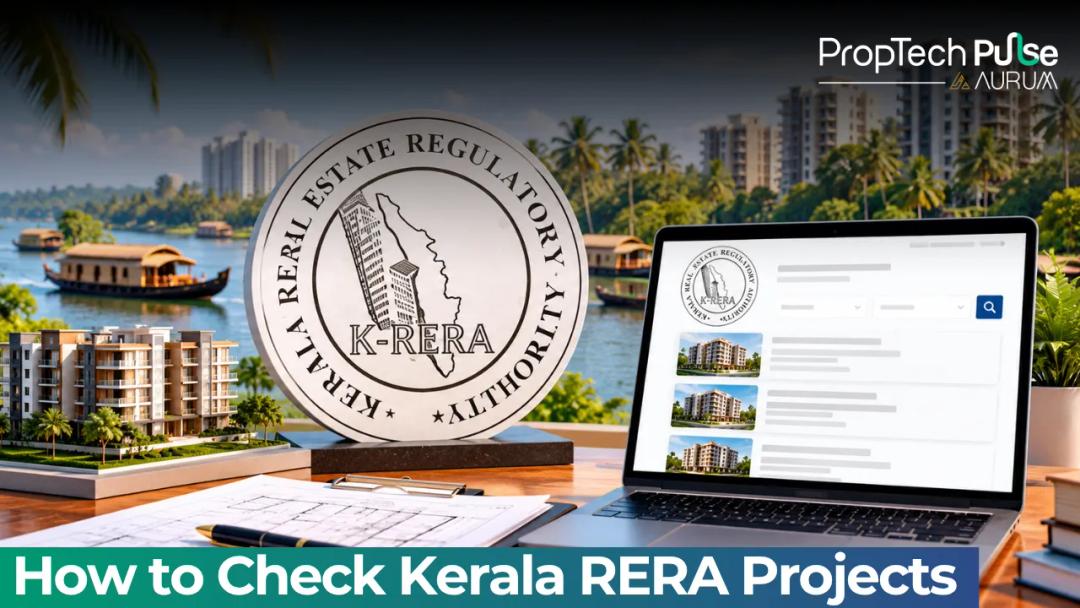
Kerala RERA: How to Check Projects and Verify Approvals
Many Kerala buyers live far from the flat they are buying. They are in the Gulf, in Bengaluru or abroad, and they rely on a brochure, a video call and a relative who can visit the site. That makes the online check on the official portal even more important. This guide explains how Kerala RERA works for a buyer. It covers how to check a project, extra checks for waterfront sites, a worked currency example for NRI buyers, and how to complain about delays. In this guide What Kerala RERA is How to check a project Approvals and clearances Waterfront and coastal projects Buying from abroad A worked currency example Red flags Delays and complaints How to decide Frequently asked questions What Kerala RERA is Quick answer Kerala RERA is the state regulator under the RERA Act, 2016. It registers projects and agents, publishes project details and hears buyer complaints. Search the project's registration number on the official portal, then check approvals and any coastal clearances separately. Match the promoter, dates and carpet area to your papers before you pay. The Real Estate (Regulation and Development) Act, 2016 is called RERA. It asks promoters to register covered projects and disclose plans, approvals and timelines. The Pulse RERA page gives the national picture. How to check a project Ask for the number. Get the registration number in writing. Use the official site. Type the address yourself. Search the project. Use the project search by number, name, promoter or district. Match the facts. Promoter, location, carpet area and completion date must match your papers. Read the updates. Look for recent progress filings and any orders. Keep a copy. Save a dated screenshot or PDF. If the project is missing, ask the promoter to explain in writing. The property legal verification guide lists the other documents to ask for. Approvals and clearances What each check tells you CheckQuestion it answersWho confirms it RERA registrationIs the project registered and are its dates on record?Kerala RERA portalBuilding permitWas the plan sanctioned and does the build match it?Municipality, corporation or panchayatEnvironmental or coastal clearanceIs the site allowed to build, and to what extent?The relevant authorityCompletion proofIs the finished building cleared for use?Local body; see the occupancy certificate noteTitle and encumbrancesDoes the seller own the land free of disputes?A property lawyer Source: author's checklist; confirm current Kerala processes with each body. The note on the occupancy certificate explains what proves a finished building is ready. Waterfront and coastal projects Kerala has many homes near the sea, backwaters and rivers. Sites close to water can be subject to extra rules on how and how far you can build. Ask the promoter for the clearances in writing, then confirm them with the issuing body. A clean RERA page does not prove that a waterfront site cleared these rules. Buying from abroad Non-resident Indians can buy residential and commercial property in India under the foreign exchange rules. Payments normally need to come through banking channels. If someone signs for you, a power of attorney needs care. Read the Pulse guide to NRI and owner powers of attorney and the overview on NRIs buying property in India. Ask your relative or agent to visit the site, check the progress against the RERA updates and send dated photos before each instalment. A worked currency example Take a flat priced at ₹80 lakh, paid over construction. The rupee price is fixed, but the foreign currency you need depends on the exchange rate on the day you pay. Assume the rate is ₹85 per US dollar. You would need 80,00,000 ÷ 85, or about $94,118. At ₹90 per dollar, you would need about $88,889. The gap is about $5,229 on the same flat. These rates are made up to show the method. Use current rates and your bank's charges. Staged payments spread this risk, but each instalment is converted at its own rate. Red flags No registration number. Ask for it in writing, in ads and in the agreement. A number that opens a different project. Stop and ask why. Missing building permit. The promoter cannot show it. No clearance papers for a waterfront site. Do not pay until they are shown. Old updates. No progress filings for several quarters. Pressure and cash. Quick deadlines or cash payments. Delays and complaints If possession is late, start with your agreement. Note the promised date, the registered date and what you have paid. Send the promoter a written notice first. Then approach the authority. The Act allows interest on delay or a refund. Compare builders before you commit. Start with the Pulse lists on builders in Kerala, builders in Kochi, builders in Kozhikode and builders in Thrissur. Plan for the costs of buying too. See Kochi stamp duty and registration charges or the page for Kerala as a whole. How to decide Decision rule: before paying any booking amount, verify the RERA number yourself, get the building permit and any coastal clearance in writing, and have someone check the site. If any of these is missing, walk away or ask in writing. Treat registration as the first check, not the last. After it, read the agreement, check title and compare builders. The Pulse property buying guide covers the path from search to possession. Frequently asked questions What is Kerala RERA? Kerala RERA, often written K-RERA, is the Kerala Real Estate Regulatory Authority. It registers projects and agents, publishes project details and hears buyer complaints under the RERA Act, 2016. How do I check a project on Kerala RERA? Take the registration number from the seller and search it on the official Kerala RERA website. Match the project name, promoter, location and dates to your papers. Then confirm the building permit with the local body . Can an NRI buy in a Kerala RERA registered project? Yes. NRIs can buy residential and commercial property in India, with rules on payment routes and documents. A power of attorney, if used, needs care. Check the current Reserve Bank of India and tax rules and take advice before you transfer funds . Do waterfront projects in Kerala need extra checks? Often they do. Projects near the coast, backwaters or rivers may be subject to coastal or environmental rules. Ask for the clearances in writing and confirm them with the issuing body. RERA registration does not replace them . What can I do if a Kerala RERA project is late? Send the promoter a written notice, then approach the authority. The Act provides for interest on delay or a refund with interest. Keep your agreement, receipts and messages together before you file . Sources Kerala Real Estate Regulatory Authority: registered projects, agents, orders and complaints [VERIFY: current portal address and sections] (accessed October 2026) Reserve Bank of India: rules on property purchase and payment routes for non-resident Indians [VERIFY: current FEMA rules] (accessed October 2026) India Code: Real Estate (Regulation and Development) Act, 2016 [VERIFY: section references and current amendments] (accessed October 2026) Author's calculations: dollar cost of an ₹80 lakh flat at assumed exchange rates Enjoyed this blog article? Visit PropTech Pulse for more interesting blogs.
PropTech Pulse Editorial
13th October 2026
Uncategorized
What Is RERA? Buyer Rights, Rules and Project Checks
Before RERA, a buyer who paid a booking amount had little way to check the builder's approvals, the real area or the handover date. If the project stalled, the buyer faced a long fight with few rules to lean on. So what is RERA? This guide explains who it covers, what it gives a buyer, what it asks of a builder and where its protection stops. In this guide What RERA is Which projects it covers What it gives buyers What it asks of builders A worked example on ₹1 crore How to check a project How complaints work What RERA does not do How to decide Frequently asked questions What RERA is Quick answer RERA is the Real Estate (Regulation and Development) Act, 2016. It requires builders to register covered projects with a state authority, share plans and timelines publicly, and follow rules on payments and delays. Buyers get a way to verify a project and a place to complain. It covers most under-construction projects, not every property. It aims to bring openness and discipline to real estate. Each state sets up its own authority and rules under it. To see how it works in your state, start with the Pulse RERA page, which points you to the current state-level resources. Which projects it covers RERA mainly targets the sale of under-construction property. The Act sets size limits for registration. Projects below them, and completed projects with an occupancy certificate before the Act began, are generally outside it. Who the Act covers and what each must do PartyCovered whenMain duty Promoter or builderSelling a covered projectRegister the project, disclose details, keep to the registered plan and datesReal estate agentDealing in a registered projectRegister with the authority and follow the Act's rulesBuyer or allotteeBuying in a registered projectPay as agreed and use the Act's remedies if the promoter defaults Source: author's summary of the RERA Act, 2016. Land is a state subject, so thresholds, forms and fees differ across states. Always check the rules of the state where the project sits. What it gives buyers The Act gives buyers a short list of protections. Each one is tied to a section, and each should be checked against your own agreement. Key buyer protections under RERA ProtectionWhat it meansCheck Public project detailsPlans, approvals, timelines and status are on the authority's portalAdvance capNo more than 10% of the cost before a registered agreement for saleCarpet area basisArea is stated as carpet areaSeparate project accountA share of buyers' money is kept for that projectDelay remedyInterest for delay or a refund with interestDefect liabilityStructural defects reported in the Act's period are fixed by the promoter Source: author's summary of the RERA Act, 2016; confirm section numbers and state rules. The note on loading factor explains why the carpet area basis matters for what you pay per sq ft. What it asks of builders A builder has to register before advertising or selling. It must publish key details, update progress and keep to the sanctioned plan. Buyers' money must go to the project, and handover must meet the promised date. Breaking these rules can lead to penalties. The registration number should appear on advertisements and agreements, which is why you ask for it in writing. A worked example on ₹1 crore Take a flat priced at ₹1 crore in a registered project. The Act caps the advance before a registered agreement for sale at 10%. That is ₹10 lakh. The Act expects a share of your payments to sit in a separate project account. At 70%, ₹70 lakh of your ₹1 crore is meant for the project. Now say you have paid ₹40 lakh and possession is 12 months late. Assume a delay interest rate of 10.5% a year. Interest is 40,00,000 × 0.105, or ₹4.2 lakh. The rate and the amounts are assumptions to show the method. Your agreement and state rules decide what applies. An order for interest also takes time to recover. How to check a project Ask for the number. Get the RERA registration number in writing. Use the state portal. Type the address yourself rather than following a chat link. Search the project. Use the number, name or promoter. Match the facts. Promoter, location, carpet area and dates must match your papers. Read the updates. Look for recent progress filings and any orders. Keep a copy. Save a dated screenshot or PDF. For the other documents to ask for, read the property legal verification guide. How complaints work A buyer in a registered project can complain to the state authority or its adjudicating officer. Appeals go to a state appellate tribunal. Keep your agreement, receipts and written messages together. Send the promoter a written notice before you file. A property lawyer can tell you which route fits and how long recovery may take. What RERA does not do So what is RERA in practice? A filter, not a guarantee. It does not check title for you, rate the builder's quality or promise on-time delivery. It also mainly covers under-construction projects, so resale flats usually fall outside it. Read the occupancy certificate note for what proves a finished building is ready. The notes on sale deed and UDS cover the paper and the land share that RERA registration does not. How to decide Decision rule: search the project on the state RERA portal yourself before paying any booking amount. Match the promoter, carpet area and dates to your papers, then add a lawyer's title check. If any step fails, walk away or ask in writing. Treat registration as the first check, not the last. After it, compare builders, read the agreement and plan your costs. The Pulse property buying guide covers the path from search to possession. Frequently asked questions When did RERA come into force? The Real Estate (Regulation and Development) Act, 2016 was passed in 2016, and most of its provisions came into force from 1 May 2017. States then notified their own rules and set up authorities, so timing and details differ by state . Does RERA apply to every property? No. It covers projects above the Act's size limits, and it mainly protects buyers in under-construction projects. Small projects and completed ones with an occupancy certificate before the Act began are usually outside it. Check your state rules for the exact limits . Who can file a RERA complaint? A buyer or allottee in a registered project can file a complaint with the state authority or its adjudicating officer. Promoters and agents can also be brought before it. The forms, fees and timelines vary by state, so check the state portal . Is a RERA registered project safe to buy? It is safer than an unregistered one, but registration is not a guarantee. It does not check title for you or promise delivery on time. Combine it with a lawyer's title check, approvals from the local body and a read of the agreement. What is the penalty if a builder does not register? The Act provides for penalties on promoters who sell covered projects without registration, including a fine linked to the project cost. The exact amount and process are set in the Act and state rules . Sources India Code: Real Estate (Regulation and Development) Act, 2016 [VERIFY: section references and current amendments] (accessed October 2026) Ministry of Housing and Urban Affairs: RERA implementation and state authorities [VERIFY: current pages on RERA] (accessed October 2026) Author's calculations: ₹1 crore flat with 10% advance cap, 70% project account share and delay interest at an assumed rate Enjoyed this blog article? Visit PropTech Pulse for more interesting blogs.
PropTech Pulse Editorial
13th October 2026
Uncategorized
Telangana RERA: How to Check Projects and HMDA Approval
In Hyderabad, a plot or flat is often quoted in square yards, a flat in square feet and a rate in lakhs per yard. A buyer can lose track of the price before they ever look at the paperwork. Checking the project on the official RERA portal and converting every number to one unit gets you back on solid ground. This guide explains how Telangana RERA works for a buyer. It covers how to check a project, how it differs from HMDA approval, a worked plot price example in square yards, and how to complain about delays. In this guide What Telangana RERA is How to check a project RERA, HMDA and other approvals Plots, layouts and LRS A worked plot price example Red flags Delays and complaints How to decide Frequently asked questions What Telangana RERA is Quick answer Telangana RERA is the state regulator under the RERA Act, 2016. It registers projects and agents, publishes project details and hears buyer complaints. Search the project's registration number on the official portal, then confirm the layout or building approval separately. Match the promoter, dates and area to your papers before you pay. The Real Estate (Regulation and Development) Act, 2016 is called RERA. It asks promoters to register covered projects and disclose plans, approvals and timelines. The Pulse RERA page gives the national picture. How to check a project Ask for the number. Get the registration number in writing. Use the official site. Type the address yourself. Search the project. Use the project search by number, name, promoter or district. Match the facts. Promoter, location, area and completion date must match your papers. Read the updates. Look for recent progress filings and any orders. Keep a copy. Save a dated screenshot or PDF. If the project is missing, ask the promoter to explain in writing. The property legal verification guide lists the other documents to ask for. RERA, HMDA and other approvals Registration is one check among several. Each answers a different question. What each check tells you CheckQuestion it answersWho confirms it RERA registrationIs the project registered and are its dates on record?Telangana RERA portalLayout or building permissionIs the layout or building permitted and does the build match it?HMDA or the local planning body Land useDoes the land use allow this kind of project?Planning authorityCompletion proofIs the finished building cleared for use?Local body; see the occupancy certificate noteTitle and encumbrancesDoes the seller own the land free of disputes?A property lawyer Source: author's checklist; confirm current Telangana processes with each body. The note on the occupancy certificate explains what proves a finished building is ready. Plots, layouts and LRS Open plots are common around Hyderabad. A plotted development above the Act's size limits can fall under RERA. Plots in unapproved layouts may need regularisation under a state scheme, often called LRS. Ask whether your plot sits in an approved layout or needs regularisation, and get the answer in writing. Walk the plot with the layout plan. Check that your plot number, road width and open space match what you were shown. A worked plot price example Plots here are priced per square yard. Say a plot is 200 sq yd at an assumed ₹1.1 lakh per sq yd. The price is 200 × 1,10,000, which is ₹2.2 crore. One square yard is 9 square feet. The plot is 200 × 9, or 1,800 sq ft. So the price per sq ft is 2,20,00,000 ÷ 1,800, about ₹12,222. Use this when you compare a plot with a flat quoted per sq ft. These figures are made up to show the method. For quick conversions, use the Pulse unit converters, and read the note on UDS when you buy a flat with a share of land. Red flags No registration number. Ask for it in writing, in ads and in the agreement. A number that opens a different project. Stop and ask why. Plot not on the approved layout. Do not pay until it is resolved. Mixed units in the quote. Ask for the total price and the area in one unit. Old updates. No progress filings for several quarters. Pressure and cash. Quick deadlines or cash payments. Delays and complaints If possession is late, start with your agreement. Note the promised date, the registered date and what you have paid. Send the promoter a written notice first. Then approach the authority. The Act allows interest on delay or a refund. Compare builders before you commit. Start with the Pulse list of builders in Hyderabad. The infographic on Hyderabad per sq ft pricing gives a price reference. Plan for the costs of buying too. See Hyderabad stamp duty and registration charges or the page for Telangana as a whole. How to decide Decision rule: before paying any booking amount, verify the RERA number yourself, confirm layout or building permission with the planning body and convert the price to one unit. If any of these is unclear, walk away or ask in writing. Treat registration as the first check, not the last. After it, read the agreement, check title and compare builders. The Pulse property buying guide covers the path from search to possession. Frequently asked questions What is Telangana RERA? Telangana RERA is the Telangana Real Estate Regulatory Authority. It registers projects and agents, publishes project details and hears buyer complaints under the RERA Act, 2016. The portal and authority names have been updated in places, so use the current official site . How do I check a project on Telangana RERA? Take the registration number from the seller and search it on the official Telangana RERA website. Match the project name, promoter, location and dates to your papers. Then check the layout or building permission with the planning authority . Does RERA apply to open plots in Hyderabad? It can apply to plotted developments above the Act's size limits, so a layout sold as plots may be on the portal. RERA does not replace layout approval, so check that separately with the planning authority . What is the difference between HMDA approval and RERA registration? HMDA approval, or approval from another planning body, covers whether the layout or building is permitted. RERA registration lets the promoter sell the project and puts its details on record. A sound purchase needs both, each checked with its own office . What can I do if a Telangana RERA project is late? Send the promoter a written notice, then approach the authority. The Act provides for interest on delay or a refund with interest. Keep your agreement, receipts and messages together before you file . Sources Telangana Real Estate Regulatory Authority: registered projects, agents, orders and complaints [VERIFY: current portal address and sections] (accessed October 2026) Hyderabad Metropolitan Development Authority: layout and building permissions in the HMDA area [VERIFY: current website and process] (accessed October 2026) India Code: Real Estate (Regulation and Development) Act, 2016 [VERIFY: section references and current amendments] (accessed October 2026) Author's calculations: plot price per sq ft from an assumed rate per sq yd Enjoyed this blog article? Visit PropTech Pulse for more interesting blogs.
PropTech Pulse Editorial
13th October 2026

Ask Pulse Ai anything about real estate

Unlock the Latest in Real Estate
News, Infographics, Blogs & More! Delivered to your inbox.

