
Ask Pulse Ai
Services
Knowledge Hub
Resources
Tools
Ask Pulse Ai
Services







©PropTech Pulse 2025, All rights reserved.

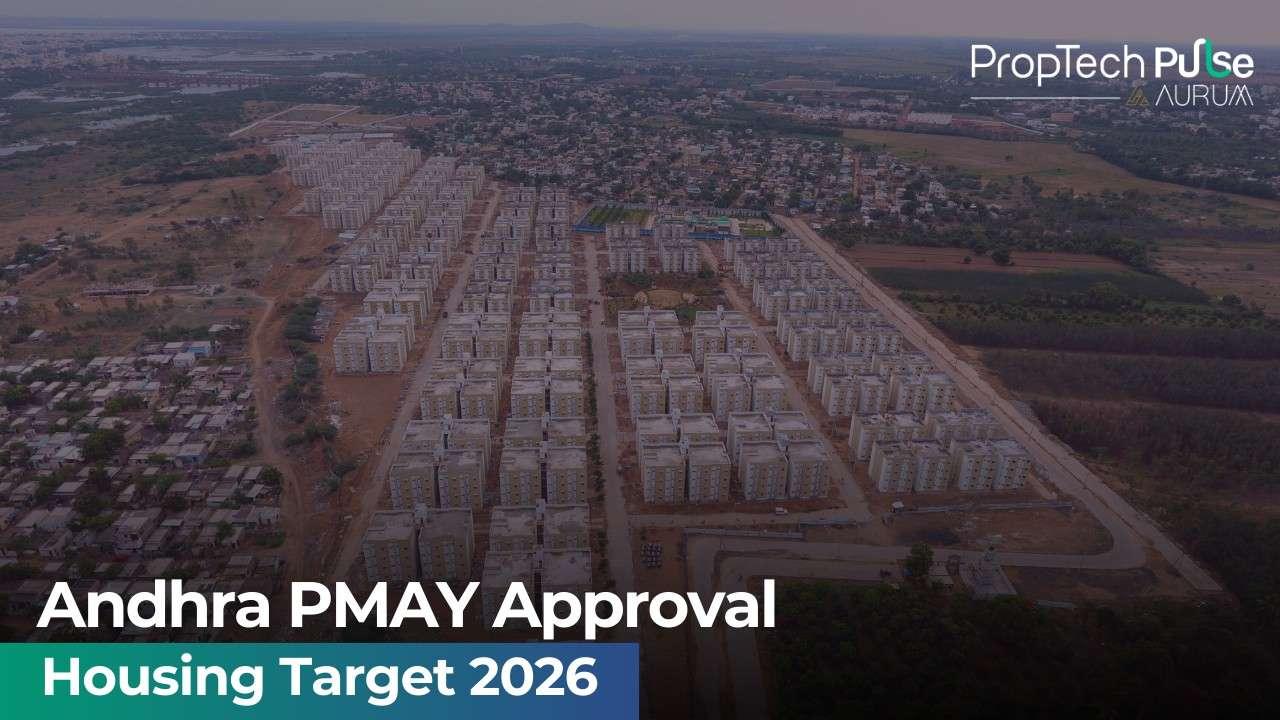
Government Approval for PMAY Housing
The Andhra Pradesh government has approved the construction of 2.61 lakh houses under the Pradhan Mantri Awas Yojana to be completed by 2026. The decision reflects the state’s commitment to accelerating affordable housing delivery for economically weaker sections and low-income households.
Alignment With National Housing Mission
The approved housing targets are aligned with the objectives of the Pradhan Mantri Awas Yojana, which aims to provide secure and affordable homes to eligible beneficiaries. The article highlights that the state’s approval supports the broader national goal of expanding housing access through structured, time-bound implementation.
Implementation Timeline and Scale
The housing approvals cover a multi-year execution plan extending up to 2026. Delivering homes at this scale requires coordinated planning across land allocation, construction, beneficiary identification, and funding disbursement. The timeline underscores the importance of execution discipline and inter-departmental coordination.
Focus on Beneficiary Segments
The PMAY houses are intended primarily for economically weaker sections and low-income groups. The article notes that the initiative targets households lacking access to permanent housing, aiming to improve living conditions and provide long-term housing security.
Funding and Policy Support
The approved projects are expected to be supported through a combination of central and state government funding under the PMAY framework. Policy support includes subsidies, standardised construction norms, and monitoring mechanisms to ensure timely completion and quality adherence.
Construction and Execution Challenges
Executing housing projects at this scale presents challenges related to land availability, contractor capacity, material supply, and quality control. The article indicates that effective project management and regular monitoring will be critical to meeting the 2026 completion target.
Impact on Affordable Housing Supply
Once completed, the approved houses will significantly add to Andhra Pradesh’s affordable housing stock. Increased supply is expected to reduce housing shortages, improve living standards, and support inclusive urban and rural development.
Employment and Economic Impact
Large-scale housing construction under PMAY is also expected to generate employment across construction, logistics, and allied sectors. The multiplier effect of such projects can contribute to local economic activity while addressing social housing needs.
Monitoring and Accountability Framework
The article notes that PMAY projects are typically subject to structured monitoring and reporting mechanisms. These frameworks are designed to ensure transparency, beneficiary verification, and adherence to construction timelines.
Conclusion
Andhra Pradesh’s approval of 2.61 lakh PMAY houses to be completed by 2026 marks a significant step toward strengthening affordable housing delivery. Successful execution of the plan will play a key role in meeting housing demand, supporting social welfare objectives, and advancing inclusive development across the state.
Enjoyed this update? Visit PropTech Pulse for more real estate news and market insights.





Unlock the Latest in Real Estate
News, Infographics, Blogs & More! Delivered to your inbox.