
Ask Pulse Ai
Services
Knowledge Hub
Resources
Tools
Ask Pulse Ai
Services







©PropTech Pulse 2025, All rights reserved.

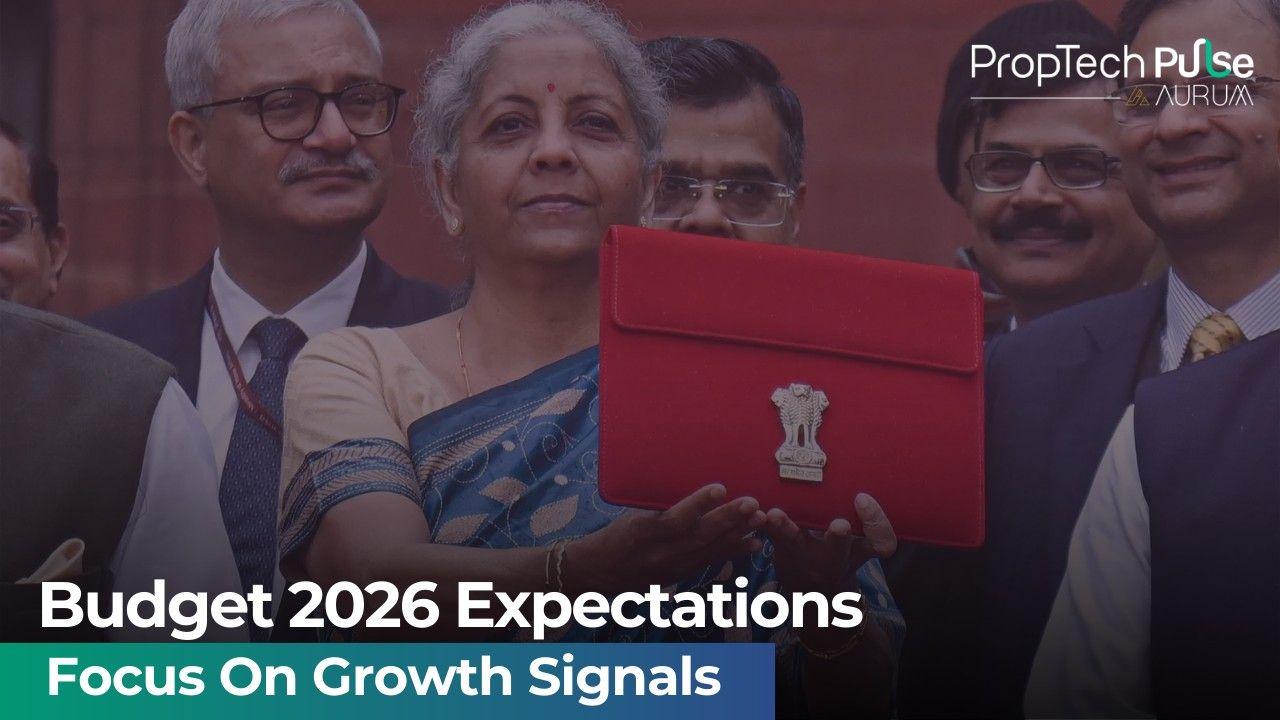
Context Ahead of Union Budget 2026
With the presentation of the Union Budget 2026 on the horizon, expectations are building across sectors that are closely linked to economic activity and employment. Among them, commercial real estate and the flex office sector occupy a critical position due to their role in supporting business expansion, urban development, and job creation. Budget-related policy direction is often viewed as an important indicator of how these sectors may evolve in the coming years.
Stakeholders are particularly attentive to fiscal measures that can influence investment confidence, operational costs, and long-term planning.
Commercial Real Estate: Key Expectations
The commercial real estate sector is looking for policy continuity and targeted interventions that can support sustainable growth. Market participants often highlight the need for a stable tax framework, faster approvals, and incentives that encourage domestic and institutional investment. Improved liquidity and access to capital remain important considerations, especially for large-scale office and mixed-use developments.
In addition, continued government spending on infrastructure is seen as a positive driver for office demand, particularly in established business districts and emerging commercial corridors.
Flex Office Sector Outlook
The flex office segment has gained prominence alongside changing workplace preferences and hybrid work models. Operators in this space are seeking policy recognition of flexible workspaces as a distinct and growing component of the office market. Supportive measures could help address operational challenges related to leasing structures, compliance, and scalability.
Budget provisions that enable greater lease flexibility and ease of doing business could further encourage enterprises, especially startups and small firms, to adopt flexible workspace solutions.
Role of Government Initiatives
Government initiatives aimed at infrastructure development, digitalisation, and urban renewal are closely linked to the performance of both commercial real estate and flex offices. Investments in transport connectivity, technology ecosystems, and business-friendly urban policies can strengthen occupier demand and improve the viability of office assets.
Such initiatives also have the potential to support job creation by enabling businesses to expand operations and establish new offices across cities.
Strategic Areas of Focus
- Investment strategies that attract long-term capital into office assets
- Flex space solutions that align with evolving workforce needs
- Real estate outlook shaped by infrastructure and policy support
Looking Ahead
As the Union Budget 2026 is unveiled, commercial real estate and flex office stakeholders will closely evaluate how proposed measures translate into actionable benefits. While expectations remain cautious, there is optimism that policy decisions will acknowledge the contribution of these sectors to economic growth and urban development.
A balanced approach that supports business expansion while maintaining fiscal prudence could help reinforce confidence and set the stage for steady, long-term growth.
Enjoyed this update? Visit PropTech Pulse for more real estate news and market insights.




Unlock the Latest in Real Estate
News, Infographics, Blogs & More! Delivered to your inbox.