New Launch - India Real Estate Report 2026.











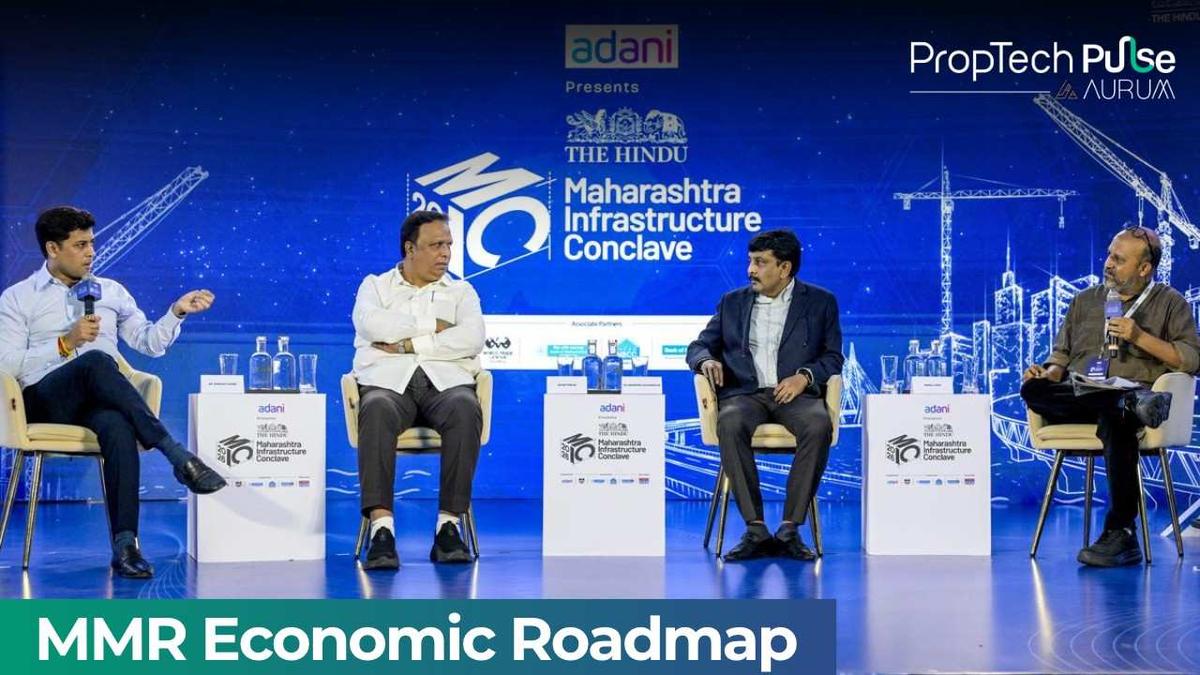
In a significant policy disclosure delivered at The Hindu Maharashtra Infrastructure Conclave 2026, Lok Sabha MP Shrikant Shinde, Mumbai Suburban Guardian Minister Ashish Shelar, and Mahendra Kalyankar, CEO of the Slum Rehabilitation Authority (SRA), laid out a comprehensive growth blueprint for the Mumbai Metropolitan Region (MMR). The joint panel established a major macroeconomic goal, projecting that the extended urban layout will contribute ₹1.7 lakh crore to Maharashtra's state economy by the centenary year of 2047. This rapid economic growth will be powered by systematic decentralisation, a massive regional transit network expansion, and a unified residential development strategy.
Massive Funding and World's Largest Metro Expansion Loop
To comfortably support this economic scaling, the MMR asset class has received a massive capital injection of approximately ₹4 lakh crore in centralised and institutional development funds. A primary portion of this capex loop is being utilised to finalise a 377-kilometre integrated metro rail network, which Shinde highlighted as the largest continuous metro system currently under development globally. While heavy structural construction is moving rapidly on the Kalyan metro corridor, the state administration is also clearing final tracking loops to initiate a dedicated metro branch for Thane, establishing seamless multi-modal connectivity across the peripheral economic sub-markets.
Decentralising the Metropolis via Logistics and Ports
A core element of the 2047 strategy focuses on diverting industrial and heavy commercial pressure away from the saturated island city toward emerging suburban corridors. Shinde pointed out that the rapid buildout of hyper-scale data centers and mega logistics hubs in Navi Mumbai, alongside the development of the multi-billion-dollar greenfield mega-port at Vadhavan, will act as the region's premier employment engines. This shift is being backed by significant localised connectivity overhauls: municipal bodies like the Kalyan-Dombivli Municipal Corporation (KDMC), Ambernath, and Ulhasnagar have unified their local transport grids, planning a water metro route, an access-controlled expressway corridor designed for quick 10-minute commutes, and a direct high-speed roadway linking Badlapur to Navi Mumbai.
Global Record for Urban Slum Rehabilitation Targets
Addressing the complex quadrant of affordable residential real estate and urban renewal, SRA CEO Mahendra Kalyankar highlighted Mumbai's unique statutory framework. The city stands out globally as the only metropolitan market providing 300-square-foot fully developed rehabilitation housings for slum dwellers completely free of cost. The housing authority has underwritten a firm goal to deliver 5 lakh such rehabilitation units by 2030, with 2.97 lakh properties already completed and handed over to families. This structural rollout is being expanded by the Brihanmumbai Municipal Corporation (BMC), which has initiated 39 independent rehabilitation projects on municipal lands, alongside a cluster development layout being executed by the MMRDA and SRA to build a landmark park at the Ramabai Ambedkar site in Vikhroli.
Upgrading the BEST Fleet and Multi-Modal Upgrades
Complementing the high-speed rail lines, Guardian Minister Ashish Shelar addressed the restoration of Mumbai's historic surface transit backbone. Acknowledging that the city's 437 sq. km. primary zone faces distinct, deep urban transit strains, Shelar stated that the current administration has drastically stepped up public funds for the Brihanmumbai Electric Supply and Transport (BEST) department to repair legacy operational lulls. The transit body has successfully injected more than 1,000 new buses into the active BEST fleet, with the remaining pipeline scheduled for absolute delivery over the next four years. By linking modern surface transport directly with the multi-modal Dharavi redevelopment framework and 101 regional water transit channels, the state ensures that MMR's expanding labour pools enjoy highly predictable, efficient daily commutes to support long-term economic output.
Enjoyed this update? Visit PropTech Pulse for more real estate news and market insights.