
Ask Pulse Ai
Services
Knowledge Hub
Resources
Tools
Ask Pulse Ai
Services







©PropTech Pulse 2025, All rights reserved.

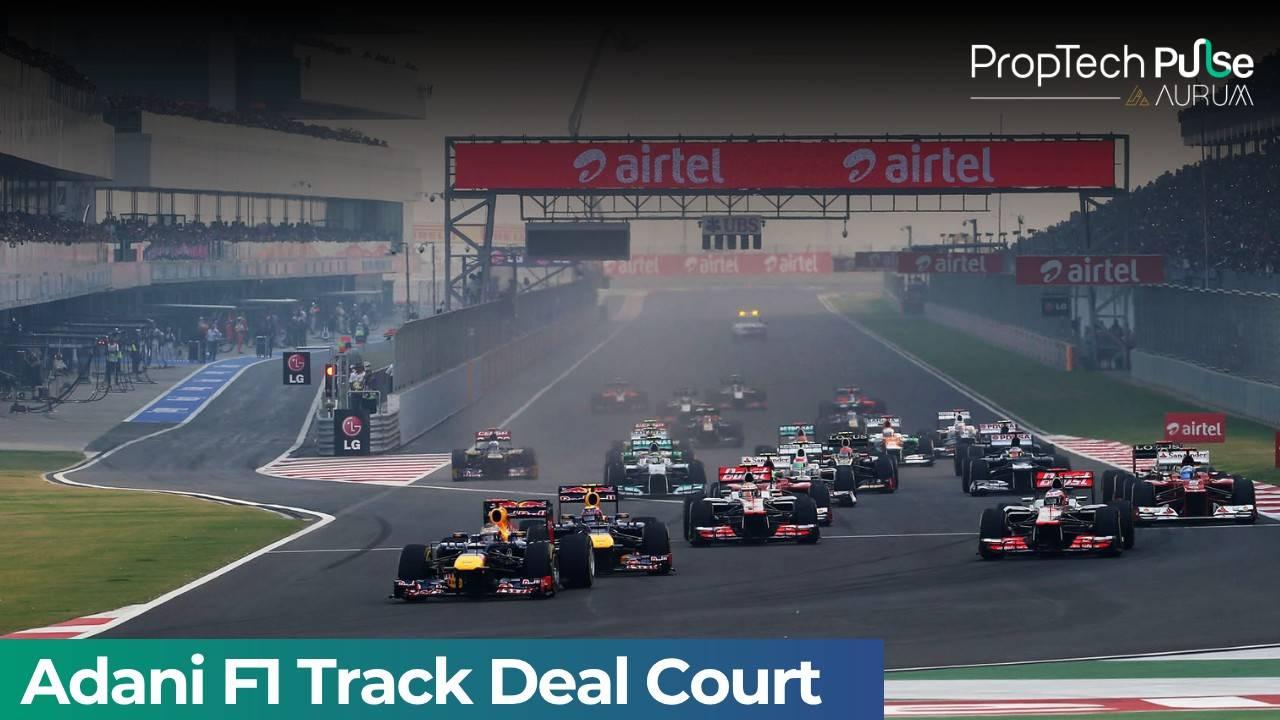
Legal Challenge Around a High-Profile Deal
An Indian court has declined to grant a stay on a real estate deal linked to the Adani Group, which is associated with the development of a Formula 1 (F1) track. The plea had sought to temporarily halt the transaction, raising concerns around the project, but the court’s refusal means there is no immediate legal barrier to its continuation.
What the Court’s Decision Means
By rejecting the request for a pause, the court has effectively allowed the project to proceed as planned, at least in the near term. Importantly, this does not imply that all legal questions surrounding the deal are resolved; rather, it indicates that the court did not find sufficient grounds to stop the project at this stage. This distinction is critical, as it allows development activity to continue even while broader legal scrutiny may still unfold.
Why This Case Matters
Large-scale real estate and infrastructure-linked projects, especially those involving high-value land and marquee developments like an F1 track, often attract legal and regulatory attention. Such challenges typically arise from concerns related to land allocation, compliance, or procedural transparency. In this case, the plea reflects that broader environment of heightened scrutiny around major projects in India’s evolving real estate and infrastructure ecosystem.
Impact on the Project and Market Sentiment
The immediate implication of the ruling is continuity. Without a stay order, project timelines are unlikely to face disruption, which is crucial for developments of this scale where delays can significantly impact costs and investor confidence. For stakeholders, including developers and investors, the decision provides short-term clarity and reduces uncertainty around execution.
At a broader level, the case highlights how legal processes intersect with real estate development in India. While courts continue to act as a checkpoint for regulatory and procedural compliance, they also balance this with the need to avoid unnecessary disruption to ongoing projects unless a strong case is established.
Conclusion
The court’s refusal to halt the Adani-linked F1 real estate deal ensures that the project remains on track for now. While legal proceedings may continue in the background, the absence of an interim stay reinforces execution momentum and underscores the importance of judicial thresholds in influencing real estate timelines.
Enjoyed this update? Visit PropTech Pulse for more real estate news and market insights.





Unlock the Latest in Real Estate
News, Infographics, Blogs & More! Delivered to your inbox.