New Launch - India Real Estate Report 2026.

Services
Knowledge Hub
Resources
Tools

Ask Pulse Ai
©PropTech Pulse 2025, All rights reserved.


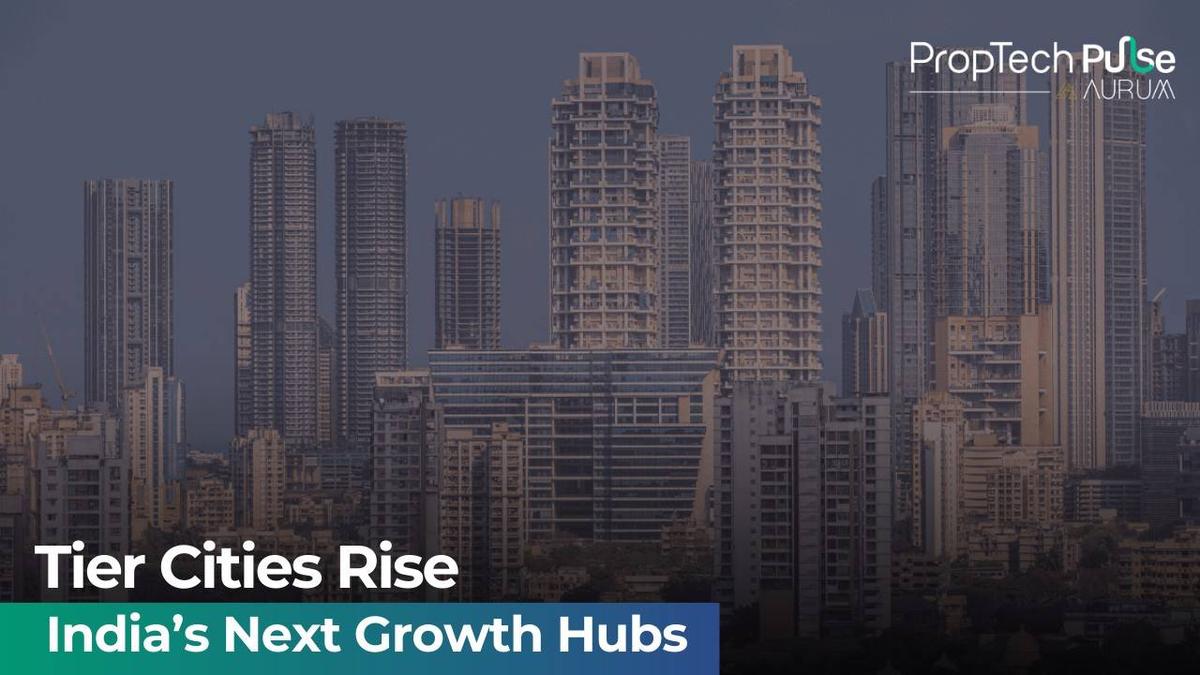
India’s Urban Shift Gains Momentum
India’s real estate growth story is no longer confined to metropolitan centres alone. A growing number of Tier II and Tier III cities are stepping into the spotlight as viable alternatives to saturated metros. Rising costs of living, congestion, and infrastructure strain in large cities have accelerated this shift, pushing both homebuyers and investors to explore emerging urban markets.
Economic Expansion and Job Creation
One of the strongest drivers behind this transformation is economic decentralisation. IT services, Manufacturing units, logistics hubs, and startup ecosystems are increasingly being set up in smaller cities. This has led to steady job creation, attracting skilled professionals and young families who seek a better quality of life without metro-level expenses.
Real Estate Demand on the Rise
As migration into these cities increases, demand for residential housing, office spaces, and retail developments has risen sharply. Developers are responding with organised townships, gated communities, and mixed-use projects that were earlier limited to Tier I markets. This marks a structural upgrade in how real estate is planned and delivered in smaller cities.
Affordability and Higher Value Proposition
Affordability remains a defining advantage. Property prices in Tier II and III cities are significantly lower than those in metros, offering larger homes and better amenities at accessible price points. For investors, this translates into a compelling risk-reward balance, with scope for long-term capital appreciation as urbanisation deepens.
Government Push and Infrastructure Growth
Government-led initiatives are playing a critical role in accelerating this growth. Investments in highways, rail corridors, regional airports, and smart city programmes are improving connectivity and liveability. Enhanced infrastructure not only supports daily life but also boosts real estate viability by attracting businesses and institutional capital.
Changing Buyer Preferences
Post-pandemic lifestyle shifts have further strengthened this trend. Buyers now prioritise space, affordability, and work-life balance over proximity to traditional business districts. Tier II and III cities offer this combination, making them increasingly attractive for end-users and first-time homebuyers.
Outlook for Investors and Developers
For developers, these cities present opportunities to enter early-stage markets with lower land costs and scalable growth potential. Investors, meanwhile, benefit from rising rental demand and gradual price appreciation driven by improving infrastructure and population growth.
Conclusion
The rise of Tier II and Tier III cities signals a fundamental shift in India’s real estate narrative. As economic activity disperses, and infrastructure catches up, these cities are evolving into future-ready urban hubs. For stakeholders willing to look beyond metros, the next phase of real estate growth is already taking shape.
Enjoyed this update? Visit PropTech Pulse for more real estate news and market insights.


