New Launch - India Real Estate Report 2026.

Services
Knowledge Hub
Resources
Tools

Ask Pulse Ai
©PropTech Pulse 2025, All rights reserved.


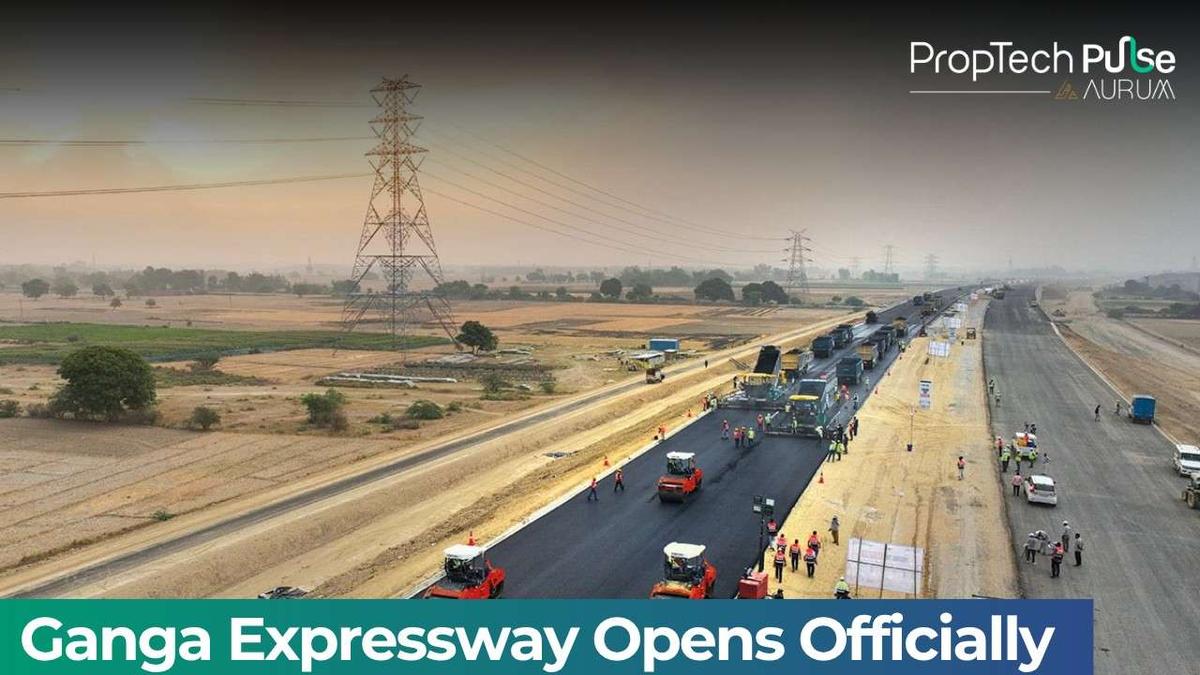
In a landmark moment for India’s infrastructure development, Prime Minister Narendra Modi officially inaugurated Phase 1 of the Ganga Expressway on April 29, 2026. Spanning 594 kilometres, this greenfield, access-controlled expressway connects Bijauli village in Meerut to Judapur Dandu village in Prayagraj. Developed by the Uttar Pradesh Expressways Industrial Development Authority (UPEIDA) at an estimated cost of ₹36,230 crore, the project is now the second-longest expressway in India, surpassed only by the Delhi-Mumbai Expressway. The six-lane highway, designed for speeds up to 120 kmph and expandable to eight lanes, has slashed travel time between western and eastern UP from 12 hours to approximately 6–7 hours.
Geographic Reach and Strategic Districts
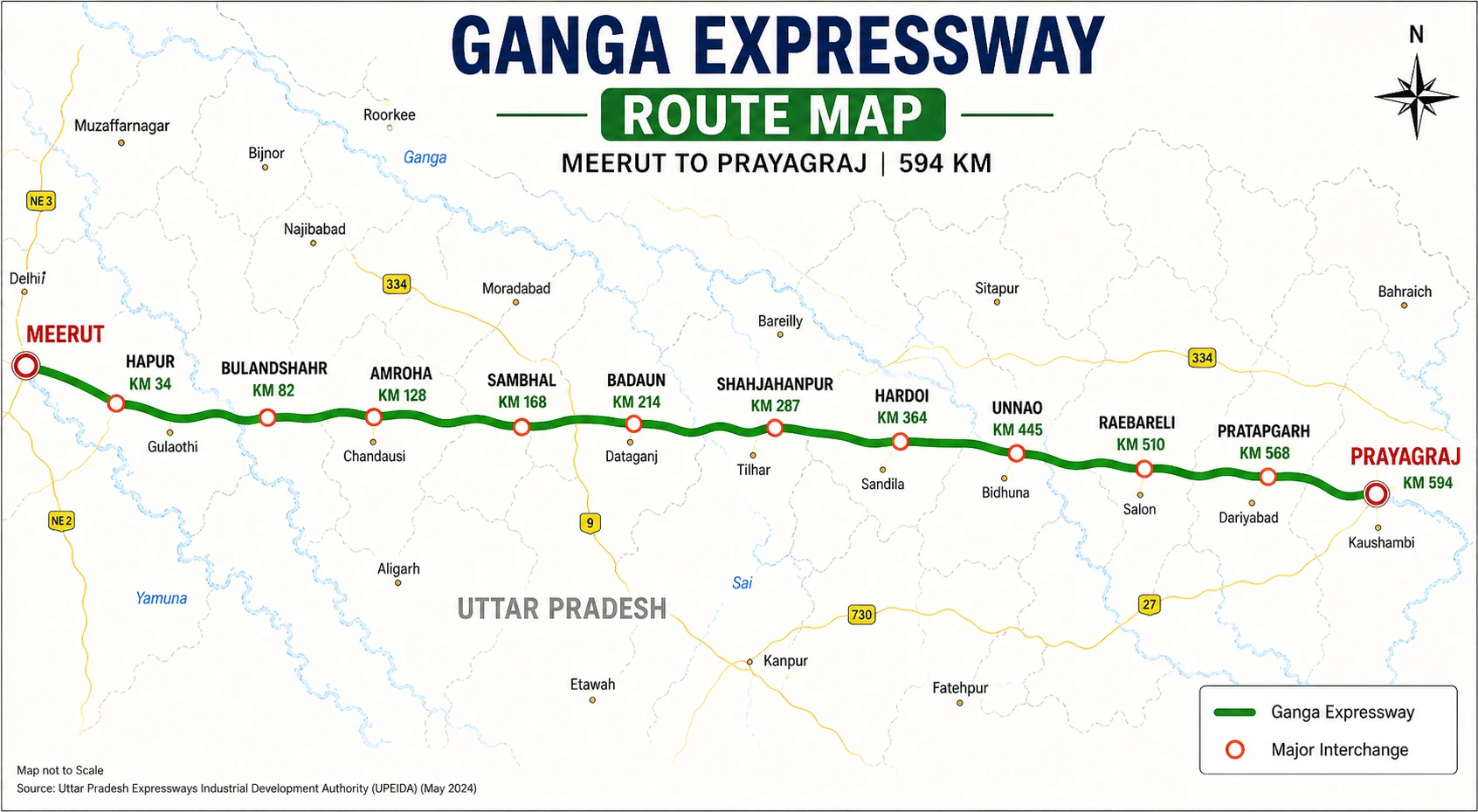
The expressway serves as a high-speed economic spine passing through 12 major districts of Uttar Pradesh, integrating western manufacturing belts with central agricultural regions and eastern religious hubs. The route covers:
- Western Region: Meerut, Hapur, Bulandshahr, and Amroha.
- Central Region: Sambhal, Budaun, Shahjahanpur, Hardoi, and Unnao.
- Eastern Region: Rae Bareli, Pratapgarh, and Prayagraj.
- Future Extensions: During the inaugural ceremony, the Prime Minister announced an extension to Haridwar from Meerut, while Phase 2 plans include a link from Prayagraj to Ballia, eventually connecting to Bihar.
Real Estate and Industrial Transformation
Real estate experts anticipate a "corridor-led" development model that will fundamentally re-rate property values across these 12 districts. Projections suggest that property prices along directly connected segments could appreciate by 20–40% over the next few years. Knight Frank India notes that development will occur in concentric rings around the 18 interchange nodes, with a primary focus on Grade A warehousing and industrial clusters within the first three years, followed by residential and retail expansions between the second and fifth years of operation. Emerging hubs such as Budaun, Sambhal, and Shahjahanpur are being positioned as major secondary warehousing centers to support India's growing e-commerce needs.
Integrated Manufacturing and Logistics Clusters (IMLCs)
To maximize the economic multiplier effect, the UP government is developing 12 integrated manufacturing and logistics clusters along the corridor. These hubs will feature advanced facilities such as cold storage, food processing units, and pharma parks, particularly in districts like Hardoi and Bulandshahr. The expressway also features a 3.5 km long airstrip in Shahjahanpur for emergency landing operations by the Indian Air Force, highlighting its dual strategic and civilian importance. Furthermore, a proposed 74 km link road connecting the Ganga Expressway to the Yamuna Expressway at Pari Chowk is expected to further integrate the National Capital Region (NCR) with these new growth nodes.
Future Outlook: Toward a $1 Trillion Economy
The operationalization of the Ganga Expressway is a critical pillar of Uttar Pradesh’s vision to become a $1 trillion economy. By reducing transit times by nearly 50%, the project encourages a decentralized work model, where cities like Meerut, Kanpur, and Prayagraj emerge as viable secondary office hubs alongside Delhi-NCR. While speculative price inflation remains a risk for early investors, the long-term structural shift toward node-anchored urbanization is expected to transform low-yield rural land into high-value commercial and residential real estate zones, fostering widespread regional prosperity.
Enjoyed this update? Visit PropTech Pulse for more real estate news and market insights.


