New Launch - India Real Estate Report 2026.











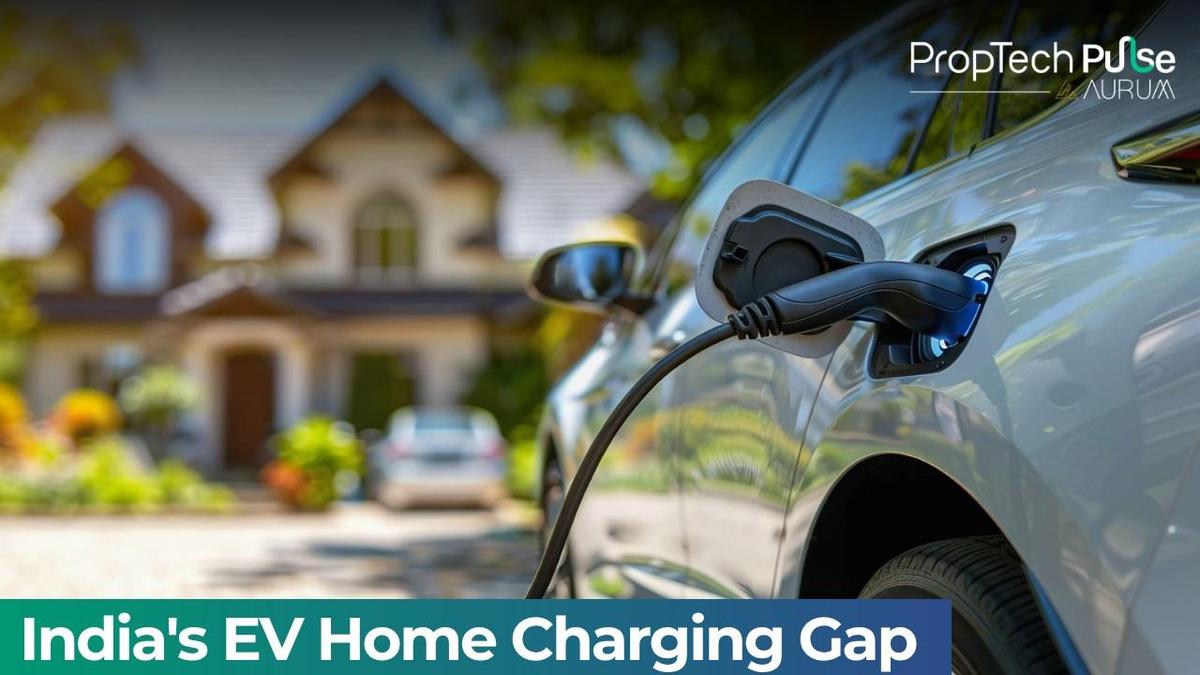
Nine out of ten EV charging sessions in India happen at home. That single statistic, drawn from a new study on residential EV charging infrastructure, reframes the entire conversation about how India scales its electric mobility ambitions. The public charging network debate, which dominates most policy discussions, addresses the 10% of demand that happens on the road. The 90% that happens in homes, apartment complexes and gated communities is largely being handled by extension cords, shared sockets and improvised arrangements that carry real safety risks and compromise battery performance. The built environment has not caught up with the vehicles being sold into it.
Home charging meets 90% of India's EV demand, but the infrastructure is not ready
The study identifies five structural barriers holding back residential EV charging. Electrical infrastructure in most existing housing stock was not designed for the sustained, high-load draw of EV charging, and many buildings lack the panel capacity, sub-metering capability or dedicated circuits that a proper home charger requires. Limited parking availability, particularly in high-density urban housing and rental properties, compounds the problem. Approvals for load enhancements and sub-meter installations are fragmented across utility providers, building societies and municipal bodies, creating a coordination failure that frustrates individual owners even when they are willing to invest. Consumer awareness remains low, and the cost of electrical upgrades can be prohibitive, particularly for older buildings, rental tenants and lower-income households.
The building bye-law gap
One of the report's most actionable recommendations concerns building regulations. It calls for EV-ready provisions to be integrated directly into building bylaws, redevelopment project approvals and affordable housing schemes, so that future construction is built with charging infrastructure as a standard feature rather than a retrofit afterthought. The gap between current bylaws and EV infrastructure requirements is a classic case of regulation lagging technology: the vehicles have arrived before the rules have been updated to require the buildings that house them to accommodate them. Getting EV readiness into the building code is a one-time regulatory change that would affect every new project going forward, making it one of the highest-leverage interventions available to policymakers.
What developers and housing societies need to do now
The report proposes a National Residential EV Readiness Framework to bring together existing standards, regulations and guidelines into a single implementation roadmap. For developers launching new projects, the practical implications are already arriving: buyers are beginning to ask about EV charging provision as part of the amenity checklist, and projects that can offer dedicated parking bays with charging-ready electrical infrastructure are differentiating themselves in markets where EV ownership is already significant. For existing housing societies, the path is harder: electrical upgrades in older buildings require collective decision-making, utility coordination and capital outlay that many management committees are not equipped to navigate without standardised guidance and financial support.
The grid and energy planning dimension
Beyond the immediate building infrastructure question, the report flags a longer-term planning imperative. EV-related electricity consumption is projected to rise from 0.2% of India's total electricity demand in 2024 to around 6% by 2035. Managed home charging, where smart systems regulate when and how fast vehicles charge based on grid load, is described as critical for grid resilience and energy planning at that scale. Unmanaged charging, where millions of vehicles plug in simultaneously at peak evening hours, would create demand spikes that the current grid infrastructure is not designed to absorb. The residential charging infrastructure problem is therefore not just a real estate issue: it is a national energy infrastructure issue that has to be solved at the building level, one apartment complex and housing society at a time.
Enjoyed this update? Visit PropTech Pulse for more real estate news and market insights.


