
Ask Pulse Ai
Services
Knowledge Hub
Resources
Tools
Ask Pulse Ai
Services







©PropTech Pulse 2025, All rights reserved.

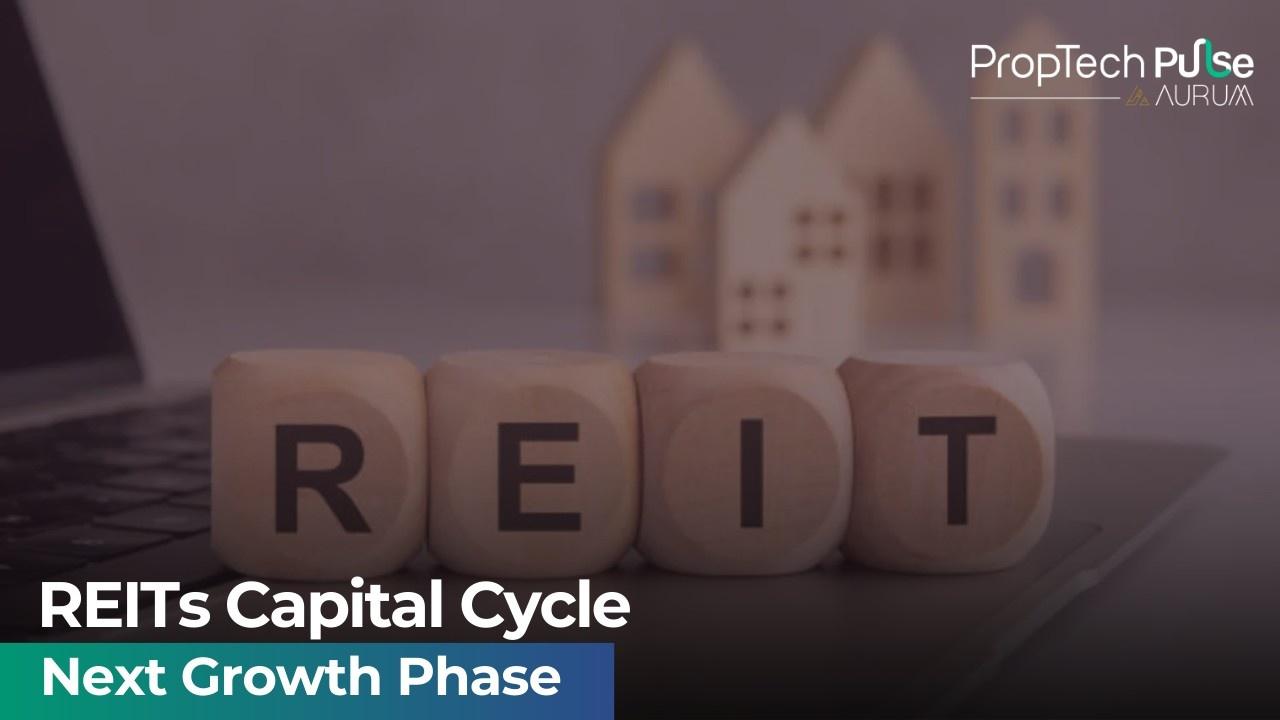
Budget 2026 And The REIT Ecosystem
Budget 2026 has reinforced attention on Real Estate Investment Trusts as structured vehicles for channelising capital into income-generating property assets. REITs have steadily evolved into a key instrument within India’s commercial real estate market, offering institutional participation, transparency, and predictable yields. Policy alignment in the Budget underscores the importance of deepening capital market integration with real estate.
Understanding Capital Recycling In Real Estate
Capital recycling refers to the process where developers monetise completed, income-producing assets through REIT structures and redeploy proceeds into new projects. This mechanism improves liquidity while maintaining operational continuity, enabling efficient balance sheet management and asset optimisation across large real estate portfolios.
Why REITs Matter For Developers
For developers, REIT listings provide access to long-term institutional capital while reducing leverage pressures. By transferring stabilised commercial assets into REIT platforms, developers can unlock value and accelerate pipeline expansion, supporting scalable growth without over-reliance on debt.
Investor Perspective And Yield Visibility
REITs offer investors exposure to Grade A office, retail, and logistics assets with stable rental cash flows. The structure ensures periodic income distribution, making them attractive to both domestic and global investors seeking predictable yield backed by operational assets.
Impact On Commercial Real Estate Development
The growing maturity of the REIT market is influencing how commercial projects are planned and executed. Developers are increasingly designing assets with institutional exit pathways in mind, enhancing governance and compliance standards to align with global investment benchmarks.
Role In Strengthening Market Transparency
REIT frameworks require regular disclosures, valuation transparency, and performance reporting. These requirements strengthen overall market discipline and elevate operational standards, reinforcing greater accountability within the commercial real estate sector.
Capital Recycling And New Supply Creation
By enabling developers to monetise stabilised assets, REITs free up capital for new office parks, mixed-use developments, and logistics hubs. This continuous cycle supports sustained supply addition aligned with demand growth, rather than episodic expansion.
Institutional Participation And Global Interest
India’s REIT market has attracted global institutional investors seeking exposure to the country’s expanding commercial real estate footprint. Capital recycling mechanisms enhance investor confidence by providing liquidity and structured returns, supporting cross-border capital inflows.
Next Phase Of Indian Real Estate Evolution
As the ecosystem matures, REITs are expected to play a larger role beyond office assets, potentially expanding into retail, warehousing, and other income-generating categories. This diversification supports broader asset class participation within the REIT framework.
Long Term Market Implications
The continued strengthening of REIT structures signals a transition toward a more institutionalised real estate environment. Capital recycling enables disciplined expansion, improves liquidity, and supports long-term sector sustainability across cycles.
Conclusion
Budget 2026’s renewed focus on REITs and capital recycling highlights the sector’s evolution toward institutional maturity. By enabling structured capital flows and asset monetisation, REITs are positioned to anchor the next growth phase of Indian real estate.
Enjoyed this update? Visit PropTech Pulse for more real estate news and market insights.



Unlock the Latest in Real Estate
News, Infographics, Blogs & More! Delivered to your inbox.