
Ask Pulse Ai
Services
Knowledge Hub
Resources
Tools
Ask Pulse Ai
Services







©PropTech Pulse 2025, All rights reserved.

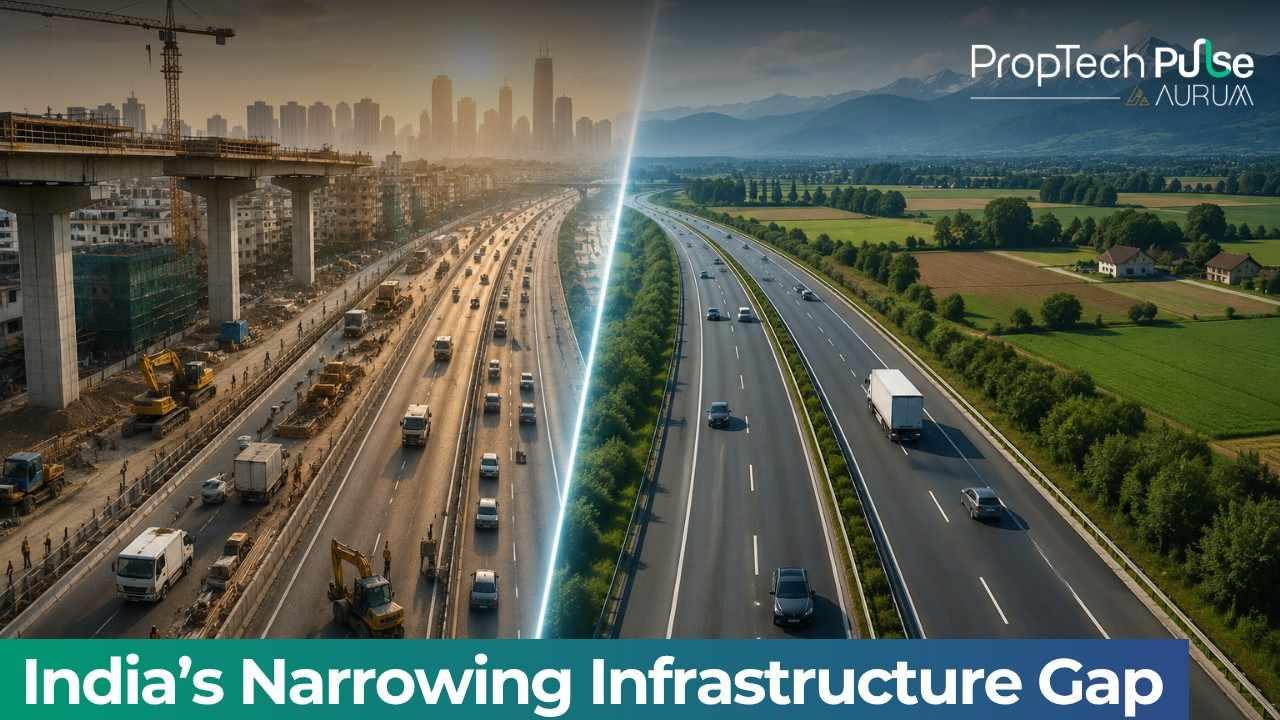
A recent viral narrative from an Indian traveller has sparked an extensive national conversation regarding the rapid modernisation of India’s road infrastructure. In a detailed observation, it was noted that a trip across Europe—traditionally the benchmark for global road standards—has shifted the perspective on the narrowing gap between Indian and Western infrastructure. While historical comparisons often highlighted a vast disparity, the aggressive rollout of access-controlled corridors and high-speed expressways under the 2026 infrastructure mandate has fundamentally altered the domestic travel experience.
This shift in public sentiment is backed by a massive surge in capital expenditure by the Ministry of Road Transport and Highways (MoRTH). The transformation is most visible in the transition from traditional dual-carriageway highways to eight-lane, world-class expressways that bypass congested urban centres. These projects have significantly reduced travel times between major economic hubs, mirroring the efficiency of the European Autobahn or Autoroute systems that were previously seen as unattainable standards.
Key Pillars of the Infrastructure Narrowing Gap
The acceleration of India's road network is not just about mileage but the quality of the engineering and digital integration. Several key developments are identified as the primary drivers of this narrowing gap:
- Access-Controlled Design: The implementation of fenced, entry-exit controlled expressways like the Delhi-Mumbai and Ganga Expressways has eliminated local traffic interference, allowing for consistent high-speed transit.
- Smart Toll Systems: The evolution from manual booths to AI-driven, multi-lane free-flow tolling has largely surpassed the efficiency of older toll systems still in use in several European regions.
- Safety and Amenities: The mandate for world-class way-side amenities, including trauma centres, rest areas, and EV charging stations every 40-50 kilometres, aligns with international long-haul travel standards.
- Biophilic and Green Infrastructure: Integration of wildlife crossings and eco-sensitive corridors into highway designs, particularly in transit-heavy zones.
Economic Implications and Future Trajectory
The transformation of the road network is a critical engine for the real estate and logistics sectors. As high-speed connectivity reaches Tier-II and Tier-III cities, it is unlocking massive land parcels for industrial parks and residential townships. Real estate experts suggest that the "infrastructure premium" is now a primary factor in property valuation, as proximity to an expressway interchange often leads to immediate capital appreciation. The enhanced road network is effectively decentralising economic growth, allowing for a more balanced urban-rural distribution of wealth.
As India moves toward the 2027 fiscal cycle, the focus is shifting from basic connectivity to last-mile integration and multi-modal logistics parks. While challenges such as driver discipline and maintenance consistency remain, the physical infrastructure is no longer the primary bottleneck it was a decade ago. The ongoing convergence of sustainability and speed ensures that India’s road network is poised to become a global case study in rapid, large-scale infrastructure development, further bridging the divide with the world's most advanced economies.
Enjoyed this update? Visit PropTech Pulse for more real estate news and market insights.




Unlock the Latest in Real Estate
News, Infographics, Blogs & More! Delivered to your inbox.