
Ask Pulse Ai
Services
Knowledge Hub
Resources
Tools
Ask Pulse Ai
Services







©PropTech Pulse 2025, All rights reserved.

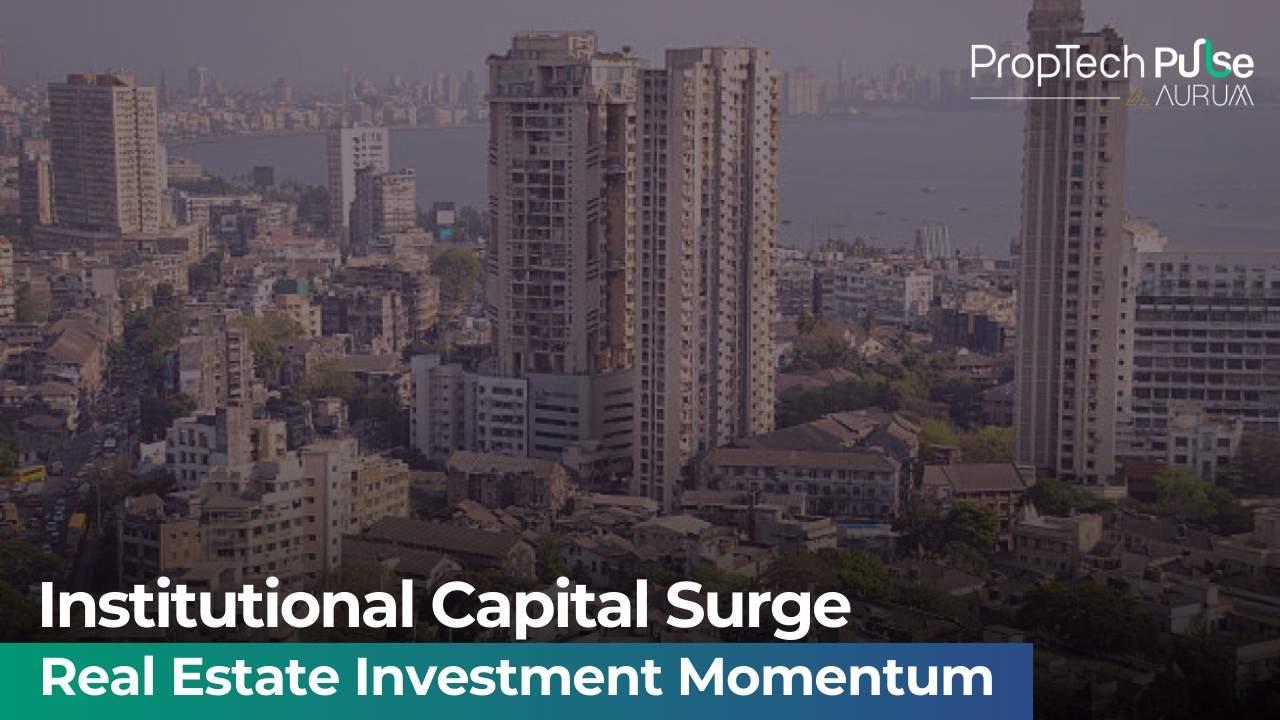
Institutional Confidence in Indian Real Estate
India’s real estate sector is entering a decisive phase of growth as institutional investments are projected to cross $10 billion by 2025. This anticipated surge reflects rising confidence among both domestic and global investors who increasingly view Indian property markets as stable, scalable, and resilient. The trend underscores the sector’s evolution from fragmented ownership to a more organised, investment-grade asset class.
Shifting Investment Landscape
Over the past few years, India has witnessed a structural shift in real estate funding patterns. Large pools of capital are now being deployed through real estate investment trusts (REITs), private equity funds, and global asset managers. Institutional investors are prioritising income-generating assets, particularly in commercial real estate, logistics parks, and Grade A office spaces located in major metropolitan regions.
Key Cities Attracting Capital
Markets such as Mumbai, Delhi-NCR, and Bengaluru continue to dominate institutional interest due to strong demand fundamentals, diversified tenant bases, and superior infrastructure. These cities offer large-scale developments that align with institutional requirements for transparency, governance, and long-term yields. The steady absorption of office and retail spaces has further strengthened investor sentiment.
Drivers Behind Rising Investments
Multiple factors are converging to support this investment upswing. Stable macroeconomic conditions, improving ease of doing business, and regulatory clarity have played a pivotal role. In addition, sustained urbanisation trends and expanding corporate footprints are driving demand across asset classes. The growing adoption of PropTech solutions is also enhancing asset management efficiency, making Indian real estate more attractive to large institutional players.
Impact on Developers and Employment
The influx of institutional capital is expected to significantly benefit developers by improving liquidity and reducing dependence on high-cost financing. Access to long-term capital enables faster project execution and better quality control. At the same time, increased investment activity is likely to generate employment across construction, facilities management, and allied sectors, contributing to broader economic growth.
Role of Policy and Regulation
Government initiatives and regulatory reforms have further strengthened investor confidence. Measures promoting transparency, asset monetisation, and structured investment vehicles have helped position Indian real estate as a credible destination for global capital. These reforms are gradually aligning the sector with international investment standards.
Outlook for 2025 and Beyond
Looking ahead, institutional participation is expected to deepen further as India’s real estate market matures. The focus is likely to expand beyond office assets into logistics, data centres, and mixed-use developments. As capital flows increase, the sector is poised to transition into a more sustainable, professionally managed investment ecosystem.
Conclusion
The projected $10 billion-plus institutional inflow by 2025 marks a defining moment for Indian real estate. It reflects not just financial optimism but a broader transformation toward an organised, technology-enabled, and globally integrated property market. For stakeholders across the value chain, this phase presents opportunities for scale, stability, and long-term value creation.
Enjoyed this update? Visit PropTech Pulse for more real estate news and market insights.




Unlock the Latest in Real Estate
News, Infographics, Blogs & More! Delivered to your inbox.