New Launch - India Real Estate Report 2026.











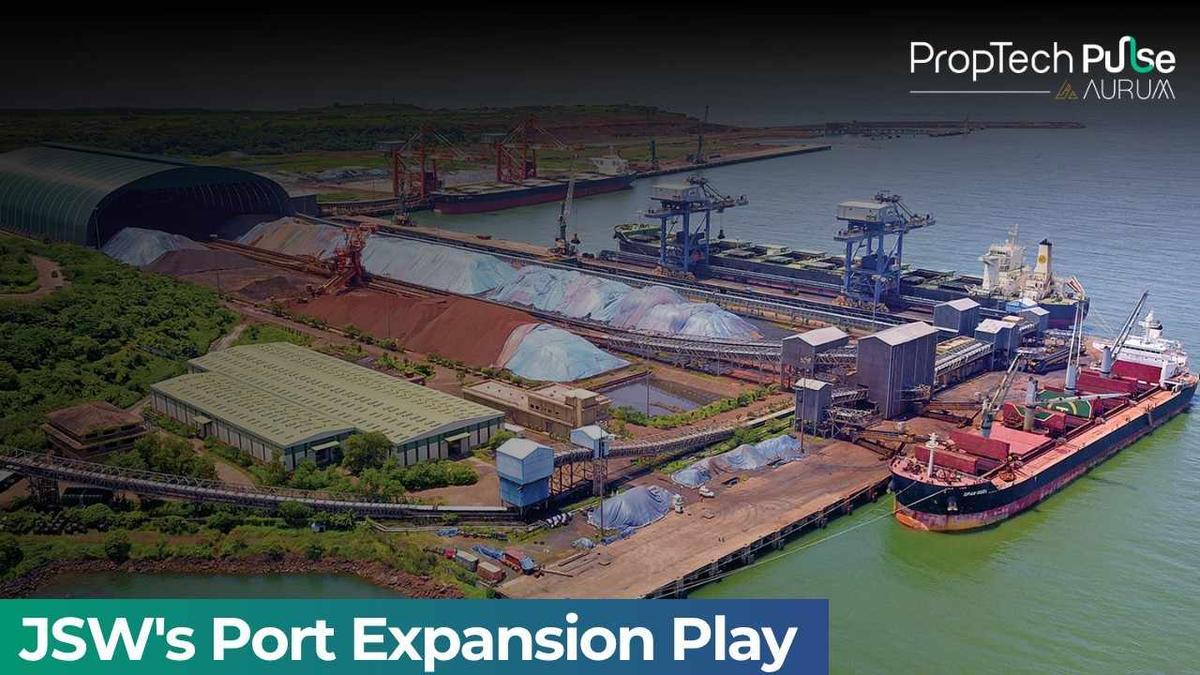
India's port infrastructure is about to receive a significant injection of capital. JSW Infrastructure has successfully closed a Qualified Institutional Placement, raising ₹7,503 crore, drawing participation from sovereign wealth funds, global long-only funds and domestic institutional investors. The scale of the raise and the quality of the investor base signal strong institutional conviction in India's port-led growth story and in JSW Infrastructure's position within it as the country's second-largest private port operator.
JSW Infrastructure's QIP: what the capital will fund
The proceeds are earmarked across three broad uses: brownfield capacity expansions at existing ports, inorganic acquisitions to widen the portfolio, and partial debt reduction to improve the balance sheet. The combination is deliberate. Brownfield expansions deliver incremental capacity faster and at lower execution risk than greenfield projects, making them the natural first call on fresh equity capital for an operator with an established port network. Inorganic acquisitions keep open the option to add new assets or geographies at speed. Debt reduction strengthens the financial structure and frees up future borrowing capacity for the next phase of growth. Together, the three-part deployment plan is designed to expand capacity while simultaneously making the business less dependent on leverage to fund that expansion.
Why institutional investors backed the raise
The participation of sovereign wealth funds alongside global long-only institutions is meaningful for what it indicates about how international capital views India's infrastructure sector. Sovereign wealth funds, in particular, are typically long-duration investors with a low tolerance for execution risk. Their presence in a port infrastructure QIP reflects confidence not just in JSW Infrastructure as an operator but in the structural demand case for Indian port capacity over the next decade. India's cargo volumes have grown consistently, port privatisation and modernisation have reduced operational friction, and the country's trade ambitions under various policy frameworks continue to point towards rising throughput requirements that the current installed base is not fully equipped to handle.
The capacity expansion context
JSW Infrastructure has been building its position in India's port sector through a combination of organic growth at its existing facilities and targeted acquisitions. The company operates ports and terminals across multiple locations on India's coastline, and the QIP proceeds will accelerate plans to add handling capacity at brownfield sites where land, approvals and relationships are already in place. That approach compresses the timeline between capital deployment and revenue generation compared with starting a new port from scratch, which is one of the reasons the asset class attracts long-duration institutional capital: the returns are visible, the demand is structural, and the incremental investment required to expand an operating port is substantially lower than building a new one.
What this signals for India's infrastructure investment landscape
A ₹7,503 crore equity raise in a single transaction, at a time when global capital markets have been selectively cautious, is a data point worth noting for the broader infrastructure investment story. It suggests that India's port and logistics infrastructure continues to be viewed as a high-conviction sector by the class of investors who move carefully and size positions deliberately. For developers, policymakers and investors tracking where serious money is positioning itself in Indian infrastructure, JSW Infrastructure's QIP adds to a pattern of large-scale capital commitments to physical infrastructure assets that generate predictable, long-term cash flows — the kind of investment profile that tends to attract further capital once it reaches a certain scale.
Enjoyed this update? Visit PropTech Pulse for more real estate news and market insights.