
Ask Pulse Ai
Services
Knowledge Hub
Resources
Tools
Ask Pulse Ai
Services







©PropTech Pulse 2025, All rights reserved.

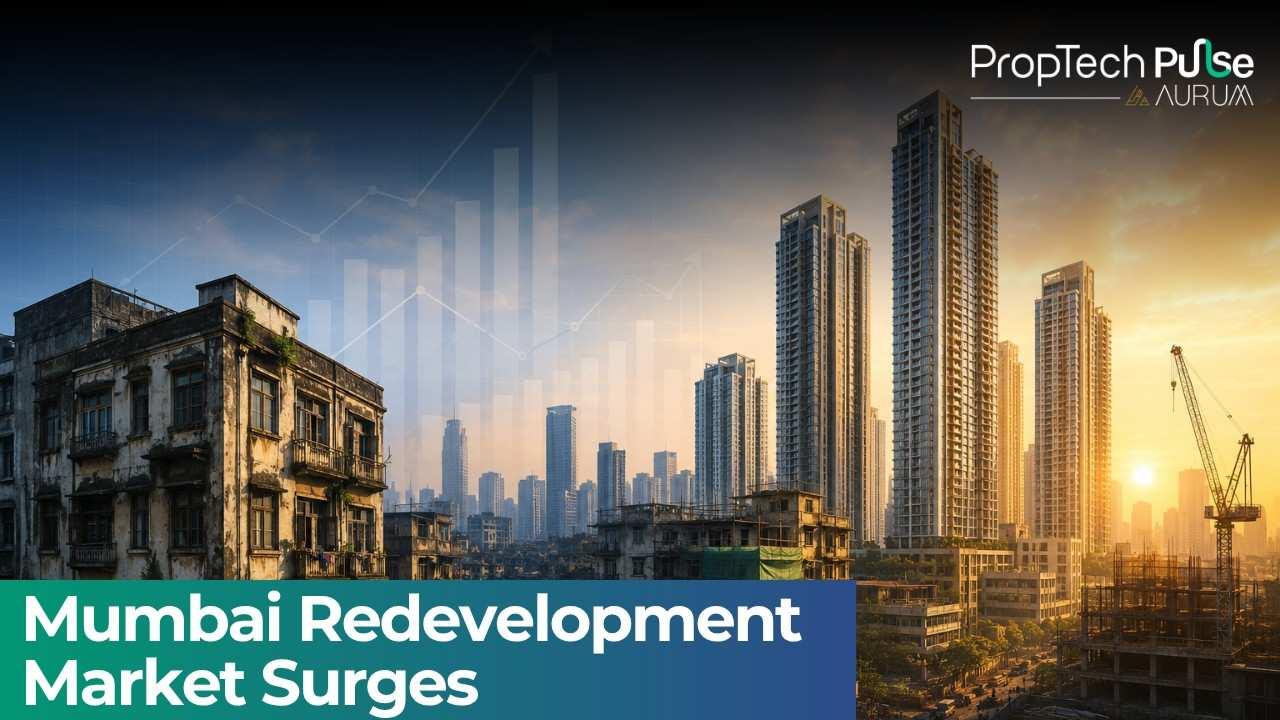
In an aggressive acceleration of urban renewal across the Mumbai Metropolitan Region (MMR), Mumbai’s real estate redevelopment market grew by a phenomenal 16% in 2025 compared to the previous year. According to comprehensive industry data compiled by global property consultancy Knight Frank India, a total of 229 formal Development Agreements (DAs) for the regeneration of ageing housing blocks were executed in 2025, marking a solid climb from the 196 pacts registered in 2024. This momentum has swept seamlessly into the opening half of 2026. Within the first 74 days of the year alone, up to March 15, developers successfully locked in 70 new deals, representing nearly 30% of the entire previous year's performance.
Six-Year Analytics: Unlocking 432 Acres of Land Infusion
The wider long-term tracking database underscores a profound institutional consolidation of Mumbai's physical footprint. Over a tracking loop spanning slightly over six years, from January 2020 to March 15, 2026, the city has recorded an aggregate of 1,094 signed redevelopment agreements. This rapid transaction velocity has successfully unlocked a massive 432 acres of premium urban land for modernised capitalisation, allowing developers to bypass severe land availability shortages in the island city. The geographic distribution of these 1,094 pacts highlights clear municipal trends:
- Western Suburbs Dominance: Standing as the absolute epicentre of property transformation, this corridor captured an overwhelming share with 773 signed DAs, unlocking 321.2 acres of land.
- Central Suburbs Corridor: Logged a steady 261 development pacts, infusing 85.9 acres of land into active construction pipelines.
- Central Mumbai District: Accounted for 38 transactions, opening up exactly 38 acres of high-density brownfield space.
- South Mumbai Hub: Anchored 22 elite, low-density deals that unlocked a premium footprint of 8.3 acres.
Borivali and Andheri Lead the Regional Supply Pipeline
A granular look at the data shows that Borivali alone anchors roughly 20% of Mumbai's entire redevelopment grid. The micro-market recorded a record-breaking 217 signed development agreements, single-handedly unlocking 90.4 acres of residential plots. Andheri emerged as the second most active hub with 115 deals, opening up 74.8 acres of land. Bandra ranked third with 74 transactions (24.4 acres unlocked), followed closely by Malad at 67 pacts (26.6 acres), and Ghatkopar anchoring the top five sub-markets with 59 registered transactions, unlocking 14.1 acres of land for upcoming structural upscaling.
Macroeconomic Impact: 59,000 Units and ₹9,115 Crore Stamp Duty Boost
The engineering translation of these 1,094 property pacts is master-planned to add an estimated 59,000 new housing units to the city\'s real estate database. Knight Frank’s unit generation analysis, based solely on Floor Space Index (FSI) sale areas while excluding tenant rehab and mandatory amenity blocks, shows that 45,000 units will cluster in the western suburbs, 11,800 in the central suburbs, 1,600 in Central Mumbai, and 731 in South Mumbai. This massive influx of inventory is projected to generate high-spec housing inventory worth an absolute value of ₹1.5 lakh crore. Furthermore, it will serve as a highly defensive revenue engine for the state government, injecting an estimated ₹9,115 crore in stamp duty collections into the public treasury.
DCR Frameworks Provide the Core Scaling Mechanism
The primary planning mechanism enabling this high-density urban transformation is the optimisation of maximum FSI allocations under state housing laws. The vast majority of society revamps are currently being underwritten through the strategic provisions of Development Control Regulations (DCR) 33(9), 33(11), and 33(20b). These targeted regulations allow developers to build maximum vertical density based directly on the road width abutting the cooperative housing society. By moving away from fragmented, low-rise structures to build modern high-rise layouts, Tier-1 developers can easily absorb rising construction input costs while giving existing residents significantly larger apartments and wide, integrated lifestyle communities.
Enjoyed this update? Visit PropTech Pulse for more real estate news and market insights.



Ask Pulse Ai anything about real estate

Unlock the Latest in Real Estate
News, Infographics, Blogs & More! Delivered to your inbox.