New Launch - India Real Estate Report 2026.

Services
Knowledge Hub
Resources
Tools

Ask Pulse Ai
©PropTech Pulse 2025, All rights reserved.


Introduction
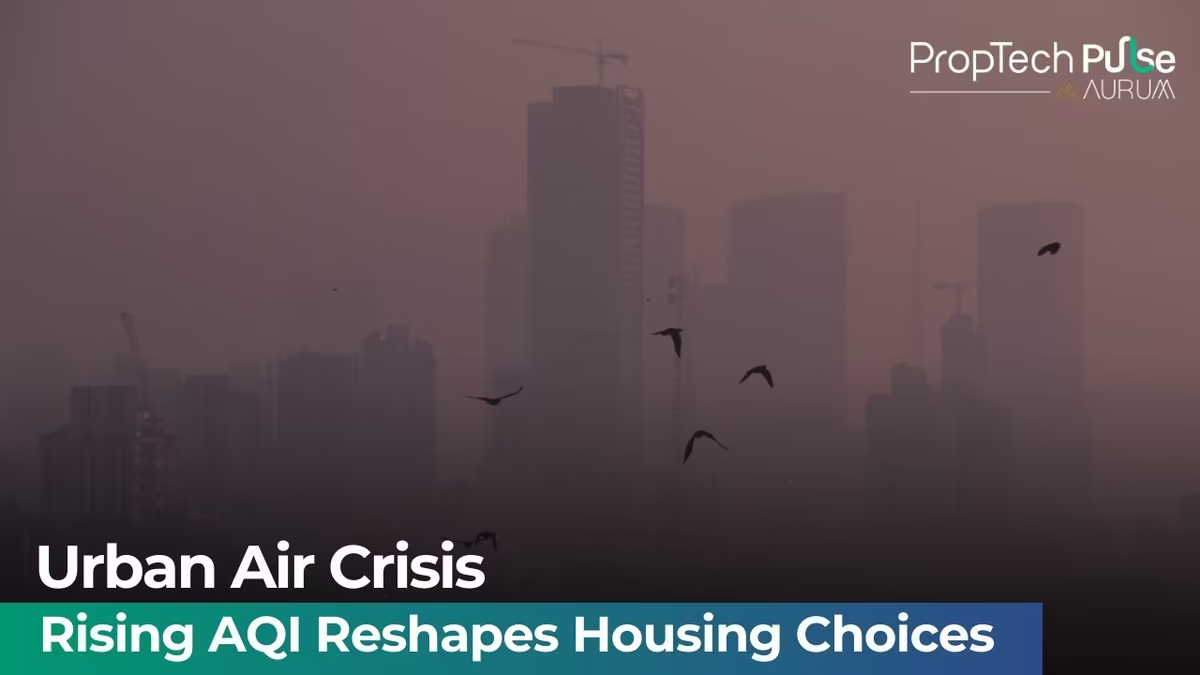
As 2026 begins, Mumbai, Thane, and Navi Mumbai are confronting a sharp deterioration in air quality, triggering widespread concern among residents, policymakers, and the real estate sector. Traditionally regarded as coastal cities with relatively better dispersion of pollutants, these urban regions are now witnessing sustained rises in Air Quality Index (AQI) levels, altering how people evaluate livability and long-term housing choices.
Alarming Pollution Indicators
Early-year monitoring data indicates that particulate matter concentrations have crossed recommended safety thresholds on multiple days. Environmental experts warn that prolonged exposure to elevated pollution levels can significantly affect respiratory health, productivity, and overall quality of life. This trend has direct implications for urban housing demand, especially in high-density micro-markets.
The decline is particularly concerning as it follows a brief post-festive improvement phase, suggesting that structural issues such as traffic congestion, construction activity, and industrial emissions continue to outweigh short-term corrective measures.
Impact on Real Estate Decision-Making
Air quality is increasingly becoming a decisive factor in residential real estate decisions. Homebuyers are now prioritizing projects that offer green-certified buildings, advanced air filtration systems, and proximity to open spaces. Developers, in response, are integrating sustainable design elements and wellness-focused amenities to maintain project attractiveness.
Micro-markets with better ventilation corridors, lower congestion, and planned infrastructure are expected to see relatively stronger demand, while pollution-heavy zones may experience pricing pressure or slower absorption.
Government Measures and Urban Planning
Authorities across the Mumbai Metropolitan Region have initiated steps to curb emissions, including stricter controls on construction dust, promotion of public transport, and encouragement of electric mobility. However, urban planners acknowledge that long-term improvement will require coordinated action across transport, housing, and industrial policy.
From a real estate perspective, these measures could accelerate investments in climate-resilient urban development and influence future zoning and infrastructure planning.
Role of Residents and Communities
Experts emphasize that community participation remains critical. Behavioral shifts such as reduced private vehicle usage, support for mixed-use developments, and advocacy for cleaner infrastructure can collectively influence air quality outcomes. Residential societies are also exploring localized solutions like air-quality monitoring and green buffers.
Conclusion
The worsening air quality across Mumbai, Thane, and Navi Mumbai is no longer just an environmental concern; it is a real estate risk factor shaping buyer preferences, project design, and urban policy. As 2026 unfolds, cities that successfully integrate sustainability with housing and infrastructure will be better positioned to retain both residents and investment confidence.
Enjoyed this update? Visit PropTech Pulse for more real estate news and market insights.


