New Launch - India Real Estate Report 2026.

Services
Knowledge Hub
Resources
Tools

Ask Pulse Ai
©PropTech Pulse 2025, All rights reserved.


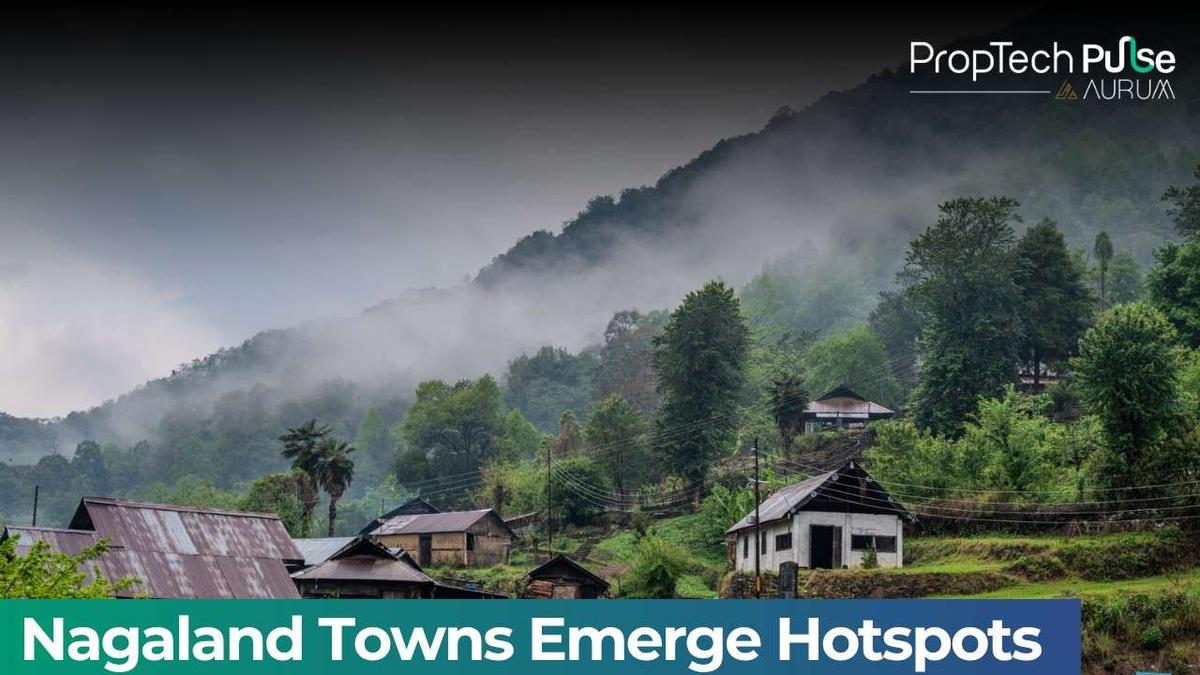
While mainstream metropolitan zones and primary capitals have traditionally dominated investor portfolios across India, a structural transformation is unfolding in the northeastern state of Nagaland. Driven by expanding connectivity, robust local business activity, and deliberate public infrastructure deployments, the state\'s prominent Tier-2 towns are rapidly establishing themselves as viable, high-potential property frontiers. These emerging growth nodes combine affordable baseline entry costs with an expanding consumer preference for serene, lifestyle-driven living spaces and purpose-led communities.
Marquee Towns and Localized Pricing Spectrums
The re-rating of Nagaland's real estate map highlights a series of distinctive urban pockets that are steadily drawing long-term private capital. Market intelligence reports from early 2026 outline a highly defined pricing spectrum per square foot across these primary hotspots:
- Mokokchung (Cultural Anchor): Recognised as the cultural hub of Nagaland, the town is drawing an influx of families and students. Robust road construction, educational institutional expansions, and upgraded urban amenities are pushing average residential plot values to a range of ₹4,000 to ₹5,500 per square foot.
- Wokha (Agro-Economic Center): Praised for its scenic landscape and agro-economy-based development, Wokha commands an underwritten baseline range of ₹3,700 to ₹5,100 per square foot, appealing heavily to lifestyle buyers and commercial traders.
- Mon (Hospitality and Tourism Frontier): With deep cultural roots and an influx of international and domestic travellers, Mon has emerged as a prime cluster for hospitality real estate. Real estate values have advanced to ₹3,800 to ₹5,200 per square foot, with private developers focusing heavily on building new homestays and commercial guesthouses.
- Zunheboto & Phek (Slow Appreciation Anchors): Offering quiet living environments, Zunheboto (₹3,600 to ₹5,000 per sq ft) and Phek (₹3,500 to ₹4,900 per sq ft) are transforming into affordable housing destinations backed by upcoming highway connectivity linkages.
The Multiplier Effect of Ecotourism and Infrastructure
The primary catalysts driving this unprecedented regional boom are synchronized infrastructure expansions and booming ecotourism. The state administration\'s emphasis on upgrading intra-district highways, widening peripheral arterial roads, and improving public healthcare setups has dramatically shortened travel times. Concurrently, the growth of localised small businesses has triggered an immediate requirement for family homes and low-cost multi-family housing projects. Because these towns boast a significant cost arbitrage compared to saturated Tier-1 cities, they offer an exceptional first-mover advantage for investors looking to establish sustainable rental yields through green vacation rentals and destination lodges.
Navigating Document Clarity and Long-Term Holding Risks
While the investment climate remains highly lucrative, real estate experts advise caution regarding local legal frameworks. Land ownership in Nagaland is heavily governed by customary tribal laws and specific constitutional safeguards, meaning that institutional property underwriting requires detailed due diligence. Buyers entering the market are strongly advised to confirm strict document clarity, title traceability, and absolute lineage clearances before finalising land allocations. Furthermore, because these markets operate on slow and gradual appreciation models rather than volatile short-term speculative spikes, portfolios must carry a long-term holding horizon to capture maximum capital value growth.
Future Outlook for the Naga Real Estate Frontier
As the central government’s "Act East" policy continues to fund large-scale logistical linkages across Northeast India, the institutionalisation of secondary markets is expected to accelerate. The emergence of self-sustaining towns like Mokokchung and Wokha demonstrates that urban demand is successfully decentralising away from traditional hubs like Dimapur and Kohima. Backed by expanding infrastructure readiness, pristine environmental quality, and rising disposable incomes, Nagaland's Tier-2 real estate hotspots are securely positioned to elevate their non-agricultural GDP contribution, providing a resilient and lucrative alternative for forward-looking property portfolios through the end of the decade.
Enjoyed this update? Visit PropTech Pulse for more real estate news and market insights.


