New Launch - India Real Estate Report 2026.











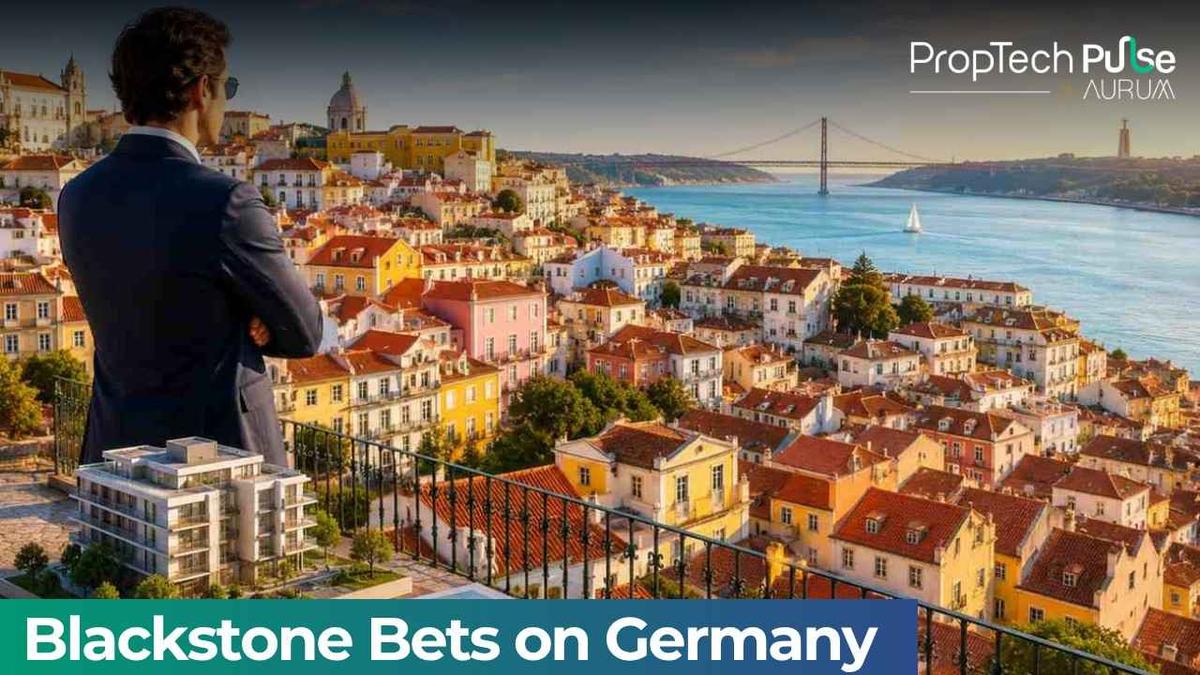
For decades, nervous capital had one obvious destination: Switzerland. Political stability, disciplined governance, and financial security. When global uncertainty spiked, money moved there. That template still holds, but a quieter version of the same story is playing out in Portugal, and the investors driving it are not waiting for the mainstream to catch up.
The headline number is hard to ignore. The United States has become one of Portugal's largest sources of foreign direct investment, surpassing both China and the United Kingdom in recent years. Billions of euros are flowing into the country across infrastructure, energy, technology, tourism and private investment. That is not passive or accidental. It is deliberate capital repositioning by sophisticated investors who read macro shifts before they become consensus.
Why Portugal, Why Now
Portugal offers a combination that is genuinely rare in today's European landscape. It sits inside the European Union with all the regulatory and currency stability that brings, while also delivering relative political stability, improving infrastructure, strong global connectivity and one of the most attractive lifestyle profiles on the continent.
At the same time, the push factors are as important as the pull factors. Global investors are actively looking to diversify away from the United States as debt levels rise, geopolitical tensions increase, and equity market volatility becomes harder to ignore. Capital naturally searches for stability. Portugal is increasingly entering that conversation.
This Isn't Just Preservation Capital. That's the Key Distinction.
Traditional safe havens were built around one thing: protecting what you already have. Low volatility. Low growth. Capital is sitting still. Portugal is offering something different. The country is not just attracting preservation capital, it is attracting growth capital, drawn by expanding economic sectors with real revenue and cash flow behind them.
Tourism is the clearest example. Global travel continues rebounding strongly post-pandemic, and Portugal has positioned itself as one of Europe's most desirable destinations for international visitors seeking culture, food, wine, wellness and lifestyle experiences. That sustained demand has created strong momentum across hospitality, short-stay accommodation and tourism-related operating businesses.
Where the Opportunity Is Actually Being Missed
Most investors looking at Portugal are still focused on traditional residential real estate appreciation or speculative development projects. That's where the crowd is. The more interesting opportunity, according to analysts tracking capital flows into the country, lies in operating businesses tied directly to Portugal's growing domestic economy: businesses with customers, recurring revenue, cash flow and long-term macro tailwinds.
Portugal's real estate market benefits directly from this broader investment thesis. As infrastructure improves, tourism deepens, and international capital builds long-term positions in the country, property values in key corridors follow. Lisbon and Porto have already seen strong appreciation cycles. The next wave is likely to come from secondary cities and coastal regions where lifestyle demand and limited supply are creating a structural pricing floor. For real estate investors tracking European opportunities, Portugal's moment is not coming. It is already here.
Enjoyed this update? Visit PropTech Pulse for more real estate news and market insights.


