
Ask Pulse Ai
Services
Knowledge Hub
Resources
Tools
Ask Pulse Ai
Services







©PropTech Pulse 2025, All rights reserved.

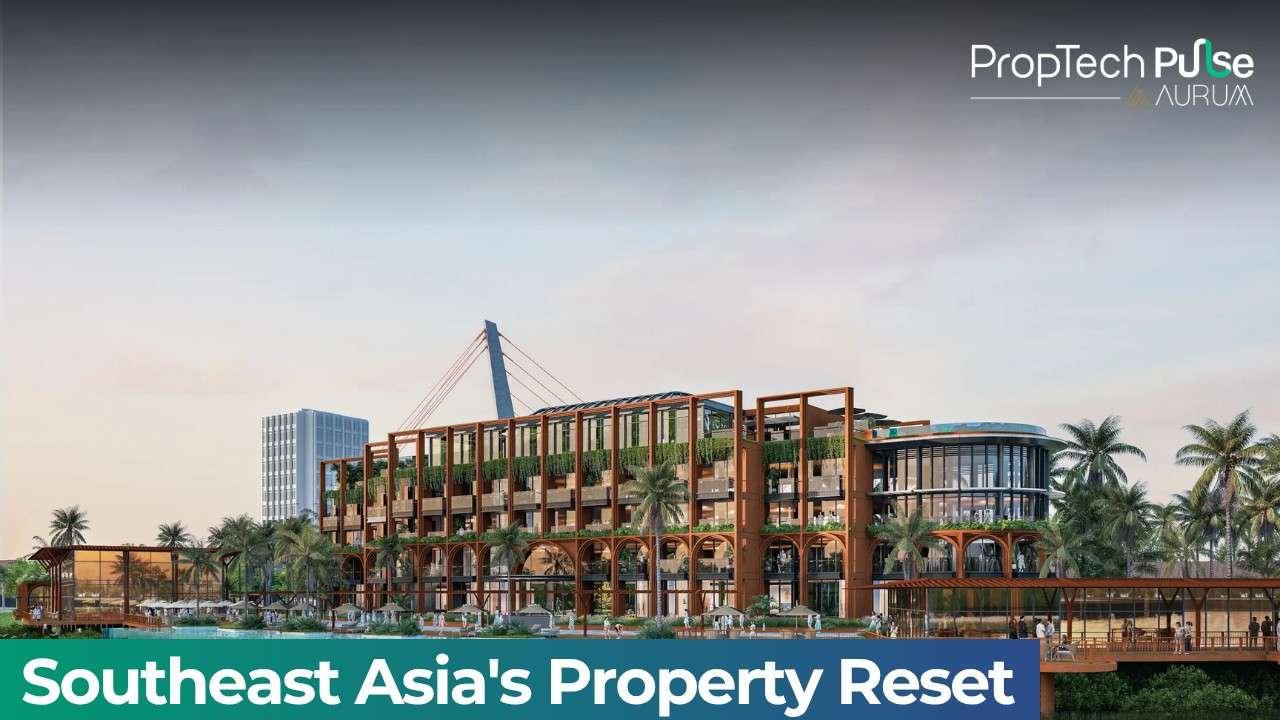
For years, Southeast Asia built fast and assumed prices would only climb. That assumption is gone. Economic uncertainty, higher interest rates and the fallout from the Iran war have pushed the region into a more cautious chapter. Across its major markets, Southeast Asia real estate is shifting from rapid expansion toward affordability, long-term demand and sustainable growth, with developers no longer treating endless appreciation as a given.
One shift, five markets
The skylines still fill with glass towers, but the logic behind them has changed. Singapore, Vietnam, Indonesia, Malaysia and Thailand are each adjusting in their own way, yet the underlying move is the same: away from building as fast as possible, and toward developments judged on whether people can actually afford and use them. Capital has turned selective, and ambition alone no longer carries a project. Survival now depends on demand that is real, not assumed.
Singapore steadies, Malaysia corrects
The two ends of the spectrum sit at the region's richest and most oversupplied markets. Singapore remains the financial anchor, its luxury condos in Marina Bay and Orchard Road still watched by global investors. But cooling measures, including additional buyer's stamp duty as high as 60 per cent on some foreign purchases, have tilted the market toward end-users and long-term capital preservation. Prime values are still rising, just more slowly than in past cycles.
Malaysia is the clearest correction. Years of heavy condominium building in Kuala Lumpur, Johor and Penang have left an overhang in serviced apartments and mid-tier units, with industry body Rehda reporting many developers still sitting on unsold completed homes. Pricing realism, not broad optimism, now decides whether a deal closes.
Growth now hinges on infrastructure
In the faster-growing markets, the brakes are financial. Vietnam's urbanisation story in Ho Chi Minh City and Hanoi remains intact, but credit tightening and regulatory scrutiny have slowed approvals and launches, with the Ministry of Construction noting reduced new supply in some districts. Long-term demand still leans on manufacturing and foreign investment corridors.
Indonesia is rewriting its map around infrastructure. The new capital, Nusantara, is pulling growth away from a congested, flood-prone Jakarta toward satellite cities, while institutional money favours logistics, data centres and mixed-use over speculative housing. Thailand, meanwhile, stays tied to tourism, with Bangkok's condo market battling oversupply and entering what JLL calls a "selective demand recovery" led by location and developer reputation.
What the Southeast Asia real estate reset rewards
The thread running through every market is a return to fundamentals. Connectivity, infrastructure readiness, capital discipline and genuine end-user demand now matter more than sentiment, and well-located, infrastructure-linked assets are pulling away from older stock that cannot compete. Industrial assets tied to data centres and logistics, and corridors like the Johor-Singapore Special Economic Zone, are among the clearest winners.
None of this amounts to a regional slump. It is a market in transition, not contraction, swapping the old faith in automatic price growth for something steadier. The new priority across Southeast Asia is building smarter, with affordability, practicality and lasting value at the centre rather than speed.
Enjoyed this update? Visit PropTech Pulse for more real estate news and market insights.




Ask Pulse Ai anything about real estate

Unlock the Latest in Real Estate
News, Infographics, Blogs & More! Delivered to your inbox.