
Ask Pulse Ai
Services
Knowledge Hub
Resources
Tools
Ask Pulse Ai
Services







©PropTech Pulse 2025, All rights reserved.

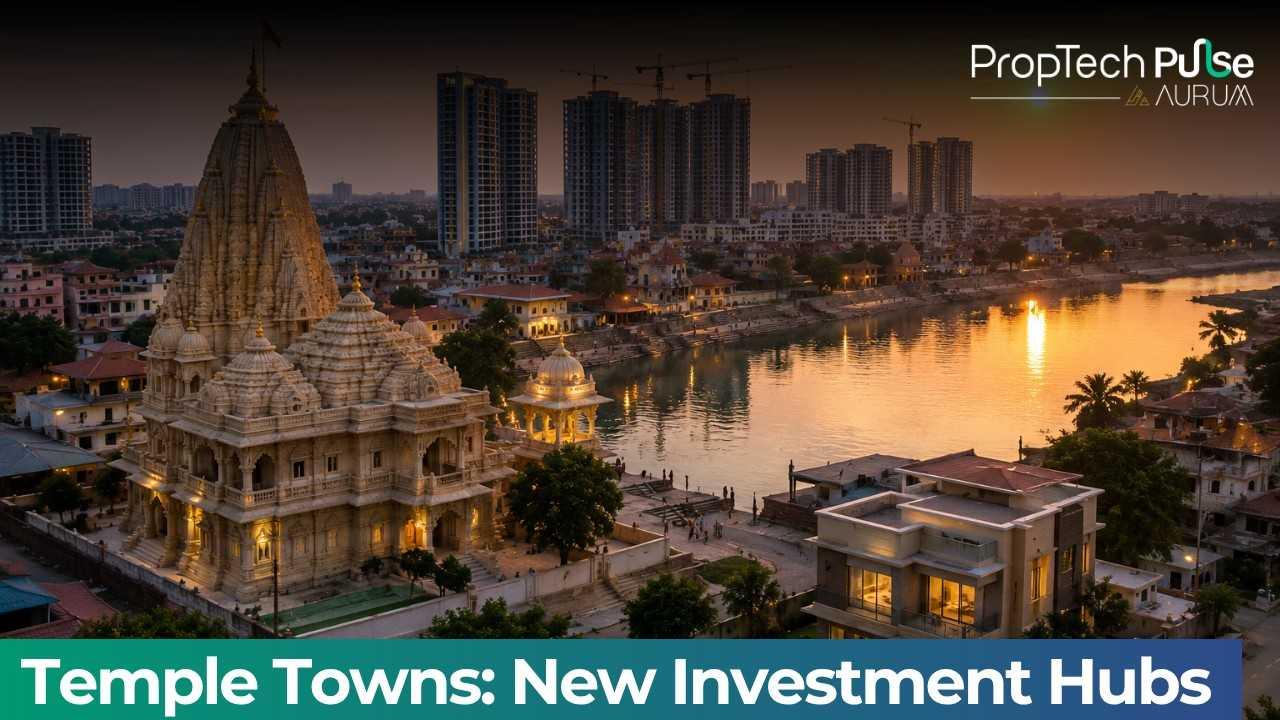
India's temple towns are undergoing a significant transformation, evolving from transient pilgrimage sites into robust real estate investment hubs. This shift is propelled by a massive "temple economy" valued at approximately ₹6 lakh crore, making it one of the country's largest economic ecosystems. Backed by significant government investment and the 2026 Union Budget focus on Tier-II and Tier-III cities, developers are increasingly launching large-scale projects in cities like Ayodhya, Varanasi, Vrindavan, and various southern spiritual centers.
Blending Spirituality with Modern Wellness
A new development paradigm is emerging where developers are purposefully blending spirituality, wellness, and contemporary conveniences. These projects are no longer just about providing shelter; they are marketed as wellness-focused communities that incorporate nature, mindfulness practices, and high-end infrastructure. For example, Stonecraft Group is developing a 110-acre "Temple Town" project near the Lakshmi Narasimha Temple in Yadagirigutta, designed to prioritize spiritual and modern living within a single ecosystem. Similarly, Jindal Realty is expanding into Kurukshetra to meet the rising demand for mindful second-home living.
Changing Travel and Living Patterns
The demand for structured housing and hospitality in these regions is being driven by changing human movement patterns. Visits to religious sites, once brief and traditional, are now extending into longer stays, particularly for families and retirees looking for a more tranquil existence. This "purpose-led living" is attracting urban buyers who see temple towns as more than just pilgrimage stops, but as viable locations for settling down or owning high-value second homes that can be lightly monetized when not in use.
Infrastructure and Policy as Growth Catalysts
Policy backing has been a cornerstone of this boom, with recent budgets emphasizing high-speed rail connectivity, upgraded civic facilities, and enhanced tourism infrastructure. Sam Chopra of eXp Realty India notes that this represents a structural shift in India's urbanization, where emerging corridors are rooted in cultural identity and continuity rather than just metropolitan spillover. This convergence of faith, infrastructure, and economics is creating a unique market that traditional urban expansion models cannot replicate.
Strategic Outlook for Real Estate Investors
As land transactions and project announcements continue to rise, the scale of opportunity in these culturally significant regions is becoming undeniable. Industry leaders emphasize that the continued emphasis on pilgrimage and cultural infrastructure ensures this is not a transient cycle but a long-term economic trend. While the emergence of these hotspots remains selective, the integration of identity-driven development is redefining how both domestic and NRI investors view the future of Indian real estate.
Enjoyed this update? Visit PropTech Pulse for more real estate news and market insights.




Unlock the Latest in Real Estate
News, Infographics, Blogs & More! Delivered to your inbox.