New Launch - India Real Estate Report 2026.

Services
Knowledge Hub
Resources
Tools

Ask Pulse Ai
©PropTech Pulse 2025, All rights reserved.


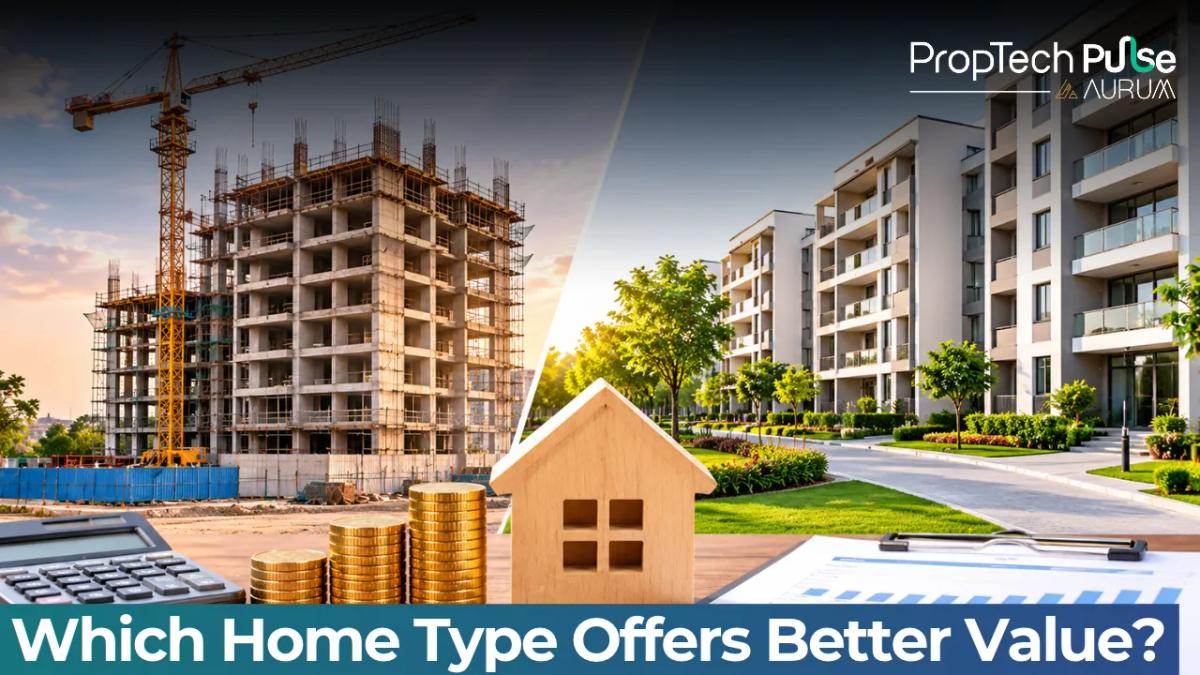
Choosing between an under-construction property and a ready-to-move home involves more than comparing their advertised prices. While under-construction homes may have lower entry prices and flexible payment schedules, completed properties offer immediate possession and greater certainty about the home and its surroundings.
The financially suitable option depends on a buyer's budget, cash flow, investment horizon and possession requirements.
Under-Construction Homes: Lower Entry Costs and Appreciation Potential
Under-construction properties may be priced lower than comparable completed homes in the same micro-market. This can make them an option for buyers seeking a relatively lower entry point into the housing market.
Developers may also offer construction-linked payment plans, allowing buyers to make payments in stages as the project progresses.
Another potential advantage is capital appreciation. If an area experiences improvements in road connectivity, public transport, social infrastructure and commercial activity, property values could increase during the construction period.
Buyers entering a project at an early stage may benefit if its market value rises by completion. However, appreciation is not guaranteed and depends on location, project quality, market conditions and demand.
There are also risks to consider. Buyers depend on the developer to complete construction and deliver possession as scheduled.
Delays or construction-related issues can affect financial plans, particularly when buyers must continue paying rent while managing home loan repayments.
Also Read: Buying Property for Investment? Check These 6 Factors
Ready-to-Move Homes: Immediate Possession and Greater Certainty
Ready-to-move properties offer buyers the opportunity to inspect the actual home before making a purchase.
They can assess construction quality, available amenities and the surrounding neighbourhood rather than relying on project plans or sample apartments.
Immediate possession also makes this option relevant to families who need to move without waiting for construction to finish.
For investors, a completed property may offer the possibility of generating rental income sooner because there is no construction-related waiting period.
Buyers currently living in rented accommodation may also be able to reduce or eliminate rent expenses after shifting into their new home.
The trade-off is the purchase price. Completed properties may command a premium over comparable under-construction units in the same location.
However, immediate use, possession certainty and potential rent savings can partly offset the higher initial cost.
Also Read: How to Choose the Best Home Loan in India 2026
Additional Costs and Factors to Consider Before Buying
The total cost of ownership includes more than the property's base price. Buyers should account for stamp duty, registration charges, GST where applicable, home loan interest, maintenance, interiors and other ownership expenses.
- GST: Under-construction residential properties are generally subject to GST under applicable rules. A completed property is not subject to GST when the entire consideration is received after the completion certificate is issued or after first occupation, whichever is earlier.
- Rent and loan payments: Buyers of under-construction homes may need to pay rent while also servicing a home loan, depending on the loan disbursement and repayment arrangement.
- Developer track record: Check the developer's delivery history, project approvals, RERA registration and actual construction progress before committing.
- Total ownership cost: Compare the complete financial commitment over the coming years instead of relying only on the advertised price.
There is no universal winner. An under-construction home may suit buyers with flexible timelines and the financial capacity to manage construction-related uncertainty.
A ready-to-move property may be more suitable for those who need immediate possession or want greater predictability.
The final decision should balance affordability, construction quality, possession certainty and long-term value.
Enjoyed this update? Visit PropTech Pulse for more real estate news, investment insights and property market trends.


