
Services
Knowledge Hub
Resources
Tools
Services







©PropTech Pulse 2025, All rights reserved.

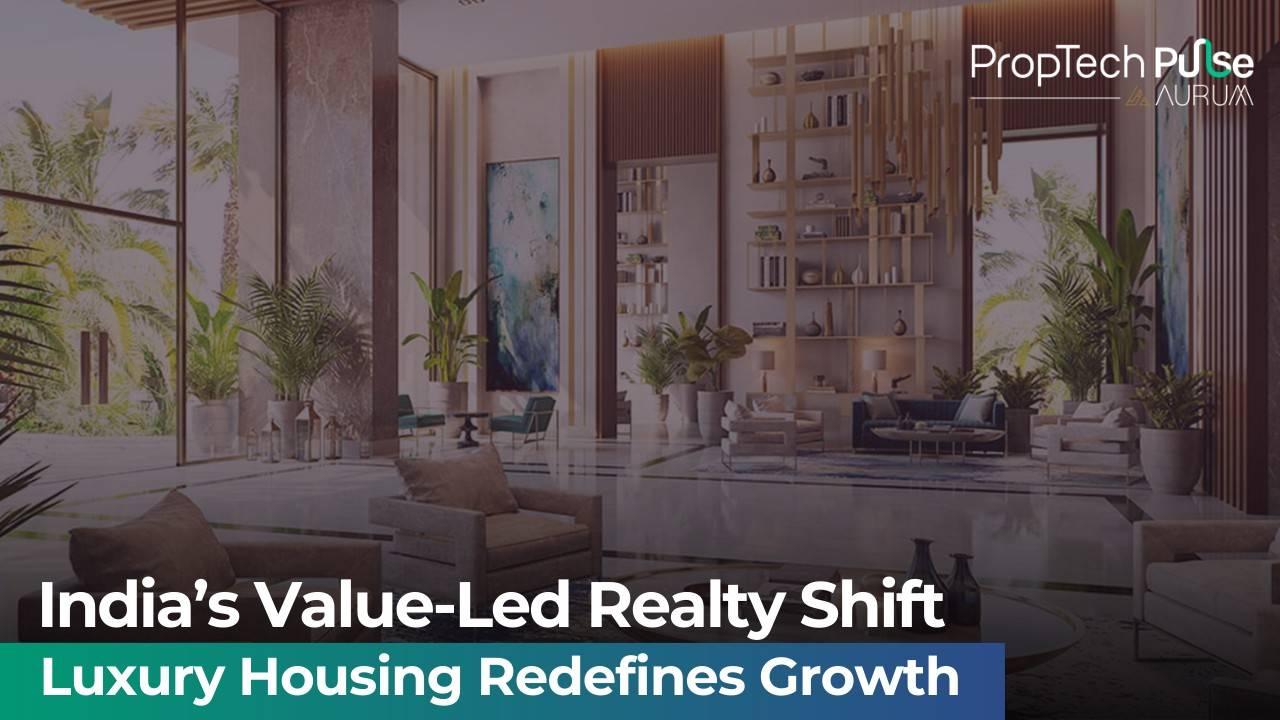
India’s Real Estate at a Turning Point
India’s real estate sector is witnessing a clear shift in its growth narrative. After years of volume-driven expansion, the focus is increasingly moving toward value-led development, where quality, design, and long-term usability are taking precedence over sheer scale. This evolution is being shaped by rising income levels, urban lifestyle changes, and a more informed homebuyer base.
Rather than prioritising rapid launches, developers are reassessing product strategies to align with what buyers now consider meaningful value.
What Value-Led Growth Means for the Market
Value-led growth in real estate goes beyond pricing. It encompasses construction quality, location advantage, amenities, sustainability, and post-purchase experience. Buyers today evaluate homes as long-term assets that must support comfort, functionality, and lifestyle aspirations.
This shift has encouraged developers to invest more in planning, execution, and customer-centric features, ensuring that projects remain relevant over time.
Luxury Housing as a Key Catalyst
The luxury housing segment has emerged as a major contributor to this transformation. Demand for premium homes has strengthened as affluent buyers seek spacious layouts, privacy, and high-quality living environments. These homes are no longer viewed merely as status symbols but as long-term lifestyle investments.
Luxury demand is being driven largely by end-users, which has brought greater stability to the segment compared to speculative cycles seen in the past.
Changing Buyer Expectations
Homebuyers in the luxury segment are increasingly discerning. They expect homes that integrate design efficiency with modern comforts. Features such as natural light, ventilation, flexible spaces, and high construction standards are now baseline expectations rather than differentiators.
Buyers are also placing importance on transparency, timely delivery, and the developer’s execution track record when making purchase decisions.
Key Trends Shaping Luxury Housing
- Sustainability focus, including energy efficiency and green design
- Smart home integration for convenience and security
- Community-oriented planning with shared amenities
- Functional luxury that balances aesthetics with everyday usability
These trends indicate that luxury is increasingly defined by how well a home supports modern living rather than by superficial features.
Developer Strategy and Market Discipline
Developers are responding to this shift by adopting a more disciplined approach to launches and execution. Many are focusing on fewer projects with higher quality benchmarks, ensuring better control over delivery timelines and customer experience.
This approach not only improves buyer confidence but also contributes to healthier market dynamics by avoiding oversupply in premium segments.
Broader Impact on the Real Estate Ecosystem
The move toward value-led growth has implications beyond individual projects. It encourages better urban planning, improved construction standards, and a stronger alignment between supply and genuine demand.
Over time, this transition can support more sustainable growth for the sector while enhancing its contribution to the broader economy.
Outlook Ahead
India’s real estate market appears poised for a phase where quality and value will define success. Luxury housing, driven by informed end-users and long-term preferences, is expected to remain a key pillar of this evolution.
As buyer expectations continue to mature, developers who prioritise innovation, sustainability, and execution excellence are likely to lead the next chapter of India’s real estate growth story.
Enjoyed this update? Visit PropTech Pulse for more real estate news and market insights.


Unlock the Latest in Real Estate
News, Infographics, Blogs & More! Delivered to your inbox.


“Data that drives action. Insight that inspires action. Technology that empowers action.“
“Data that drives action.
Insight that inspires action.
Technology that empowers action.“