








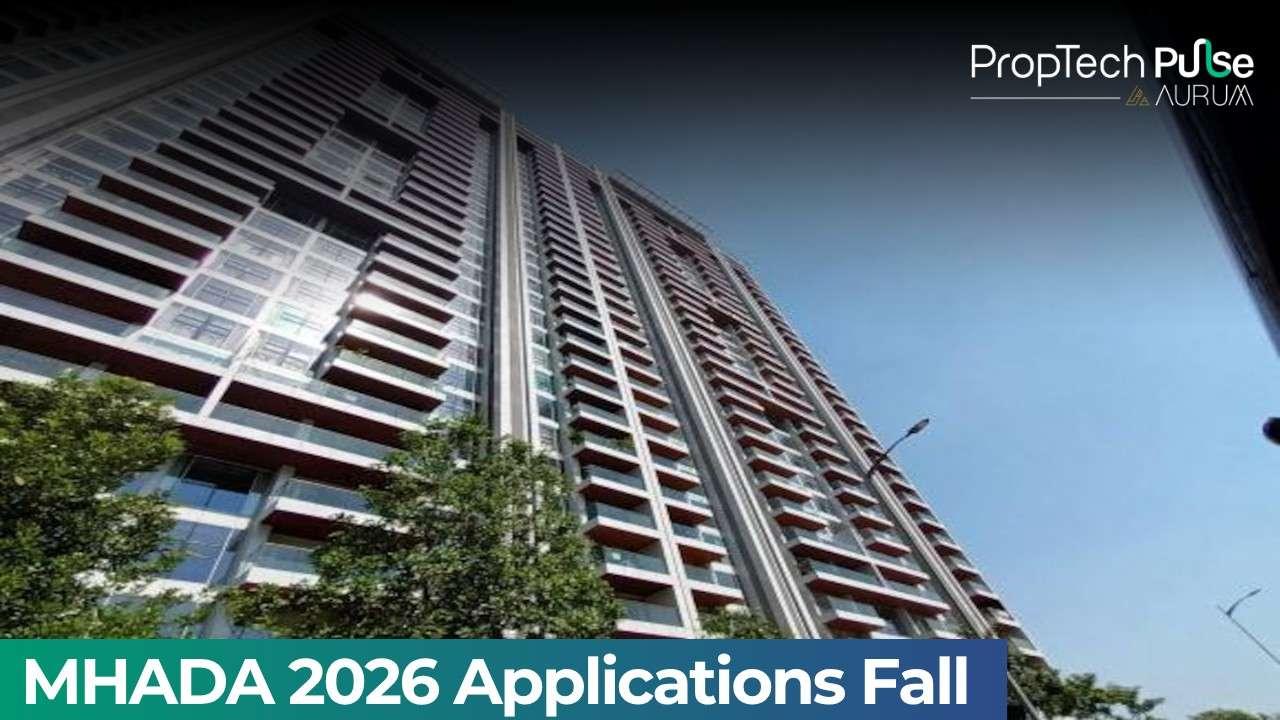
The MHADA Mumbai Lottery 2026, featuring 2,640 affordable homes, has witnessed a weaker-than-expected response, primarily due to the erosion of its traditional "affordability edge". Prospective buyers have noted that many MHADA units have reached price parity with market rates, discouraging those who previously viewed the authority as a primary provider of low-cost housing. In high-demand suburbs like Vikhroli, where units were initially priced above ₹1.45 crore, sensitive buyers have begun comparing these government offerings directly with private sector projects that often provide superior construction quality and modern layouts.
Intense Competition from Private Developers
A significant factor in the falling application volume is the aggressive entry of private developers into the compact housing segment. While MHADA flats were historically the only option for middle-income earners, private builders now offer competitive price points with extensive lifestyle amenities, including clubhouses, gyms, and advanced security systems, which are often lacking in older government colonies. This shift in consumer perception from "budget provider" to a market-linked entity has led many registered applicants to abandon the process before paying the earnest money deposit (EMD).
Corrective 7.5% Price Cut in Vikhroli
In a direct response to stagnant demand and lukewarm public interest, MHADA implemented a significant 7.5% price correction for 1,221 apartments located in Kannamwar Nagar, Vikhroli East. This decision, affecting nearly 46% of the total 2026 inventory, effectively slashes the cost of each unit by approximately ₹10 lakh. To further incentivise buyers, the authority has also bundled one free car parking space with each of these tenements, hoping to re-establish the value perception of its inventory ahead of the final draw.
Unsold Inventory and Middle-Income Pressure
The decline in new applications is exacerbated by the presence of unsold inventory from previous cycles, some of which is priced as high as ₹8 crore. The authority’s recent First-Come, First-Served (FCFS) scheme saw limited uptake for premium units, indicating that even within the "affordable" framework, high-ticket items are struggling to find takers. This trend highlights the growing pressure on the middle-income segment, where even government-subsidised housing is becoming increasingly out of reach for salaried professionals despite diverse pricing that ranges from ₹29 lakh in Mankhurd to ₹6.82 crore in Tardeo.
Strategic Deadline Extension and Future Outlook
To accommodate more participants and allow the recent price cuts to take effect, MHADA has extended the online application deadline to May 14, 2026. The computerised draw is now scheduled for June 5, 2026. Industry analysts suggest that this move highlights a pivotal shift where public housing agencies must adopt more agile, market-responsive pricing strategies to remain relevant. If application volumes remain low across other zones, experts anticipate that further adjustments in quality, amenities, and timely delivery may be necessary to restore long-term confidence in Mumbai’s public housing mechanism.
Enjoyed this update? Visit PropTech Pulse for more real estate news and market insights.


