New Launch - India Real Estate Report 2026.

Services
Knowledge Hub
Resources
Tools

Ask Pulse Ai
©PropTech Pulse 2025, All rights reserved.


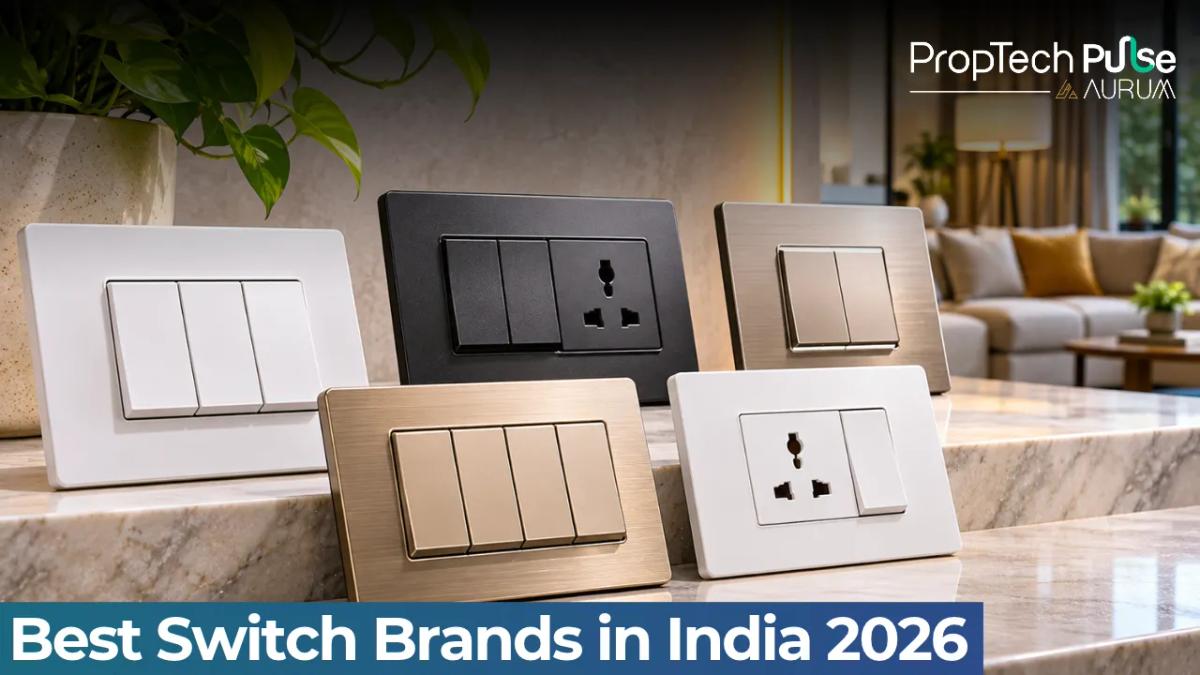
When buying a new apartment or renovating an old flat, the first thing builders install and the last thing most homeowners ever think about again are the switches.
Choosing the right hardware matters, though, because faulty boards cause overheating, burnt plugs, and expensive wall repairs down the line.
If you are searching for the best switch brand in India, your options generally split into value leaders, design-focused mid-tier players, and premium smart ecosystems.
For most families, Havells and Anchor by Panasonic deliver the sharpest balance of safety, touch responsiveness, and long-term reliability.
High-rise buyers who prioritise aesthetics and app integration should look at Schneider Electric and Legrand. If you are equipping a rental property or a tight-budget home, GM Modular and Orient give you modular flexibility without draining the pocket.
The current electric switch price in India reflects this tiering clearly. While entry-level boards sell near wholesale rates, premium designer panels carry a visible markup.
We will break down exactly which brands fit which budget, what safety marks actually matter, and how much you should realistically set aside for a full three-bedroom flat.
Top electrical switch brands in India
Quick answer
For most homeowners, Havells and Anchor by Panasonic offer the best balance of safety, durability, and design across India. If you need budget-friendly options for rental properties, GM Modular and Orient work well. For high-end luxury apartments, Schneider Electric and Legrand set the standard.
The Indian market splits cleanly into three segments. Understanding where each brand sits helps you talk confidently to your electrician, avoiding the temptation to compromise on safety while still staying within budget.
The value and bulk leaders
Anchor by Panasonic and GM Modular dominate Tier 2 and Tier 3 cities, as well as the builder-grade segment in metros.
Their supply chains are deeply entrenched, which keeps production costs low. These boards rely on solid, reliable engineering rather than flashy finishes.
They handle heavy loads effectively and are easy to replace if a socket fails after five years. Orient Electric follows a similar path, offering straightforward modular systems that prioritize function over form.
If you are managing a large construction site or supplying multiple units, the ease of restocking these brands makes them logistically painless.
The design and trust favorites
Havells built its reputation on wire and cable, and that electrical expertise flows directly into their switchgear division. Their products feature tactile snap mechanisms and consistent colour matching, which looks sharp in living rooms and bedrooms alike.
When people compare the havells switch price against competitors, they are usually weighing that mechanical feel against cheaper alternatives. Wipro draws on its consumer electronics background to offer sleek white and metallic finishes.
Polycab rounds out this middle ground, bringing strong distribution networks that guarantee stock availability even in remote districts.
The luxury and smart ecosystems
If money is less of an object than aesthetics and automation, Schneider Electric and Legrand take the lead. Both companies design large-format plates that act more like interior cladding than electrical fittings.
Schneider and Legrand consistently rank among the best switch brand choices for luxury projects. Simon offers a compelling alternative with bold geometric patterns and premium metallic trims.
Great White focuses heavily on architectural integration, making their switches blend into panelled walls. These brands cater to developers building premium inventory and homeowners executing complete interior overhauls.
Key features to demand before you buy
Marketing campaigns highlight glossy finishes and celebrity endorsements, but the hardware inside the plastic tells the real story. Three technical details separate safe boards from potential fire hazards.
First, look for the compulsory Bureau of Indian Standards mark under IS 3854. This certification proves the manufacturer submits the product to random lab testing for heat resistance and shock tolerance.
Without it, the board might soften under prolonged load, creating a direct arc-fault risk. Second, verify that the main housing is made from polycarbonate or a comparable flame-retardant thermoplastic.
Many cheap alternatives use ABS plastic, which turns yellow within two years and becomes brittle when exposed to repeated voltage spikes in Indian grid conditions.
Third, insist on shuttered sockets. Every hole in a two-pin or three-pin socket must contain a physical flap mechanism that only opens when both pins insert simultaneously. This simple component stops children from jamming wires into live terminals.
Beyond the raw materials, pay attention to the contact points inside. Copper-alloy shunts rated for at least ten thousand operations indicate solid engineering. Brass-only contacts corrode faster and create arcing risks over time.
Safety first Always verify that every single socket carries the mandatory BIS mark under IS 3854 before handing over payments to your contractor.
Ask your electrician to show you the internal mechanism before they mount the faceplate on the wall. Once plaster covers the board, visual inspection becomes impossible. Also, differentiate between your amperage ratings.
Standard lighting circuits use 5A switches, while air conditioners, geysers, and heavy kitchen appliances require 15A points.
Using a 5A switch for a geyser causes the contacts to weld shut and eventually burn out. Label your distribution board clearly so future plumbers know exactly which point handles which load.
Modern tech: smart modules and standard panels
Homeowners debating between a basic toggle indicator switch and fully integrated smart panels often confuse marketing buzzwords with actual functionality. A standard toggle or rocker switch operates mechanically.
An indicator light merely shows whether current is flowing through the circuit. It does not change how the device works or improve efficiency.
Mechanical switches slowly wear down the spring tension, which explains why that satisfying click fades after seven to eight years of daily use.
Smart modules, conversely, replace the physical toggle with a silent relay controlled by Wi-Fi, Zigbee, or Bluetooth. You can dim lights, set schedules, and group fixtures using a phone interface.
Legacy search terms like the leon switch sometimes surface in forum threads; this usually refers to outdated proprietary setups or misidentified regional brands. Today, major global manufacturers handle smart connectivity internally, rendering those fragmented names obsolete.
If you plan to integrate voice assistants or automate curtains and fans early, picking a brand with dedicated smart accessories now prevents painful retrofitting later. See our guide on smart home devices in india for a deeper breakdown of protocols and installation steps.
Transitioning to smart switching requires checking your existing wiring. True neutral connections at every switch point are mandatory for stable module performance. If your builder ran a standard single-live setup, smart modules will either flicker or fail to connect.
Upgrading the wiring tray costs significantly less than replacing broken modules after move-in. Measure the backbox depth as well.
Standard boxes are fifty millimetres deep, but smart relays often need sixty-five millimetres to breathe and dissipate heat. Swapping out the plaster boxes during civil work is trivial; chiseling them out after painting is a headache you will regret.
Cost calculation: outfitting your 2BHK flat
Brands rarely publish fixed retail lists, and local dealer margins fluctuate weekly. The table below estimates realistic project totals based on typical room layouts and average point counts, helping you negotiate better with suppliers.
| Package tier | Approximate total cost | Typical brands |
|---|---|---|
| Entry-level modular | ₹6,000 – ₹9,000 | Orient, GM Modular, local BIS-certified makers |
| Premium branded | ₹12,000 – ₹18,000 | Havells, Anchor, Wipro, Polycab |
| Luxury and smart-ready | ₹25,000 – ₹45,000+ | Schneider, Legrand, Simon, Great White |
Your exact spend hinges on point density. A well-designed bedroom needs at least four double sockets, two single switches, and one TV point. Adding AC sockets and balcony weather-proof covers increases the count further.
Dealers often discount aggressively when you buy the entire house stock from a single distributor rather than chasing individual retailers.
Cross-check the invoice against the brand's mobile verification app immediately after purchase.
Counterfeit packs circulate in open markets, so scanning the QR code on the inner carton takes five seconds and saves you from installing fake goods behind your plaster.
The math behind upgrading is straightforward when viewed against the wider renovation budget.
Spending an extra ₹5,000 to move from unbranded hardware to a certified premium range protects the underlying wiring investment. Faulty switches degrade insulation faster than proper load ratings.
If you are already calculating planning your home purchase expenses, allocating a dedicated hardware bucket avoids last-minute supplier scramble. Lock your order once plastering finishes but before flooring starts, giving the electrician plenty of time to mount the backs without rushing the final touches.
Making the final choice
Match your selection to the property's purpose rather than chasing maximum specs. A rental flat only demands BIS compliance and basic shuttered sockets; designer finishes depreciate quickly with tenant turnover.
A primary family home justifies mid-range brands like Havells or Anchor for their tactile longevity and wide service networks.
High-net-worth clients executing turnkey interiors should commit to smart-ready ecosystems early, locking in compatible app interfaces and central hubs.
Regardless of the route you pick, maintaining a rigorous property due diligence checklist ensures the installed hardware matches the specifications you approved during contracting. Finding the right fit among the best switch brand options simply comes down to matching quality with your actual usage needs.
Frequently asked questions
What is the number 1 best switch brand in India?
While there is no single official ranking, industry data consistently places Havells and Anchor by Panasonic at the top for balanced performance. Both brands dominate the mid-tier sector by combining solid copper alloy contacts with durable polycarbonate housings. If you require heavy-duty commercial grade hardware, Schneider Electric leads the premium segment, while GM Modular holds the strongest grip on affordable residential rentals.
Which switch brand is best for modular switches?
GM Modular earned its name by pioneering the frame-and-replacement-plate system that dominates Indian homes today. Their parts remain widely available across every district, making future repairs remarkably fast. Anchor by Panasonic and Havells also excel in this category, offering interchangeable faceplates that let you update your room's aesthetic without ripping out the underlying electrical mechanism.
Are smart switches safer than normal switches?
Standard and smart switches meet the exact same core safety benchmarks under IS 3854. The difference is mechanical: smart panels swap clicking toggles for silent relays. They require genuine neutral wiring to prevent phantom currents, so verify your distribution board has dedicated return paths before installation.
How much do I need to budget for switches in a 2BHK flat?
Outfitting a standard three-bedroom flat typically costs between twelve thousand and eighteen thousand rupees for reputable mid-range brands. This figure covers approximately forty to fifty points, including lighting toggles, power sockets, fan regulators, and AC outlets. Builders often deduct from the finishing budget to install basic unbranded boards, leaving owners to pay the difference later when they decide to upgrade.
Why do contractors push generic brands over trusted ones?
Generic boards hide margin incentives in wholesale deals that premium distributors cannot match. Contractors collect higher cash-back percentages for pushing volume through unofficial channels. Specify brand names in your written contract before the first wire is cut. A strict BIS certification clause hands you clear grounds to reject substandard replacements at the site.
Sources
- Department of Consumer Affairs: Guidelines on mandatory quality control orders for electrical accessories (accessed November 2026)
Enjoyed this blog article? Visit PropTech Pulse for more interesting blogs.




Ask Pulse Ai anything about real estate

Unlock the Latest in Real Estate
News, Infographics, Blogs & More! Delivered to your inbox.

